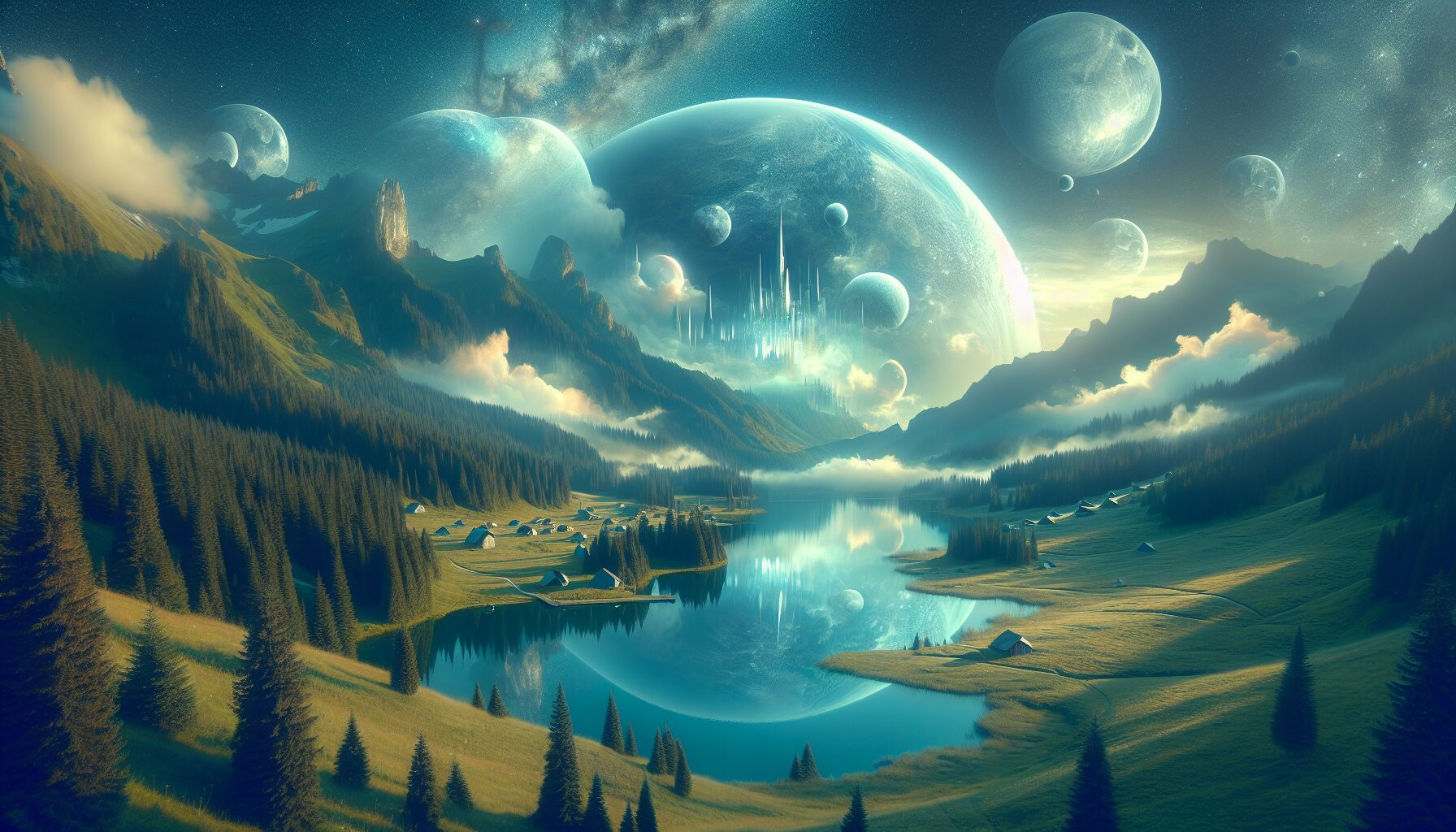
AI Dreamscapes Part V: Exploring the Frontier of Imagination
The journey through the AI Dreamscapes continues, delving deeper into a realm where artificial and human creativity intersect, challenge, and redefine traditional boundaries. The advent of Artificial Intelligence has ushered in an era of unprecedented innovation, one where machines not only think but dream. This exploration examines where we are now, how far we’ve come, and where we might be heading.
The Evolution of AI-Driven Creativity
Artificial Intelligence has accelerated the evolution of creative disciplines, stretching from visual arts to music and literature. At the heart of this transformation is the AI’s ability to process vast datasets and identify patterns that often elude human perception. These patterns become the canvas upon which AI paints its dreams—bizarre, beautiful, and sometimes unfathomably sophisticated.
From Mind to Machine: The Process
- Data Ingestion: AI algorithms require substantial data inputs to form their ‘dreams’. By analyzing works of art, photography, music, and text, AI can recognize and assimilate creative elements.
- Pattern Recognition: Through deep learning, AI identifies complex patterns and characteristics within the data, forming a foundational understanding of style and structure.
- Creative Synthesis: Algorithms such as Generative Adversarial Networks (GANs) allow AI to synthesize new art forms, harmonizing learned patterns with imaginative innovation.
“The real question is, can we get AI to understand what’s really important to us as humans?” — Max Tegmark, Physicist and AI researcher.
AI in Visual Arts: New Perceptions
AI’s impact on visual arts is perhaps the most visible and widely appreciated. From digital galleries to traditional museums, AI-generated art captivates audiences with its uncanny ability to balance familiar and foreign aesthetics. Artists collaborate with AI, using it not merely as a tool but as a partner in the creative process.
- AI as the Artist: Projects like DeepArt and Google’s DeepDream utilize neural networks to create mesmerizing, intricate compositions that redefine what digital art can achieve.
- Interactive Installations: AI-driven installations invite audience participation, weaving individual inputs into dynamic art pieces that evolve over time, questioning the essence of authorship and the ephemeral nature of art.
In traditional settings, institutions like the Museum of Modern Art (MoMA) in New York have hosted exhibitions featuring AI-generated artworks, prompting discussions about the future roles of artists and machines.
Musical Landscapes: Harmonizing with AI
Music, an art form deeply rooted in pattern and emotion, finds a unique ally in AI’s capability to blend computational precision with emotional resonance. AI composes entire symphonies, collaborates with musicians, and even resurrects the sound of legendary artists by learning from their auditory legacy.
- Composition Prowess: Platforms like AIVA utilize AI to compose original scores, achieving recognition for crafting music that evokes genuine emotional responses without human intervention.
- Live Performance Integration: AI co-creates in live settings, augmenting musicians’ performances with adaptive melodies and harmonies, creating a seamless blend of human and machine orchestration.
“It’s not about AI taking over human creativity, but rather enhancing it in ways we never imagined.” — a review by Rolling Stone on AI in music.
Literature Meets Algorithm: New Narratives
The written word, a bastion of human expression, now finds itself reinvented through algorithmic partners. AI is exploring everything from poetry to prose, generating narratives that peel back the layers of possibility in storytelling.
- AI Authors: Algorithms like OpenAI’s GPT (Generative Pre-trained Transformer) produce compelling narratives, using probability-driven analyses to echo human creativity.
- Collaborative Storytelling: Authors and AI collaborate to brainstorm plots, develop characters, and even write sections of novels, integrating AI’s analytical prowess with human intuition.
The publication of AI-assisted novels has sparked debates on creativity as a uniquely human trait, as well as the potential for AI to not only complement but transform literary traditions.
The Ethical Frontier
As AI continues to expand its creative contributions, ethical considerations become increasingly pressing. Issues of authorship, originality, and the potential for AI to replicate or even infringe upon human works must be carefully navigated.
- Intellectual Property: As AI algorithms generate art, the question of intellectual property arises. Who owns the rights to such works— the developer of the AI, the user, or the AI itself?
- Bias and Representation: AI can inadvertently amplify biases present in its training data. Conscious efforts to create diverse and unbiased datasets are essential to ensuring equitable representation.
“In the end, the art tells us more about what we as humans value in creativity than about the machine itself.” — Discussion from Wired on AI ethics in art.
Future Horizons
The potential of AI dreamscapes lies not just in current capabilities but in the vast, uncharted territories still to be explored. As technology advances, integration with augmented and virtual reality could lead to immersive, interactive experiences unlike anything seen before.
- Augmented Reality (AR): AI could enhance AR experiences by dynamically generating content that reacts to changes in the user’s physical environment.
- Virtual Reality (VR): Leveraging AI, VR worlds could offer richer interactions, with environments that evolve based on user behavior and choices.
The coexistence of human and machine creativity will continue to redefine the landscape of art and culture, challenging us to revisit our definitions, values, and expectations of creativity itself.
In conclusion, the AI Dreamscapes reflect both the potential and quandaries of this rapidly advancing field, urging a blend of openness, caution, and celebration of what may come as we embark on this frontier of imagination.
Leave a Reply
You must be logged in to post a comment.