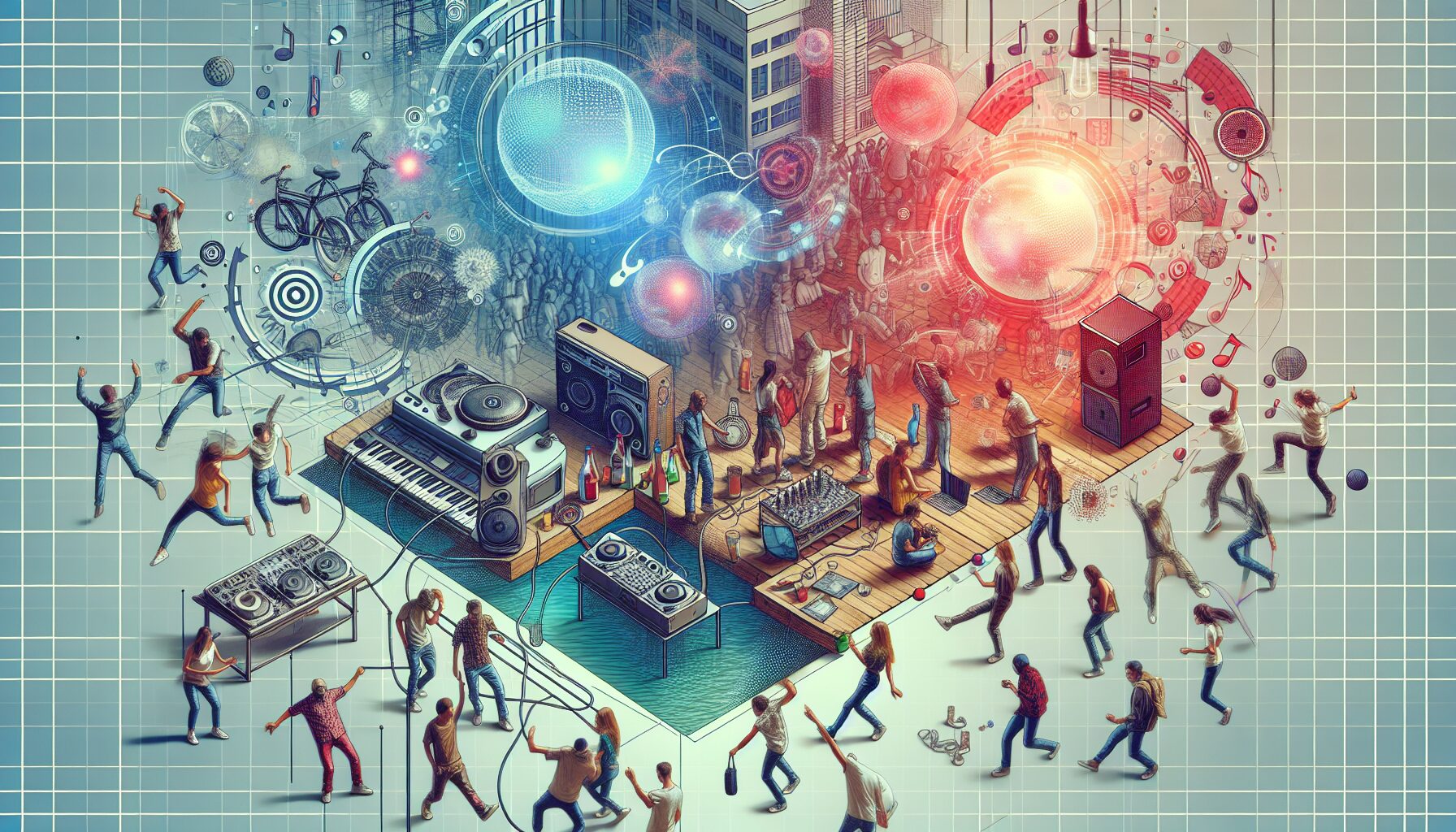
In the quest to understand the restless spirit of counterculture, a term often used to describe movements that challenge mainstream societal values, one must traverse the complex landscapes of art, music, literature, and political activism. This second installment of our exploration into countercultural observations continues to dissect the dynamics that fuel these irrepressible waves of change.
The Evolution of Counterculture
The genesis of counterculture is often traced back to bohemian movements of the 19th century, where artistic and literary circles began actively rebelling against the strictures of middle-class life. As we moved into the 20th century, these sentiments found new expression amid the revolutionary fervor of the 1960s and 70s. However, the progenitor of many modern countercultural movements can arguably be found in the “Beat Generation” of the 1950s.
“The only people for me are the mad ones, the ones who are mad to live, mad to talk, mad to be saved, desirous of everything at the same time, the ones who never yawn or say a commonplace thing…” — Jack Kerouac, On the Road
Kerouac’s seminal work captured the spirit of a generation yearning for meaning outside the societal norms. This movement birthed luminaries such as Allen Ginsberg and William S. Burroughs, who vocally contested the prevailing conservative values through literature and lifestyle.
Music as Protest: From Woodstock to Punk
Music has been a potent vessel for countercultural expression, with each note resonating as a call for liberation. The Woodstock festival of 1969 marked a pinnacle point where music not only entertained but became an embodiment of peace, love, and resistance. Artists like Jimi Hendrix, with his electrifying rendition of “The Star-Spangled Banner,” blurred the lines between art and protest.
Fast forward to the 1970s, the punk movement emerged with bands like the Sex Pistols and The Clash, who juxtaposed chaotic sound with socially aware lyrics. The punk ethos rejected the excess of rock ‘n’ roll, offering an antithesis that returned to the roots of simplicity and raw emotion.
“Punk was defined as an attitude, not a musical style. Unbeknownst to much of the world, the essence of punk was D.I.Y” — Jim Jarmusch, filmmaker
The Role of Technology in Modern Counterculture
As we delve into contemporary countercultural movements, technology plays a dual role as both a catalyst and a platform. The internet has democratized information, allowing a multitude of countercultural ideas to flourish beyond geographic and physical constraints. This digital expansion has seen movements such as the Occupy Wall Street protests utilize social networks to organize and sustain momentum.
Moreover, the rise of hacktivist groups like Anonymous illustrates a new front of countercultural engagement, where digital activism provides an alternative arena for civil disobedience and advocacy.
“We are Anonymous. We are Legion. We do not forgive. We do not forget. Expect us.” — Anonymous motto
Women in Counterculture
The role of women in counterculture has often been overlooked, yet their contributions are monumental. From the early suffragettes challenging the status quo, to influential figures such as Angela Davis, a prominent voice in the civil rights movement and beyond, women have significantly shaped the countercultural narrative.
In the arts, women musicians like Patti Smith and writers such as Sylvia Plath have provided piercing insights into the female experience within countercultural contexts, challenging traditional gender roles and expectations.
Art as Radical Expression
Art remains a formidable tool for counterculture, offering a canvas for radical expression and societal critique. In movements like Dadaism and Surrealism, art eschewed traditional aesthetics, instead presenting absurd and provocative works that confronted the disillusionment felt post-World War I.
More recently, Banksy, the elusive street artist, uses urban landscapes as a medium, highlighting societal flaws through poignant imagery and sardonic wit. Banksy’s anonymous identity itself has become part of the countercultural dialogue, questioning notions of artistic ownership and commercialization.
“Art should comfort the disturbed and disturb the comfortable.” — Banksy
The Future of Counterculture
As we move further into the 21st century, counterculture continues to evolve, often reflecting the societal faults it seeks to amend. Whether through environmental activism, digital frontlines, or the resurgence of interest in community and cooperative living, the spirit of counterculture persists.
The new wave of environmental activists, inspired by figures such as Greta Thunberg, marks a continuance of countercultural resistance focusing on sustainability and ecological responsibility. In an era defined by rapid technological advancement and climate change, this movement embodies the latest iteration of cultural resistance.
“I have learned you are never too small to make a difference.” — Greta Thunberg
Thus, counterculture remains a critical measure of our times, constantly pushing the boundaries of what is possible and continually questioning the status quo. It thrives in pockets of resistance, urging society to reflect, reconsider, and ultimately reshape the narratives we hold as immutable truth.
For further reading on this topic, consider exploring works that delve deeper into these complex movements and their enduring impacts on society, such as Source 1 and Source 2.
Leave a Reply
You must be logged in to post a comment.