Noise Against the Machine: Hardcore as Political Resistance
The soundtrack of rebellion has never been quiet. From the rattles and hums of early rock ‘n’ roll to the thunderous drums of punk, music has long been a vehicle for societal and political change. Amidst these sonic movements, hardcore punk emerged as a particularly potent form of protest — a raw, aggressive response to the world’s injustices. But why did this genre, characterized by its breakneck speed and ferocity, become synonymous with political resistance?
The Genesis of Hardcore
Hardcore punk began its loud, cacophonous life in the late 1970s and early 1980s, primarily rooted in the United States. Bands like Black Flag, Minor Threat, and Bad Brains pushed punk to its extremes, creating a sound that was faster, harder, and more aggressive. The music was a natural evolution of punk, but its ethos was decidedly more intense.
Political and Social Backdrop
The emergence of hardcore punk coincided with significant social and political turbulence. The United States, under President Ronald Reagan, faced a conservative shift that many young people saw as exclusionary and repressive. Economic disparities widened, while issues like the Cold War and nuclear arms races loomed large. Against this backdrop, hardcore became a means of confronting these anxieties and frustrations.
Lyrics as Manifestos
One of the primary ways in which hardcore distinguished itself was through its lyrics. Bands used their music as a platform to voice dissent, question authority, and demand change. Songs were often short, pointed, and laced with urgency.
“We destroy the family, we destroy the country,” sang Dead Kennedys in their seminal track “Moral Majority,” directly critiquing societal norms and the political status quo. (Rolling Stone)
Hardcore bands did not shy away from complex themes. They tackled everything from racism and police brutality to consumerism and environmental destruction. Minor Threat’s “Straight Edge” movement, for instance, was a direct response to the excess and indulgence that many musicians had embraced. Instead, they advocated for a lifestyle that rejected drugs and alcohol, promoting self-control and clarity.
The DIY Ethic
Beyond the music and lyrics, hardcore also meant taking control of the means of production. The genre was characterized by an outgrowth of the Do-It-Yourself (DIY) ethos, where bands often recorded, distributed, and promoted their own music. This was as much a political act as it was an economic necessity.
By bypassing major labels, hardcore punk bands rejected corporate influence, asserting their autonomy. It was about creating an inclusive scene where the music and message were paramount, and profits were not the primary motivation. This allowed for a level of creative freedom that was crucial in discussing the raw, honest, and sometimes uncomfortable truths of the time.
A Community of Resistance
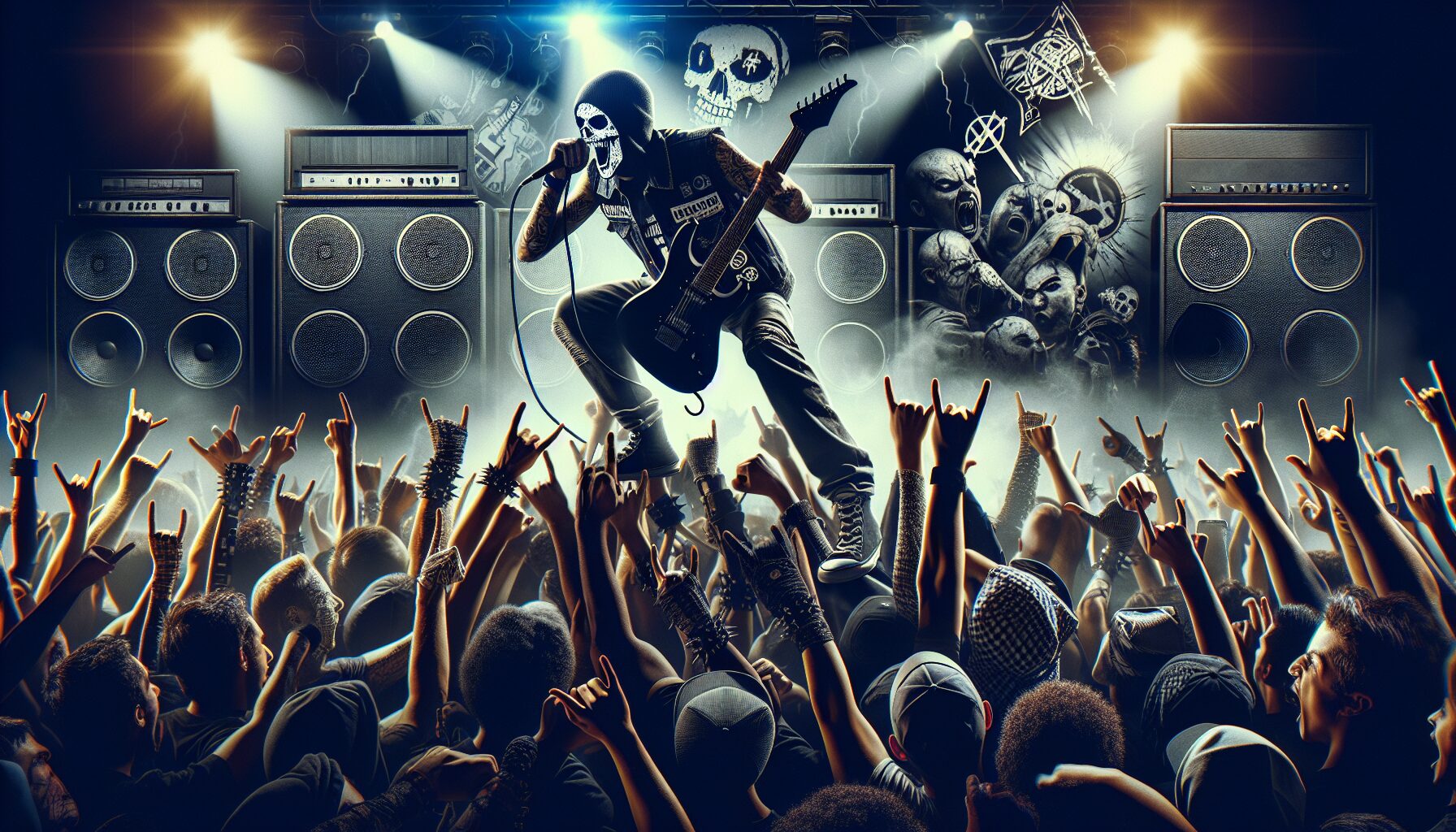
The hardcore scene was not only about the sound or even the message; it was about community and creating spaces where people could come together in defiance of mainstream culture. Hardcore shows were often held in unconventional venues like basements, warehouses, and community halls, where the energy was palpable and participatory.
The mosh pits that characterized these shows were more than just physical expression; they symbolized collective rebellion. The solidarity fostered in these spaces created a network of resistance, where ideas were exchanged, and lifelong bonds formed.
Legacy and Continued Influence
Though the peak of hardcore punk has passed, its influence on contemporary music and culture remains profound. Elements of its aggressive sound and political messaging can be heard in genres ranging from metalcore to modern punk. Bands today continue to take cues from the hardcore ethos, using their platforms to address ongoing social and political issues.
Moreover, the DIY ethic championed by hardcore punks now permeates the independent music scene. In an age where technology enables creators to reach their audiences directly, the spirit of hardcore’s resistance continues to inspire.
In conclusion, hardcore punk’s significance lies not only in its sonic ferocity but in its unwavering commitment to using music as a tool for change. In a world where noise is often equated with chaos, hardcore punk has proven that noise can also be a powerful catalyst for unity, action, and political resistance.
Leave a Reply
You must be logged in to post a comment.