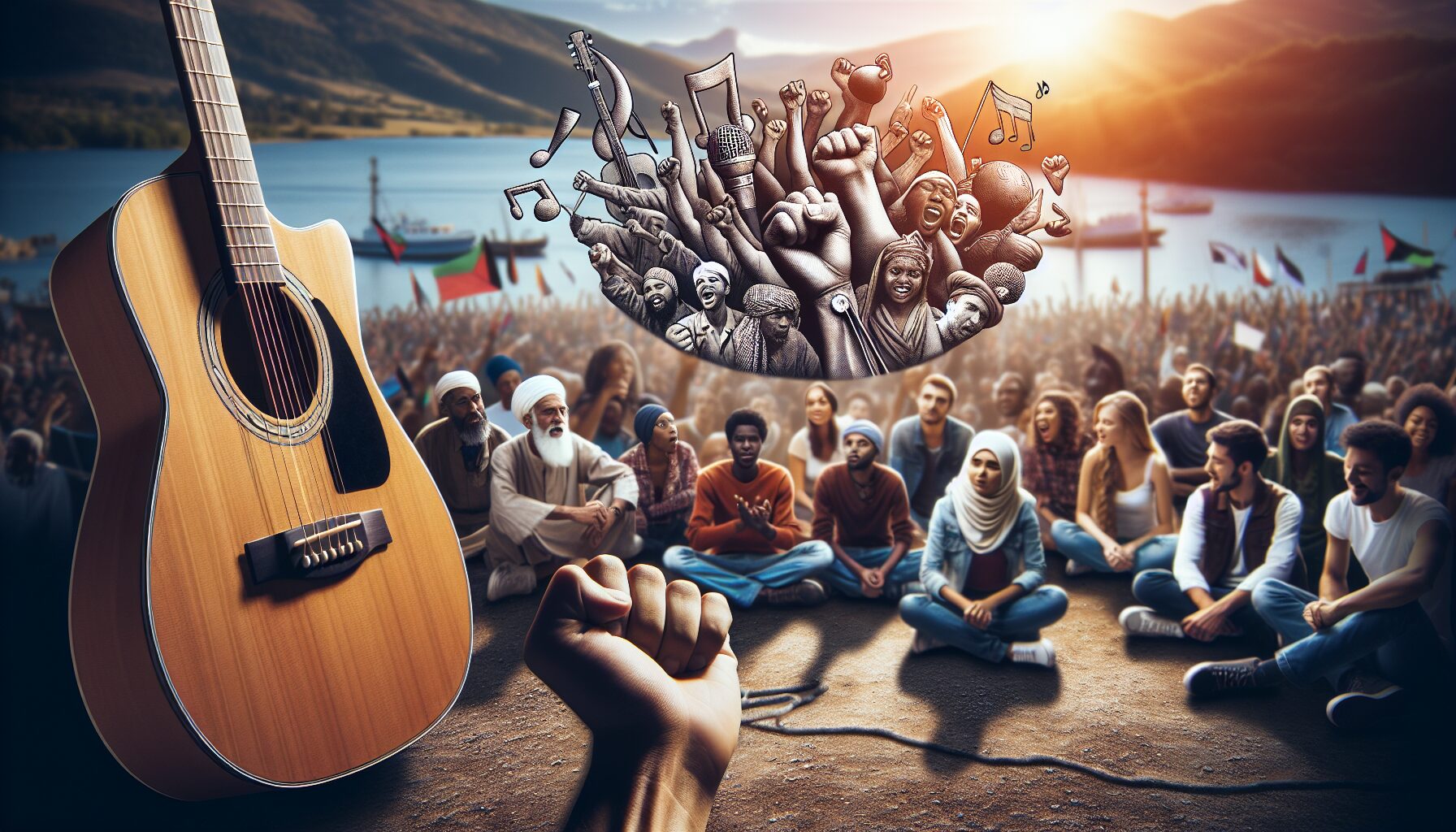
Sonic Revolution Doctrine: Music as Protest
Throughout history, music has played a pivotal role as a tool for protest and social change. The Sonic Revolution Doctrine embodies this powerful intersection of art and activism, where musicians use their craft to challenge societal norms and inspire movements.
A Historic Perspective
Music has long been intertwined with protest movements. From the soulful cries of spirituals during the era of slavery in America, to the profound impact of folk music in the 1960s civil rights movement, sounds have catalyzed change and stirred emotions.
“Music is the weapon of the future,” said Fela Kuti, the Nigerian musician and activist. His words echo the essence of how music serves as a potent force against oppression.
- 1960s and 70s Rock and Folk Music: Artists like Bob Dylan and Joan Baez turned folk music into an engine for political expression, addressing issues like war and civil rights.
- Reggae and Resistance: Emerging from Jamaica, reggae became a voice of resistance, with artists like Bob Marley advocating for peace and unity.
- Punk Rock Movement: The late 1970s saw a rise in punk rock, characterized by bands such as The Clash, who voiced anti-establishment sentiments.
Modern Manifestations
Today, music as protest remains resilient and relevant across genres worldwide. Hip-hop, with its roots in marginalized communities, continues to be an outspoken commentary on racial and social injustice. Artists like Kendrick Lamar use their platforms to address these pervasive issues.
“All we got is music, all we got is life,” raps Kendrick Lamar in Alright, a song that became an anthem for the Black Lives Matter movement. His words underscore the ongoing need for music as a rallying cry for justice.
- Pop and Activism: Even mainstream artists like Beyoncé and Lady Gaga infuse social commentary into their music, reaching global audiences with messages of empowerment and change.
- Electronic Dance Music (EDM): With its wide reach, EDM festivals often highlight social causes, leveraging their vast audiences for environmental and social awareness.
The Future of Sonic Activism
As society continues to face myriad challenges, the Sonic Revolution Doctrine asserts that music will remain a unifying and transformative force. With digital platforms and global connectivity, the potential for music to instigate change is greater than ever.
Ultimately, music exemplifies how art can not only reflect reality but also rewrite it, empowering individuals to envision and strive for a more equitable world.
Leave a Reply
You must be logged in to post a comment.