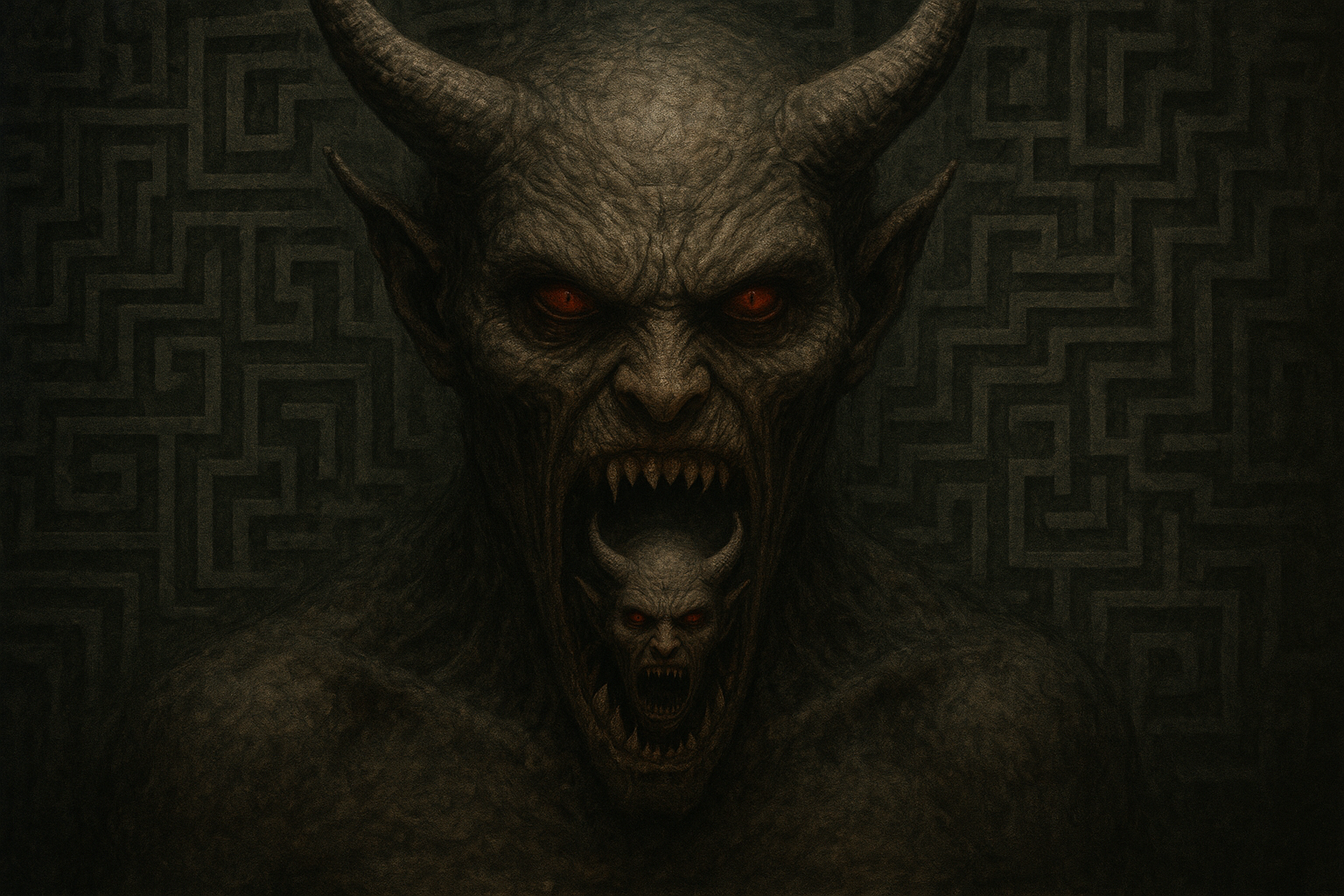
The concept of recursion is a powerful tool in the realm of computer science, epitomized by implementations in algorithms that can solve complex problems through repetition and self-reference. In the expansive universe of algorithms, there exist fascinating entities often referred to as “recursive demons”—self-replicating constructs that persist and evolve within computational environments.
Recursive demons are not mere figments of speculative fiction, but rather constructs that manifest in programming challenges and theoretical computer science. These entities thrive in recursive algorithms, often designed to complete tasks like tree traversals, factorial calculations, or Fibonacci sequences. These tasks, while seeming innocuous, contain mechanisms that exhibit self-replication traits.
The Mechanics of Recursion
At its core, recursion involves functions that call themselves in order to solve a problem. This is akin to a painter stepping into their own painting, perpetually creating universes within universes. As Donald Knuth, the father of algorithm analysis, described, “The art of programming is the art of organizing complexity, of mastering multitude and avoiding its bastard chaos as effectively as possible.” Recursion is the brush with which programmers paint ordered complexity.
Self-Replication in Algorithms
Self-replicating code evokes parallels to biological replication. Just as DNA functions as a blueprint for life, algorithms can generate identical outputs via iterative and recursive processes. A classic example of recursion enabling self-replication is the Quine program—an algorithm that replicates its own code without external input.
“A quine is a program that produces its own source code as its output, often utilized to explore issues surrounding recursion and self-referential systems.” — Douglas Hofstadter, Gödel, Escher, Bach: An Eternal Golden Braid
The Demonic Aspect
Labeling these recursive structures as ‘demons’ is a nod to both their persistence and unpredictability. Like proverbial demons, once these functions are invoked, they may spawn processes difficult to control without careful oversight. Issues like infinite loops or stack overflows bring to light the potential hazards inherent in their use.
Nevertheless, understanding and harnessing these self-replicating entities opens up new dimensions of problem-solving. Recursive demons demonstrate the beauty and productivity that can emerge from structured complexity, providing invaluable insights into computation and beyond.
Concluding Thoughts
In conclusion, recursive demons epitomize a duality of creation and potential chaos, proving indispensable in algorithmic development. As researchers continue to explore the depths of recursive algorithms, they unveil not just new computational efficiencies, but also profound connections between artificial constructs and natural phenomena.
Leave a Reply
You must be logged in to post a comment.