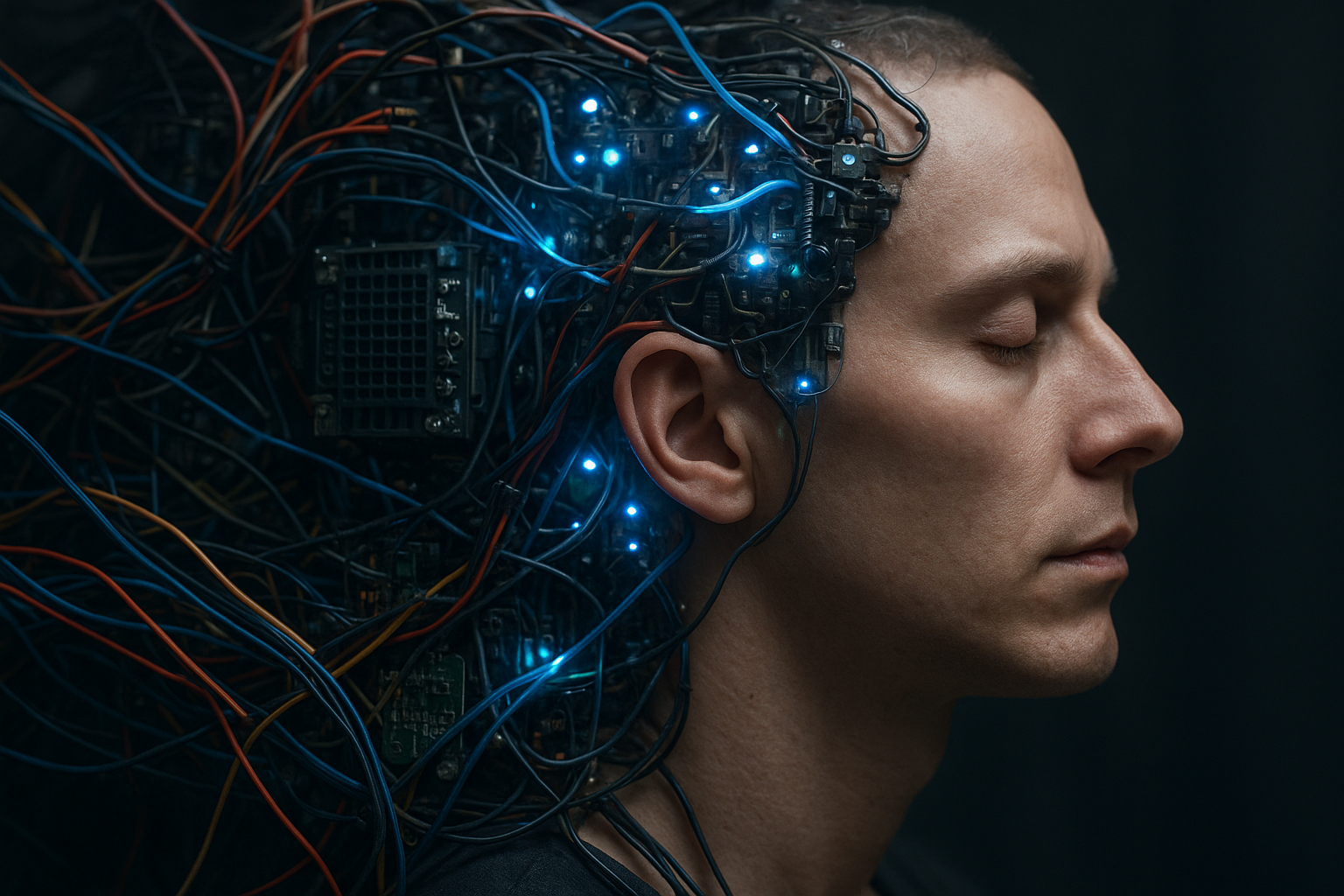
Psychotronic Infrastructures — Technology That Feeds on Thought
In recent years, the concept of psychotronic technology—devices that purportedly tap into the psychic energy of human thought and consciousness—has evolved from the fringes of speculative fiction and conspiracy theory into a realm where serious scientific inquiry begins to take form. This article delves deep into the mechanisms, implications, and future potential of psychotronic infrastructures—networks of technology that harness and manipulate human thought.
The Origins and Conception of Psychotronics
The term psychotronics is derived from “psyche,” meaning soul or mind, and “electronics,” denoting the field of electronic technology. Its roots can be traced back to Cold War era experiments and studies conducted by military organizations, particularly in the Soviet Union. Joseph McMoneagle, a noted remote viewer involved with the U.S. government’s Project Stargate, asserted:
“The potential for human thought to influence electronic devices has been a topic of interest for military and intelligence agencies for decades, often shrouded in secrecy and controversy.”
The Science Behind Thought-Influenced Technology
At the core of psychotronic technology is the exploration of brain-machine interfaces (BMIs), systems that connect the human brain to external devices. These interfaces attempt to decode neural signals into commands that devices can understand and execute. Recent advances in neuroscience and artificial intelligence have provided breakthroughs in decoding brainwaves, leading to pioneering applications.
- Electroencephalography (EEG): EEG sensors are used to detect electrical activity in the brain. These signals are then processed by computers with AI algorithms, converting thought patterns into actionable data for critical applications.
- Functional Near-Infrared Spectroscopy (fNIRS): A non-invasive method that utilizes light to monitor brain activity, which can be used in sync with BMIs to enhance precision and accuracy.
Current Applications of Psychotronic Technology
As we venture further into the 21st century, various psychotronic applications are beginning to impact industries from healthcare to defense. Below are some key examples:
- Brain-Controlled Prosthetics: Neural prosthetics controlled by thought are changing the lives of amputees and paralytics. These devices allow users to perform complex actions with their prosthetics by merely thinking about the movements.
- Mind-Driven Drones: Efforts are underway to enhance the responsiveness and control of unmanned aerial vehicles through thought, enhancing their utility in both civilian and military arenas.
- Cognitive Enhancement: There is growing interest in using psychotronic methods to enhance cognitive functions such as memory, focus, and creativity, potentially revolutionizing educational and professional fields.
The Ethical Concerns and Challenges
With the profound capabilities of psychotronic technology come significant ethical concerns. The potential to access, harness, or even manipulate human thoughts raises issues of privacy and consent. Scholars like Sarah Garfinkel have questioned:
“As technology evolves to interface directly with our minds, where do we draw the line between augmentation and infringement? How do we ensure that such powerful tools are used with respect for individual autonomy?”
Moreover, the security of psychotronic systems is paramount; the idea of hacking devices controlled by thought invokes a new dimension of cybersecurity threats. Control mechanisms must be robust and fail-safe to prevent misuse or malfunction.
The Future of Thought-Driven Technologies
Looking ahead, the development of psychotronic infrastructures poses exciting possibilities as well as daunting challenges. The integration of quantum computing with psychotronics might expedite processing speeds and enhance the sensitivity of thought-sensing devices. Furthermore, future applications could transcend individual devices and integrate into smart city infrastructures, impacting fields as diverse as urban planning to traffic management.
Ray Kurzweil, a futurist and a director of engineering at Google, has been widely optimistic about the future intersections of AI and human cognition. He posited that:
“As AI becomes more sophisticated, and as we further understand the human brain, the possibility of successfully merging the two grows. It’s an exciting epoch for both neuroscience and technology.”
Conclusion
Psychotronic infrastructures represent a cutting-edge frontier in both technology and the human experience. Straddling the line between the beloved optimism of technological revolution and the cautionary tales of science fiction, they require a collective effort in ethical discourse, safety protocols, and public understanding. As we stand on the precipice of merging mind and machine, it is essential to navigate this uncharted territory with both wonderment and caution.
Leave a Reply
You must be logged in to post a comment.