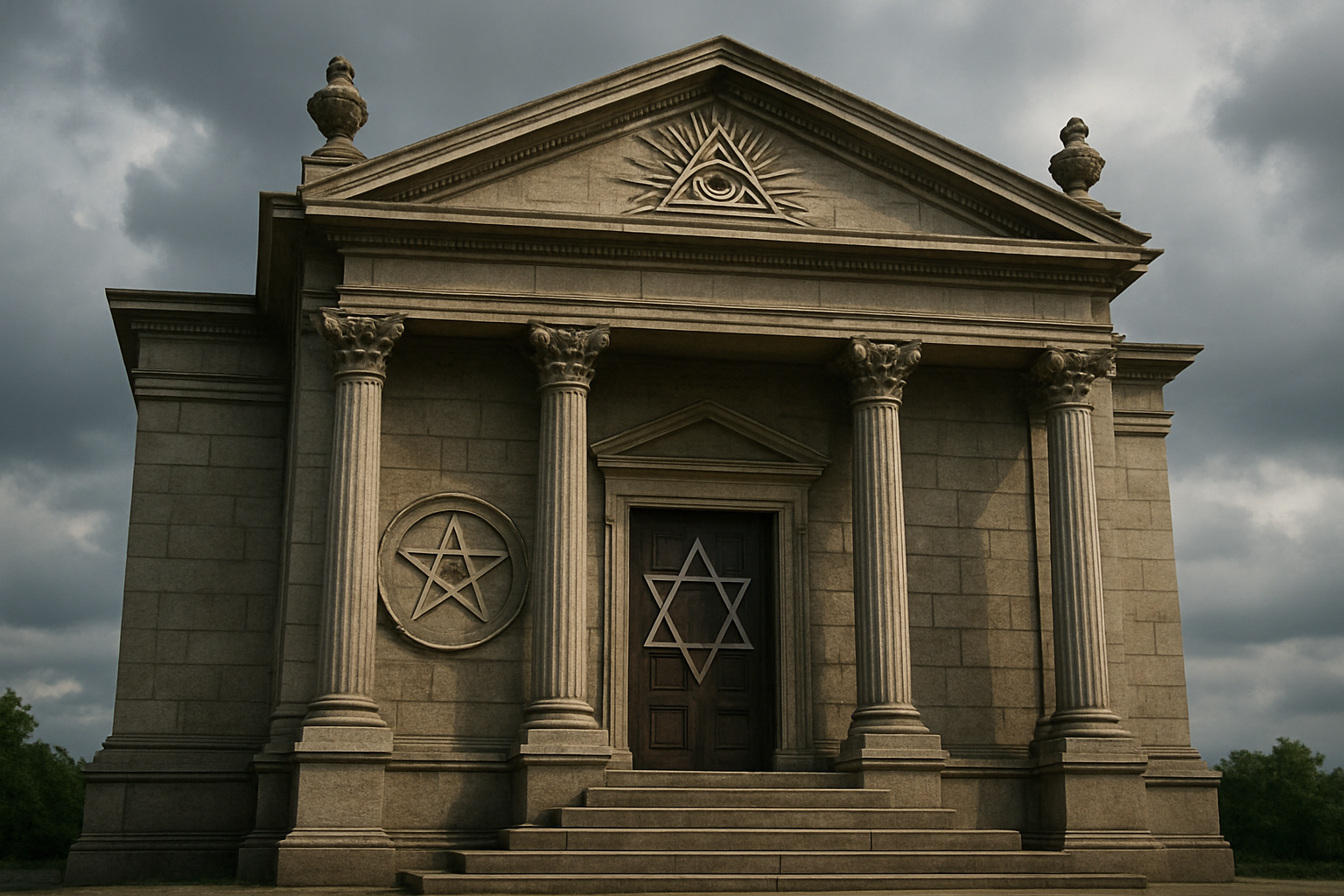
Occult Engineering — Building Structures for Invisible Forces
The idea that the universe is infused with hidden energies and forces has intrigued humanity for millennia. From the pyramids of Egypt to the standing stones of Stonehenge, ancient civilizations have created structures that were not only powerful symbols but also believed to be conduits for harnessing mystical energies. This intersection of belief and architecture is known today as occult engineering.
The Principles of Occult Engineering
Occult engineering is based on the principle that certain architectural forms, alignments, and materials can interact with invisible forces and energies. These might include geomagnetic fields, cosmic energies, or spiritual entities. While some consider these forces to be purely metaphorical, others embrace them as real powers that can be drawn upon for various purposes.
“Architecture is an expression of values.” — Norman Foster
Within occult engineering, these values extend to encompass not only aesthetic and functional aspects but also metaphysical ones. The goal is to create structures that resonate with the unseen world, allowing them to harness and amplify energies that influence both the spirit and the environment.
Historical Examples
- Pyramids of Giza: The positioning and geometric perfection of the Great Pyramid are believed to correlate with astrological alignments. Some speculate that the pyramids served as giant “energy machines,” connecting with Earth’s energy grid.
- Stonehenge: Positioned to mark significant astronomical events like solstices, Stonehenge has long been associated with mystical energy fields. The alignment of the stones supports theories of solar and lunar significance, suggesting an ancient understanding of the celestial forces.
- The Kaaba: In Mecca, the Kaaba is considered the spiritual center of the universe in Islamic belief. Structured as a simple cube, it is thought to manifest a profound spiritual presence, central to the rites of Hajj.
Occult Mechanisms and Modern Interpretations
Modern interpretations of occult engineering delve into both scientific arenas and speculative realms. For example, the field of biogeometry explores how form, shape, and proportion can interact with the subtle energy fields affecting health and wellbeing.
Numerous modern architects and theorists have speculated on these interactions:
- Buckminster Fuller: Known for popularizing the geodesic dome, Fuller believed in “synergetic” principles—where architectural forms could aid human sustainability by interacting positively with natural energies.
- Nikola Tesla: Although not an architect, Tesla’s work on electrical resonances and energy fields significantly influences today’s therapeutic environment designs, where space and form seek to facilitate energy flow.
“The day science begins to study non-physical phenomena, it will make more progress in one decade than in all the previous centuries of its existence.” — Nikola Tesla
The Role of Symbolism
The power of symbols is central to occult engineering. Sacred geometry, for example, involves geometric shapes and patterns found in nature that are believed to be the building blocks of the universe. These symbols are often integrated into architectural design to align with and draw upon these fundamental natural laws. Some commonly utilized forms include:
- The Flower of Life: A complex geometric figure believed to hold the secrets of the universe, frequently used in art and architecture to symbolize creation and harmony.
- The Vesica Piscis: Formed from two intersecting circles, it is interpreted as the intersection of the spiritual and material worlds.
This symbolism often extends into all aspects of building construction—from the materials chosen, which may be thought to transmit certain energies, to the rituals and practices surrounding the construction process itself.
Occult Engineering in the Modern World
While most modern architecture prioritizes functionality and aesthetics, there remains a niche but growing interest in incorporating mystical principles into design. Companies focusing on conscious building design utilize principles derived from ancient practices to create balanced, health-promoting spaces.
Sustainable Architecture
The advent of sustainable architecture shares overlaps with occult engineering by seeking harmony between human creations and the natural world. The integration of natural elements and an emphasis on energy efficiency and environmental consideration evoke the ancient philosophies of creating sacred, energy-conscious spaces.
Numerology and Design
Numerology remains an intriguing tool for modern architects seeking to imbue their designs with hidden meanings, subtle energies, and historical significance. This aligns with the growing fields of feng shui and Vastu Shastra, which influence interior design through harmonious arrangement and orientation.
The Future of Occult Engineering
As technology continues to evolve, the exploration of unseen forces gains new tools and insights. Emerging technologies in energy transfer, quantum physics, and bioenergy fields may further elucidate the mechanics behind occult practices.
Moreover, with growing environmental consciousness, these ancient principles manifest in new forms as we seek to create spaces that promote well-being and connection with nature. While skeptics may question the scientific basis, the undeniable allure of mysticism combined with architecture keeps the field of occult engineering both relevant and eternally fascinating.
For further exploration into these concepts, resources such as ArchDaily offer examples of contemporary architecture inspired by these ancient philosophies.
Ultimately, the enduring allure of occult engineering suggests that, at its core, humanity remains fascinated by the mysterious and the unknown, a testament to our innate desire to bridge the gap between seen and unseen, known and unknown, scientific and mystical.
Leave a Reply
You must be logged in to post a comment.