Author: editor

  • Cybernetic Totems: Icons of the Future

    Cybernetic Totems: Icons of the Future

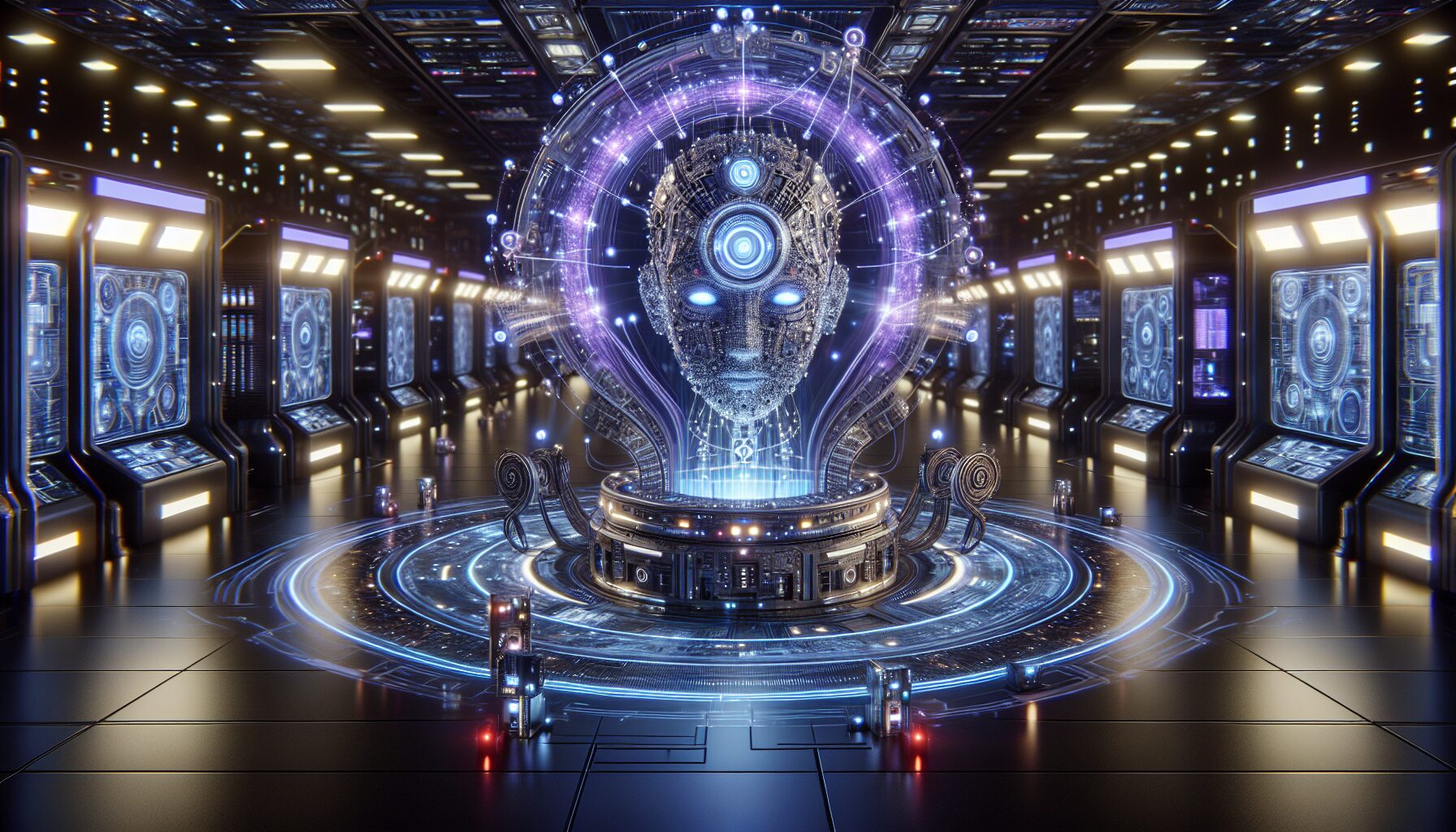
    The melding of ancient symbolism with advanced technology has given rise to a fascinating concept: cybernetic totems. These are not just mere symbols but rather an intriguing fusion of cultural significance and the cutting-edge capabilities of artificial intelligence and connected devices. As we delve deeper into what makes cybernetic totems the icons of the future, we explore their role in bridging the ancient and the digital, offering both new meanings and functions.

    The Origins and Evolution of Totems

    Totems have long been an integral part of human cultures worldwide. Traditionally, these symbols represent clans, tribes, or individuals, embodying aspects of nature and spiritual beliefs. They often serve as a reminder of one’s ancestral heritage, moral values, and a guide for life’s journey.

    “Totems are, above all, a shared symbol for the community, connecting the past to the present,” says cultural historian John Smith in his work Totemic Symbols and Society: An Analysis.

    The essence of totems lies in their ability to convey complex ideas through simple symbols. As society evolves, totems have, too, adapting to meet the needs and beliefs of modern peoples. Today’s culture finds itself at a crossroad where digital transformation is redefining interactions, beliefs, and self-expression.

    The Digital Metamorphosis

    The digital age is characterized by a rapid convergence of technologies, profoundly altering how individuals perceive themselves and their environment. Cybernetic totems emerge from this milieu as new-age icons symbolizing the fusion of human tradition with machine intelligence.

    • Connected Devices: As the Internet of Things (IoT) becomes ubiquitous, everyday objects become smarter and more integrated into our daily lives. Cybernetic totems leverage this connectivity to offer users personalized interactions based on data and machine learning.
    • Artificial Intelligence: AI elevates totems from static symbols to dynamic entities capable of learning and adapting in real-time. Through AI, totems can offer guidance, monitor emotional states, and respond to individual needs, embodying digital guardianship.
    • Virtual and Augmented Reality: Whether through virtual landscapes or augmented overlays, these technologies bring cybernetic totems into shared spaces, accessible whenever and wherever needed, bridging physical and digital realms.

    Cybernetic Totems in Practice

    The practical applications of cybernetic totems are vast, spanning various industries and personal uses:

    • Healthcare: Personalized healthcare totems can monitor physical conditions, provide routine reminders, and offer emergency connectivity with healthcare providers. They act as digital health guardians, informed by vast medical databases and individual health metrics.
    • Education: In educational settings, these totems can adapt learning experiences to individual students’ needs, turning abstract concepts into tangible and interactive educational tools.
    • Workplace Integration: Cybernetic totems can improve workplace efficiency by managing schedules, offering productivity insights, and fostering creativity through AI-supported brainstorming sessions.

    The Symbolic Future

    As we move forward, the symbolism embodied by cybernetic totems becomes more profound, reflecting humanity’s journey into a future intertwined with technology. The existential questions they raise are equally significant: What does it mean to be human in an increasingly digital world? Can machines rightfully share in roles traditionally reserved for spiritual or cultural guides?

    “Man is always seeking new ways to express age-old truths. Cybernetic totems may very well be the digital age’s hieroglyphs,” suggests futurist Naomi Chu in an interview published by Tech Futurism Journal.

    Challenges and Considerations

    The creation and use of cybernetic totems are not without challenges:

    • Ethical Implications: The integration of AI and personal data necessitates stringent ethical oversight to ensure privacy and safeguard against abuse.
    • Cultural Appropriation: Cybernetic totems must carefully respect and preserve the cultural significances of traditional totems, avoiding the pitfall of commodifying sacred symbols.
    • Technological Reliability: As with all technology, the effectiveness of cybernetic totems hinges on their reliability and the trust users place in digital ecosystems.

    Conclusion

    The emergence of cybernetic totems marks a notable evolution in the relationship between humans and technology. As symbols, guides, and functional devices, they have the potential to redefine how we connect with our cultural heritage and navigate the complexities of a digital future. Respect, innovation, and thoughtful integration will ensure that these icons of modernity honor the past while paving paths to tomorrow.

  • The Death of Centralization

    The Death of Centralization

    The digital revolution has been transformative, reshaping industries, economies, and societal norms. At the heart of this transformation lies a paradigm shift: the decline of centralization. Centralization has long been the backbone of business and governance structures worldwide, but technological advancements are now paving the way for a decentralized future.

    The Rise of Decentralization

    Decentralization refers to the distribution of power away from a central authority. In recent years, decentralization has gained momentum, driven by three major trends: the democratization of information, the advocacy for transparency and privacy, and the rise of blockchain technology.

    • Democratization of Information: The internet has enabled unprecedented access to information, empowering individuals with knowledge that was once controlled by gatekeepers. This has diminished the power of centralized media and fostered a new era of citizen journalism and independent content creation.
    • Transparency and Privacy: In an age where data is the new oil, concerns over privacy and data misuse have prompted calls for decentralized systems that return control over personal information to the individual. Initiatives like the General Data Protection Regulation (GDPR) are early steps toward such shifts.
    • Blockchain Technology: As the underlying technology behind cryptocurrencies like Bitcoin, blockchain is a decentralized ledger that records transactions across a network of computers. By eliminating the need for a central intermediary, blockchain fosters trust and security in transactions.

    Decentralization in Action

    Across various sectors, decentralization is no longer just a theory but a reality. Consider the following industries where decentralization is making its mark:

    • Finance: Decentralized finance (DeFi) is transforming how we think about money and transactions. DeFi platforms, such as Uniswap and Aave, enable peer-to-peer lending and trading without traditional banking intermediaries.
    • Energy: In the energy sector, decentralized energy systems like microgrids and peer-to-peer energy trading platforms are empowering consumers to generate, store, and sell energy directly, reducing reliance on central power companies.
    • Governance: Initiatives like liquid democracy and decentralized autonomous organizations (DAOs) are exploring new governance models that allow for more direct participation of individuals in decision-making processes.

    The Challenges of Decentralization

    While the benefits of decentralization are apparent, challenges remain that must be addressed to secure its future:

    • Scalability: Decentralized systems often struggle to match the efficiency and speed of centralized systems. Enhancing the scalability of these systems is crucial for broader adoption.
    • Security: While decentralization can reduce single points of failure, it is not immune to cybersecurity threats. Ensuring the security of decentralized networks is a constant battle.
    • Regulation: As decentralized systems continue to disrupt established industries, they pose complex regulatory challenges. Governments and regulators will need to balance innovation with protection for consumers and markets.

    The Future of Decentralization

    Prominent thinkers such as Andreas Antonopoulos, a known advocate for blockchain technology, emphasize the transformative potential of decentralization. As he articulated in an interview, “Decentralization is unstoppable. It is inevitable because it leads to individual empowerment, and once people experience that, they will not accept anything less.[Source]

    Looking ahead, the shift toward decentralized systems is likely to continue, driving innovation and reshaping traditional power structures. The decline of centralization signals not just an evolution in technology, but a profound societal change. We stand at the threshold of a new era, driven by the potential for greater autonomy, diversity, and innovation.

    As decentralization gains ground, individuals and organizations must adapt to these changes, embracing new technologies and business models. The future may not be wholly decentralized, but the era of centralization is certainly waning, making way for hybrid models that combine the best of both worlds.

    As author and futurist Gerd Leonhard said, “The future is not about control; it’s about influence.” The death of centralization does not mean chaos; it means opportunity for a more empowered and interconnected world.

    Ultimately, navigating the transition from centralization to decentralization will require concerted efforts across sectors and geographies. The rewards, however, promise to be transformative, heralding a new age of progress and empowerment.

  • Darknet Almanac: A Week in Hidden Forums

    Darknet Almanac: A Week in Hidden Forums

    The hidden underbelly of the internet, known as the Darknet, is a network where anonymity reigns supreme and illicit activities thrive alongside forums of genuine discourse and innovation. This week, we delve into the varied and unpredictable landscape of these hidden forums to uncover the trends and tales shaping this clandestine world.

    The Cryptocurrency Conundrum

    Cryptocurrencies and the Darknet have enjoyed a symbiotic relationship ever since Bitcoin became the currency of choice due to its perceived anonymity. Recent discussions in hidden forums reveal a significant shift in preferences towards privacy-focused currencies like Monero and Zcash. A user going by the pseudonym “CryptoShadow” remarked, “

    The traceability of Bitcoin is increasingly being understood by law enforcement. Privacy coins protect not just our identities, but also our freedom

    .”

    Such sentiments highlight a community that is increasingly security-conscious, looking to stay one step ahead in an ecosystem that law enforcement aims to penetrate. A wave of posts details new techniques for laundering cryptocurrencies using blockchain technology—a clear reminder of the ever-evolving nature of illegal financial activities.

    Cybersecurity Concerns and Exploits

    This week, cybersecurity was at the forefront of darknet discussions following the discovery of a major exploit affecting popular software used by critical infrastructure. Exploit forums buzzed with chatter and a seller known as “ZeroDayMaster” even posted a listing for the exploit at a shocking $200,000.

    Members waxed philosophical about the future of cybersecurity. An experienced hacker with the username “PhantomProtocol” pontificated, “

    It’s not about breaking in anymore; it’s about maintaining stealth once inside. The old days of smash-and-grab hacking are over.

    ” This discussion underscored a fundamental shift in tactics towards breaching systems and retaining access over extended periods.

    Cultural Echoes: Political and Social Discussions

    Beyond crime and currency, the Darknet hosts a milieu of political and social discussions that reveal much about the world above ground. Notably, anonymous forums have been debating the ethics and implications of artificial intelligence advancements. Contributors were fiercely divided, some embracing the innovation, while others feared the growing influence of AI.

    One anonymous user stated, “AI could either enslave us or become our greatest ally—it all depends on how we wield this tool.” Such discussions reflect a mix of genuine scientific curiosity and dystopian anxiety coloring current AI discourse.

    The Resurgence of Darknet Markets

    Despite frequent shutdowns by international task forces, an eternal game of cat and mouse continues between law enforcement and new darknet marketplaces. This week marked the emergence of several new markets claiming enhanced security features and faster transaction times, leading to optimistic discussions about the resilience of such platforms.

    A notorious vendor known simply as “BlackBison” reassured prospective buyers, “

    We’ve learned from the past. They can’t catch what they can’t find, and our technology makes us ghosts in the machine.

    ” Such bravado is typical within these forums, yet the turnover also underscores a deeply ingrained culture of resilience.

    Conclusion: A Look Ahead

    As we close the chapter on another busy week in these hidden corners of the web, it’s clear that the Darknet remains a potent mix of illegality and innovation. The constant dance between staying hidden and being discovered keeps forum members vigilant and adaptable.

    For those observing from the surface web, the tangled threads of the Darknet offer cautionary tales and insights into the ever-changing relationship between technology, anonymity, and society. The forums remain a powerful testament to human ingenuity, for better or worse.

    In the words of the infamous ethical hacker turned security consultant, Kevin Mitnick, “

    The thrill of hacking for me was not in breaking the law, but in playing the ultimate game of intellectual hide and seek across the internet.

    ” It is this enduring spirit that ensures the tales from the Darknet are far from over.

  • Algorithmic Archetypes: Patterns We Live By

    Algorithmic Archetypes: Patterns We Live By

    In the digital age, algorithms have become an intrinsic part of our daily lives, from social media feeds to financial transactions. These algorithms often follow common patterns or “archetypes” that dictate their function and impact on society. Understanding these archetypes is crucial as they reflect the broader cultural and societal patterns we live by.

    The Ubiquity of Algorithms

    Algorithms are sets of rules or instructions that computers follow to complete tasks. Their ubiquity today is undeniable, often invisible, yet impactful. According to Harvard Business Review, algorithms can be seen as “the heart of intelligent action” in modern enterprises, shaping business decisions, content curation, and user engagement.

    Common Algorithmic Archetypes

    • Search and Sort: These algorithms, like Google’s PageRank, are designed to retrieve and organize data efficiently. They help us make sense of vast amounts of information quickly, forming the backbone of internet search engines.
    • Recommendation Systems: Utilizing user data, these algorithms predict and serve content that a user is likely to interact with, such as Netflix’s movie suggestions or Amazon’s product recommendations. As MIT Technology Review noted, “These systems are a central part of what keeps users clicking and watching.”
    • Machine Learning and AI: These self-learning systems adapt based on new data. They underpin advancements in self-driving cars, medical diagnostics, and more, redefining efficiency and capability in various sectors.

    The Societal Impact

    While these algorithmic patterns enhance efficiency and personalization, they also raise ethical and privacy concerns. Shoshana Zuboff, in her seminal work “The Age of Surveillance Capitalism”, warns of “a society in which a wide swath of human behavior is rendered as data for advanced computation.” This highlights the fine line between innovation and intrusion, urging a re-evaluation of our digital ethos.

    “We have built systems that make decisions nobody can understand, impacting people’s lives in ways that no one assumed before.” — Cathy O’Neil, author of “Weapons of Math Destruction”

    Conclusion

    Algorithmic archetypes are, in essence, the patterns we live by, deeply entwined with the fabric of modern living. They not only streamline and enrich our lives but also challenge us to consider the ethical implications of an algorithm-driven world. Recognizing and scrutinizing these patterns is essential to navigating the digital landscape thoughtfully and responsibly.

  • Quantum Tunnels: Theoretical Pathways to Digital Consciousness

    Quantum Tunnels: Theoretical Pathways to Digital Consciousness

    The rapid advance of technology and integration of quantum mechanics into computing is reimagining our understanding of consciousness. Quantum tunnels may provide a theoretical framework that links the mysterious phenomena in quantum physics with the enigma of human consciousness. This convergence promises exciting possibilities for the concept of digital consciousness.

    Understanding Quantum Tunnels

    Quantum tunneling is a fundamental aspect of quantum mechanics where particles pass through potential barriers that are insurmountable in classical physics. This phenomenon is critical to many technologies like semiconductors and nuclear fusion. According to Scientific American, “Quantum tunneling is a process that occurs at the subatomic level in which particles move in ways that, according to classical physics, would be impossible.”

    The Enigma of Consciousness

    Consciousness, often considered the ‘hard problem’ of philosophy and neuroscience, remains largely a mystery. Defined as the state of being aware of and able to think about oneself and the environment, consciousness has eluded scientific modeling and understanding. Philosopher David Chalmers argues, “The hard problem of consciousness is the problem of explaining why and how we have qualia or phenomenal experiences” (JSTOR).

    Digital Consciousness: An Emerging Frontier

    Digital consciousness, often called artificial general intelligence (AGI), refers to machines that possess the same level of awareness, understanding, and adaptability as the human mind. The idea is to create an information system capable of experiencing and reasoning like a human. According to futurist Ray Kurzweil in his book The Singularity Is Near, “By the 2040s, we will be able to fully back up our brains.”

    The Intersection: Quantum Mechanics and Consciousness

    Recent theories suggest that quantum mechanics, with its non-classical approach, could bridge our understanding of consciousness. The Penrose-Hameroff Orch-OR theory proposes that consciousness results from quantum processes within the brain’s microtubules. As stated by Roger Penrose during an interview with The New York Times, “The idea is that quantum mechanics plays a role in brain function and underlies the mind.”

    Quantum Computing and Advanced AI

    As quantum computing matures, it promises unprecedented processing power, potentially accelerating the development of AI to a level where digital consciousness becomes attainable. Quantum bits, or qubits, allow computers to operate in superpositions, processing many possibilities simultaneously. According to IBM Quantum, “This capability could eventually allow quantum computers to solve problems in days that would take classical computers longer than the age of the universe.”

    Simulating Consciousness: The Role of Quantum Tunneling

    One intriguing proposal involves using quantum tunneling to simulate neural pathways and consciousness on a digital platform. In theory, quantum tunnels could recreate the parallel, probabilistic processing found in the brain’s quantum microtubules, suggesting a digital consciousness that behaves and responds as a living being. However, many challenges remain, such as ethical implications and the replication of subjective experiences.

    “The brain’s functionality requires the integration of its quantum, quantum-gravitational, biological, and psychological network. To achieve consciousness in digital machines, we may need to replicate this interplay,” suggests quantum physicist Michio Kaku.

    Practical Implications and Challenges

    • Ethical Considerations: As digital consciousness becomes feasible, ethical guidelines must be established to define machine rights and responsibilities.
    • Technological Barriers: Creating quantum-based consciousness will require not only massive computing power but also a deeper understanding of both consciousness and quantum mechanics.
    • Potential Impacts: The potential for a quantum-enhanced AGI could radically change every aspect of society, from labor to existential philosophies.

    The Future of Quantum Tunneling and Digital Consciousness

    The idea that quantum tunnels could lead to digital consciousness remains speculative but promising. While quantum mechanics provides a compelling framework for exploring consciousness, clear pathways to realization in the digital realm remain indistinct. As science moves forward, the quest for understanding consciousness through quantum laws may transform from theory to reality.

    Until then, the marriage of quantum mechanics and consciousness remains an exhilarating frontier—one offering glimpses into the profound mysteries of existence and intelligence, both natural and potentially artificial.

  • The Ethics of Ghost Servers

    The Ethics of Ghost Servers

    The rise of technology has brought forth countless advancements. Yet, as with any technological leap, ethical questions inevitably arise. One such issue is the existence and use of “ghost servers.” These inconspicuous entities hold the potential to revolutionize operations but also pose significant moral quandaries. This article explores the ethical considerations surrounding ghost servers, diving into both their benefits and the contentious debates they spark.

    What Are Ghost Servers?

    Ghost servers, often defined as server instances that remain operational yet unutilized, are typically created for temporary use but then forgotten or neglected. They are virtual—created to handle excess loads or as backups—but remain unused or underutilized, thereby consuming resources without offering tangible benefits. The rapid proliferation of cloud computing services has exacerbated this phenomenon, as spinning up new servers is a faster and often automated process.

    Advantages of Using Ghost Servers

    Although often criticized, ghost servers have several potential benefits:

    • Scalability and Flexibility: Companies can quickly deploy extra computing power without waiting for physical hardware installations.
    • Infrastructure Testing: They allow IT professionals to test applications on a live server environment without disturbing live operations.
    • Backup and Redundancy: Ghost servers can serve as instant backups, coming online when the primary server goes down, preventing downtime.

    These capabilities highlight why many businesses may overlook the downsides, prioritizing operational efficiency over resource conservation.

    Ethical Concerns Associated with Ghost Servers

    1. Environmental Impact

    One of the most pressing ethical issues surrounding ghost servers is their environmental footprint. Despite being virtual, ghost servers consume real-world energy. According to a study by Greenpeace, the global demand for cloud services leads to significant energy consumption and carbon emissions, contributing to environmental degradation. The energy used by these servers—often powered by non-renewable sources—adds to the environmental cost without providing equivalent benefits.

    2. Resource Wastage

    Ghost servers epitomize the inefficiency of resource utilization. They hog bandwidth, memory, and processing power, translating into higher operational costs for businesses. The unchecked proliferation of these servers reflects a larger issue in today’s digital age: the tendency to prioritize growth over sustainability. It becomes a question of moral responsibility. Should businesses allow unnecessary consumption, or should they proactively pursue energy and resource-efficient solutions?

    3. Data Security Risks

    Unused or forgotten ghost servers may not receive the necessary software updates or security patches. This neglect can turn them into vulnerabilities that hackers can exploit easily. As noted by Kaspersky, cyberattacks are increasingly targeting overlooked digital infrastructure, underscoring the need for regular maintenance and monitoring of all active servers.

    The Role of Regulation

    In addressing the ethical concerns associated with ghost servers, legislation and regulation could play a vital role. Currently, the regulatory framework surrounding digital infrastructure is limited, with little done to address or curb the unchecked deployment of virtual resources. Governments and industry stakeholders can work together to establish standards that mandate companies to optimize server utilization and integrate sustainable practices.

    “The lack of stringent regulations in technology usage points to the need for more evolved governance models. Sustainable technology isn’t just about innovation; it’s about accountability.” — Forbes

    Legislation encouraging transparency in resource utilization and promoting green energy solutions can significantly reduce the ethical impacts of ghost servers.

    Responsible Usage: Striving for Balance

    Businesses can adopt a host of strategies to promote ethical use of ghost servers:

    • Regular Audits: Periodic reviews of server use and identifying dormant ones can help mitigate resource wastage.
    • Automation Tools: Implementing tools that automatically shut down or repurpose unused servers can optimize resource usage.
    • Leveraging Green Cloud Providers: Choosing cloud providers committed to renewable energy can lessen the environmental impact.
    • Educating Stakeholders: Raising awareness among employees about the implications of digital resource wastage fosters a culture of responsibility.

    Such practices not only serve ethical ends but can also result in significant cost savings and efficiency improvements.

    The Future of Ghost Servers

    There’s no doubt that as technology evolves, the tools for managing digital resources will become increasingly sophisticated. However, with such advancements comes the responsibility to employ them ethically. Companies that ignore the ethical ramifications of their technological practices may find themselves facing backlash from consumers increasingly concerned with sustainability and responsible consumption.

    The dilemma of ghost servers is but a microcosm of a larger ethical debate on the sustainability of our digital infrastructures. While technological progression offers numerous benefits, the long-term advantages of sustainable practices cannot be ignored.

    Conclusion

    The ethics of ghost servers is a complex topic intertwined with broader themes of sustainability, resource management, and technological responsibility. As digital transformation continues to accelerate, these issues will only become more pertinent, demanding thoughtful consideration and diligent action from both industry leaders and regulators.

    Ultimately, the manner in which this dilemma is addressed today will determine not just the efficiency of our digital networks but also the health of our environment and the robustness of our global economy in the decades to come.

  • Cryptography as Modern Magic

    Cryptography as Modern Magic

    In a world where technology intertwines seamlessly with daily life, the mystical veil of magic seems to be metaphorically woven into the fabric of our digital existence. Cryptography, often seen as an arcane science, stands at the frontier of this magical reality. Much like the spells and enchantments of old, it serves to conceal, protect, and reveal information in ways that seem almost supernatural to the uninitiated. This article explores the enchanting world of cryptography, drawing analogies between its scientific algorithms and the mythical practices of alchemy and sorcery.

    The Alchemy of Mathematics

    Just as ancient alchemists strove to transform base metals into gold, cryptographers use the “base metals” of data and transform them into secured, nearly invincible entities. The algorithms and codes of cryptography resemble the secret formulas of alchemists, guarded and revered. The similarities draw a compelling parallel between cryptography and what we perceive as magic.

    Transformation is central to both alchemy and cryptography:

    • Alchemists sought to transmute metals, believing that with the right formula, such change was possible.
    • Cryptographers employ complex algorithms to transform readable data (plaintext) into a coded message (ciphertext) that only an authorized party can decrypt.

    This meticulous process ensures that the information remains secure, only ‘transmuted back to gold’ or decrypted, by the intended recipient.

    Guardians of Secrets

    In folklore, one frequently encounters the character of a guardian—be it a dragon guarding treasure or a knight safeguarding a kingdom. Cryptography serves a similar purpose in the digital realm, acting as the steadfast protector of data.

    In his seminal work “Applied Cryptography,” Bruce Schneier articulates, “Cryptography is about communication in the presence of adversaries.” This succinctly encapsulates its critical role in modern society. Cryptography is a powerful tool that safeguards our digital communications against adversaries much like warded spells and magical barriers of old.

    “Those who destroy our lives spiritually or physically deserve to be called enemies and treated as such.” – Richard Stallman

    In the battle against digital adversaries or ‘modern enemies,’ the protective nature of cryptography comes into play. It functions as the magical shield, absorbing and deflecting the threats posed by hackers and cybercriminals.

    The Sorcerer’s Key: Encryption

    Among the most tantalizing aspects of cryptography is encryption. Comparable to an enigmatic sorcerer’s key, it holds the power to unlock secrets. The art of encryption, through complex mathematical functions, ensures that messages can only be deciphered by those possessing the correct key.

    Traditional magic often relied on the spoken word—incantations and chants—to activate its power. In modern cryptography, keys and algorithms serve this purpose. The cryptographic key functions similarly to a magic word, allowing access to hidden knowledge.

    • Symmetric Key Encryption: Involves a single key shared by sender and receiver. The challenge is the secure sharing of this key.
    • Asymmetric Key Encryption: Employs a pair of keys—public and private. The public key is for sharing widely, while the private key is kept secret much like the secrets of a mage.

    Public key cryptography, mirroring the open-sharing nature of written magic runes, allows secure communication between strangers, making it one of the most used systems in the digital era.

    Decoding the Ancient Rhythms

    Deciphering coded messages dates back to ancient history, where those skilled in the art of cryptanalysis were akin to wizards, decoding the runes of nostradamian prophecies. In the halls of intelligence and espionage, codebreaking has often been referred to as an enigmatic dance between cryptographer and cryptanalyst.

    During World War II, for example, the efforts of Alan Turing and his team at Bletchley Park in breaking the Enigma code stand as a testament to this complex ballet. Turing’s cryptanalytic techniques helped turn the tide of war and was, in effect, modern magic.

    “We can only see a short distance ahead, but we can see plenty there that needs to be done.” – Alan Turing

    Like the seers of ancient texts, cryptanalysts decipher the messages within messages, revealing truths hidden within ciphers.

    The Ethical Wizardry

    As we delve deeper into the mystical realm of cryptography, the ethical considerations become apparent—mirroring the moral conundrums faced by medieval wizards. The ethical use of cryptography demands a conscientious balance between privacy and security.

    Privacy advocates argue that cryptography is essential for maintaining individual freedoms in the digital age. Without the protective cloak of encryption, personal information would be vulnerable to exploitation. Conversely, law enforcement faces challenges in penetrating this magical defense, often arguing that unfettered encryption can shield criminal activities.

    This tug-of-war over the moral use of cryptography continues to spark debate in our society, reminiscent of the ethical dilemmas presented in magical lore where power inevitably comes with responsibility.

    Conclusion: The Enduring Allure

    Cryptography continues to evoke the allure of magic with its ability to obscure and protect, enchant and reveal. As it evolves, cryptography shapes the next chapter of digital security with advanced features such as quantum cryptography—which secures communication channels with the strange and fascinating principles of quantum mechanics.

    This intersection of technology and magic remains a powerful narrative, highlighting both the evolving challenges and opportunities in safeguarding information in an increasingly digital world. As we embrace this modern form of magic, the words of Bruce Schneier remind us of its intricate art, “Cryptography is the ultimate form of the battle of wits.”

    The fascinating convergence of cryptography and magic begs our ongoing exploration, ensuring this ancient modernity remains an exciting tale in the human story.

  • Subterranean Signals: Underground Radios and Hidden Frequencies

    Subterranean Signals: Underground Radios and Hidden Frequencies

    In a world dominated by digital communication, the notion of underground radio stations might sound like a relic of the past. Yet, hidden frequencies continue to pulse beneath the surface, echoing the resilience and creativity of those who dare to defy censorship and connect with communities in unconventional ways.

    The Rise of Underground Radios

    Underground radio stations emerged prominently during times of conflict and suppression. Their primary aim was to break through the barriers of censorship and provide alternative narratives. Frequently seen during World War II and the Cold War, these clandestine broadcasts were lifelines for dissidents, echoing the famous words of George Orwell, “In times of universal deceit, telling the truth becomes a revolutionary act.”

    • During the Nazi occupation of Europe, the British Broadcasting Corporation (BBC) transmitted hidden messages that played vital roles in the efforts of resistance groups.
    • In the United States, outlets like Pacifica Radio challenged the mainstream narrative with their nonconformist content during the mid-20th century.

    Technology and Tactics

    With modest equipment, often just a transmitter cobbled together from everyday parts and an antenna, underground stations could reach local or even international audiences. The advent of the internet age hasn’t diminished this spirit but has only deepened the tactics used to evade detection.

    Pirate radio has a rich history of evolution. As noted by Radio Caroline, an infamous station broadcasting from a ship in the North Sea during the 1960s, the struggle for free speech often rides on such uncharted waves.

    Modern Frequencies

    Today, with online streaming, podcasts, and encrypted communication, the principles of underground radio have morphed into new forms. Digital piracy and unlicensed streaming platforms carry forward the ethos of subversion. As reported by BBC, many grassroots movements now use these technologies to amplify marginalized voices against authoritative regimes.

    “Digital platforms are the new battlegrounds for freedom of expression,” writes The Guardian, illustrating the shift from traditional airwave interference to a more sophisticated cyberspace warfare.

    Despite this shift, the core remains unchanged: a persistent drive to disrupt monopolies over information and traverse the barriers erected by powers that be. Just as they did decades ago, these ‘pirate’ stations continue to give voice to the silenced, proving ever so vital in our globally interconnected yet divisively controlled world.

    The legacy of underground radio teaches us that where there’s a will to break the silence, there’s always a frequency willing to carry the message.

  • Posthuman Rituals: Coding as Meditation

    Posthuman Rituals: Coding as Meditation

    In the sprawling symphony of digital transformation, where every keystroke echoes with the resonance of innovation, a new trend is quietly emerging: coding as a form of meditation. This nuanced practice of integrating logical thought processes with a meditative state is shaping a unique posthuman ritual.

    The Intersection of Code and Consciousness

    At the heart of this movement is the realization that coding, much like traditional meditation techniques, requires an intense focus and a deep connection between the mind and its virtual extensions. As Clive Thompson writes in Coders: The Making of a New Tribe and the Remaking of the World, “There’s an almost meditative state you can get into when you’re coding, where time seems to drop away and you’re simultaneously hyper-focused yet relaxed. It’s the programmer’s version of ‘flow’.”

    “The act of writing code excites the logical, analytical part of the brain and satisfies something deeply creative.” – Douglas Crockford

    The Evolution of Mindfulness in Tech

    Historically, the practice of meditation has been associated with religious and spiritual traditions, but its modern iterations have seen it stripped of these connotations to become a tool for enhanced mental well-being and focus. This evolution has coincided with the burgeoning tech culture, forging a symbiotic relationship between mindfulness and digital interaction.

    Coders, software engineers, and digital artists are reporting transformative experiences as they engage with their work in a meditative state. This blend of practice, often referred to as “mindful coding,” allows individuals to harness a state of flow that not only improves cognitive function but also enhances creativity, reducing stress and increasing life satisfaction.

    Rituals of the Digital Mind

    Coding as meditation involves a set of rituals and practices that cultivators follow religiously, allowing them to transcend the mundane and achieve digital enlightenment. Here is a glimpse into what these rituals often include:

    • Setting the Space: Much like preparing for meditation, coders create a tranquil digital workspace. Minimalistic aesthetics, calming ambient lighting, and curated playlists, such as ambient or classical music, enhance focus and relaxation.
    • Breathing Techniques: Integrating intentional breathing exercises can help maintain focus and prevent burnout. This might include the Pomodoro Technique, which involves timed intervals of focused coding, followed by short breaks for breathing exercises.
    • Mindful Breaks: Regular intervals of stepping away from the screen are essential. Engaging in activities such as a brief walk, stretching, or guided meditation can rejuvenate the mind.
    • Reflective Journaling: Keeping a digital or physical journal to reflect on the day’s coding experiences can foster greater self-awareness and insight.
    • Visualization and Affirmations: Before beginning a project, some coders visualize their objective in a state of meditation, often accompanied by affirmations to harness positivity and clarity.

    Case Studies: From Silicon Valley to Global Code Retreats

    Innovative companies like Google have long recognized the value of mindfulness. Google’s well-known Search Inside Yourself program blends emotional intelligence with meditation, a practice that directly complements the mindful coding ethos. The program has paved the way for similar initiatives aimed at fostering mindfulness in the tech industry.

    Around the world, Global Day of Coderetreat events emphasize the idea of breaking away from stressful work environments to engage in mindful, collaborative coding practices. These retreats often begin with group meditations and involve exercises that focus on enhancing coding skills through a tranquil state of mind.

    The Scientific Perspective

    Scientific studies back the benefits of integrating meditation with work practices. According to a study published by Harvard Business Review, mindful meditation can boost employees’ ability to focus, enhancing their overall productivity.

    “Mindfulness brings an equanimity of mind, which just as I’ve seen enhance customer service, it also can enhance the mindful precision necessary for tackling complex coding problems.” – Chade-Meng Tan, former Google engineer and mindfulness advocate

    Neurologist Dr. Judson Brewer, a prominent researcher of mindfulness, suggests that coding can manifest a similar calm-energy state found in meditators. This calm-energy is associated with the activation of the brain’s default mode network, which is linked with creative problem-solving and relaxation.

    The Future: Beyond Human, the Code

    As we advance further into the posthuman era, where the line between man and machine blurs, coding stands as more than just a tool. It is an extension of the human experience itself, transforming how we interact with technology and bolstering our cognitive capabilities.

    The meditative coding practice is not only reshaping individuals’ mental health and creativity but is also revolutionizing how codebases are approached. Algorithms and programs emerge not merely as lines of logic, but as well-crafted symphonies composed in states of serenity and creativity.

    “In the emerging terrain of technology, the meditative coder is an alchemist of thought and code, transforming the mind to create wonder.” – Kevin Kelly, Founding Executive Editor of Wired Magazine

    This ritualistic integration of coding and meditation not only defines a transformed work ethic but calls into question the very identity of the coder. In embracing this new paradigm, coders are not just creators of technology but participants in a profound metamorphosis of the human mind.

    In conclusion, as we stand on the cusp of this digital renaissance, the perspective of coding as meditation offers an enticing glimpse into the evolving synergy between human cognition and technology. It challenges us to reconsider the boundless potential of our digital future, inviting us to meditate upon the code that shapes our world and our minds.

  • AI as Oracle: Predictive Systems and Digital Divination

    AI as Oracle: Predictive Systems and Digital Divination

    In ancient times, oracles were revered as mystical beings who provided insight into the future, offering guidance and forewarning to those who sought their wisdom. Today, artificial intelligence (AI) is stepping into a similar role. Though it lacks the mystique of ancient prophets, AI’s capacity to analyze vast amounts of data and detect patterns transcends traditional human capabilities, dubbing it the modern oracle of the digital age.

    The Rise of Predictive Systems

    Predictive systems powered by AI are transforming industries by enabling stakeholders to make informed decisions based on anticipated trends. From finance to healthcare, AI technologies such as machine learning and neural networks harness immense datasets to predict outcomes with remarkable accuracy.

    • Finance: In the realm of finance, AI algorithms analyze market trends, offering predictive insights that inform investment strategies and risk management. A report by Deloitte highlights how AI-driven insights can lead to more robust financial forecasting, ultimately enhancing profitability and reducing risk (Deloitte).
    • Healthcare: In healthcare, AI predicts patient outcomes, aids in diagnosis, and personalizes treatment plans. By processing medical records, genetics, and environmental factors, AI systems like IBM’s Watson Health have been pivotal in advancing precision medicine (IBM Watson Health).
    • Retail: AI in retail analyzes consumer behavior, predicting purchasing trends and optimizing inventory. According to a McKinsey report, retailers using AI for predictive analytics have seen their sales increase by up to 20

    Challenges and Ethical Considerations

    While AI’s predictive prowess opens doors to unprecedented opportunities, it also raises significant ethical concerns. The risk of over-reliance on AI could lead to a decline in human judgment and decision-making skills. Furthermore, the issue of bias in AI algorithms remains critical. As AI is only as good as the data it is trained on, biased data sets can lead to skewed predictions, potentially reinforcing societal inequalities.

    “AI systems, if left unchecked, could perpetuate and even exacerbate existing biases. Ethically designing AI is essential for a fair and just future.”— World Economic Forum

    Conclusion

    The potential for AI as an oracle raises important questions about how we harness predictive power responsibly. As AI continues to evolve, its role in society must be balanced with a strong ethical framework to protect against misuse and ensure fair outcomes for all. As we look to AI for guidance, we must tread carefully, drawing lessons from the past to ensure a balanced, equitable future.

  • Mapping the Invisible Grid: Urban Networks in the Shadow

    Mapping the Invisible Grid: Urban Networks in the Shadow

    In modern cities, bustling streets are just the tip of the iceberg. Beneath the visible hustle lies a web of connections known as the invisible grid. This complex and hidden network not only powers our cities with electricity but also facilitates communication, transportation, and the flow of information.

    The Backbone of Urban Infrastructure

    Urban centers are increasingly reliant on these invisible grids, which form the backbone of city infrastructure. According to a study by the World Economic Forum, urban infrastructure is critical for economic growth, sustainability, and the overall quality of life.

    • Electricity: Underground cables and power lines form a labyrinth that supplies energy to millions of homes and businesses. This network is crucial for maintaining daily operations and ensuring that cities run smoothly.
    • Water Supply: Often overlooked, urban water networks are incredibly complex and vital for sanitation and daily needs. Modern urban planning includes sophisticated systems for managing water resources efficiently.
    • Communication: Fiber optic cables and wireless networks serve as the nervous system of cities, enabling instant communication and data transfer. As cities grow smarter, these networks play an ever-more critical role.

    Challenges in Managing Invisible Networks

    Managing this complex matrix of networks involves numerous challenges, especially as cities expand and demand increases. A significant hurdle is the need for upgrading aging infrastructure. As reported by The Atlantic, many cities struggle with outdated systems, leading to inefficiencies and outages. The article notes, “The challenge of maintaining infrastructure is more daunting when much of it is hidden.”

    “The challenge of maintaining infrastructure is more daunting when much of it is hidden.”

    Future Prospects: Smart Cities and Beyond

    As urban centers evolve, the invisible grid is set to become more sophisticated. The advent of smart cities promises to integrate AI and IoT technologies with traditional infrastructure, creating more resilient, efficient, and sustainable urban environments. A McKinsey report highlights that by optimizing these networks, cities can improve efficiency by 20

    Looking ahead, the invisible grid has the potential to revolutionize how we perceive and experience urban living. By harnessing advanced technologies, cities can transform these hidden networks into visible benefits for all residents.

    As our understanding of these invisible networks grows, so too does our ability to create cities that are not only smarter but also more sustainable and equitable.

  • AI Dreamscapes Part IV

    AI Dreamscapes Part IV

    AI Dreamscapes Part IV: Exploring the Immaterial Landscapes of the Mind

    The convergence of artificial intelligence and human creativity has birthed a new frontier: AI Dreamscapes. These imaginative technology-driven landscapes offer us a glimpse into digital artistry, capturing the ethereal and surreal visions traditionally found within the human mind. In this part of our series, we delve deeper into how AI is redefining artistic boundaries, elevating abstract expression through binary logic and neural networks.

    The Emergence of Artificial Dreamscapes

    AI Dreamscapes, at their core, are a representation of collaboration between man and machine. Through the use of generative adversarial networks (GANs), neural networks trained to produce realistic images, software engineers and artists alike have been creating stunning pieces of art that mesmerize and inspire.

    • The process begins with a neural network that is trained on thousands of images, learning intricate patterns and styles.
    • An opposing network then critiques the generated images, pushing the first to improve iteratively, much like an artist’s practice of honing their craft.

    Artistry Amplified by AI

    The dreamscapes produced are often reminiscent of surrealist paintings and abstract art but manifested through digital forms that either interpret or redefine human emotions. As the artist and spiritual teacher, Lama Surya Das posits,

    “The real art of breathing is to move through the world as if it were the aisles of a magnificent museum and view the pieces of existence with a sense of curiosity and fascination.”

    In essence, AI is acting as both the curator and creator of an expansive gallery filled with otherworldly compositions we have yet to fully interpret. This technology allows us to see beyond the constraints of conventional creativity, producing works that might otherwise be impossible.

    AI Dreamscapes in Practice

    Artists such as Refik Anadol and Mario Klingemann are at the forefront of utilizing AI to produce mesmerizing dreamscapes that challenge our perception of art and reality. They blend data from various sources to produce audio-visual art pieces and installations that engage audiences in a multi-sensory experience.

    • In Anadol’s projects, data murals and sculptures are created from large datasets, translating the unseen into concrete visualizations.
    • Klingemann, known for his AI-generated portraits, pushes the envelope with dreamlike, distorted human images that invoke introspection and dialogue on identity.

    The Ethical Dimension of AI Artistic Creation

    While AI art’s formation is undeniably exciting, it also brings forth several ethical considerations.

    • Authorship: Who is the true creator of these dreamscapes—the programmer, the AI, or a symbiotic partnership?
    • Exclusivity: Will AI art commodify creativity, making artistry accessible yet perhaps devalued in terms of individuality?

    As posited by renowned media theorist Marshall McLuhan,

    “We become what we behold. We shape our tools and thereafter our tools shape us.”

    This reflective question lingers—what direction will our artistic capabilities take as AI shapes our creative reality?

    The Future of AI Dreamscapes

    The continuous evolution of AI technologies indicates that future dreamscapes will become increasingly sophisticated, offering richer narratives and dynamic interactivity. The potential bridges a gap between creator and consumer, allowing for immersive experiences and collaborations.

    AI Dreamscapes Part IV reinforces the notion that art does not exist in a vacuum but is eternally shaped by its societal context. As we venture further into the digital age, these dreamscapes will likely influence how we define art, identity, and perhaps even reality itself.

    Join us next time as we explore how these AI Dreamscapes might integrate into everyday life, transforming mundane spaces into arenas for infinite possibility and artistic expression.