Category: Uncategorized

  • Posthuman Rituals: Coding as Meditation

    Posthuman Rituals: Coding as Meditation

    In the sprawling symphony of digital transformation, where every keystroke echoes with the resonance of innovation, a new trend is quietly emerging: coding as a form of meditation. This nuanced practice of integrating logical thought processes with a meditative state is shaping a unique posthuman ritual.

    The Intersection of Code and Consciousness

    At the heart of this movement is the realization that coding, much like traditional meditation techniques, requires an intense focus and a deep connection between the mind and its virtual extensions. As Clive Thompson writes in Coders: The Making of a New Tribe and the Remaking of the World, “There’s an almost meditative state you can get into when you’re coding, where time seems to drop away and you’re simultaneously hyper-focused yet relaxed. It’s the programmer’s version of ‘flow’.”

    “The act of writing code excites the logical, analytical part of the brain and satisfies something deeply creative.” – Douglas Crockford

    The Evolution of Mindfulness in Tech

    Historically, the practice of meditation has been associated with religious and spiritual traditions, but its modern iterations have seen it stripped of these connotations to become a tool for enhanced mental well-being and focus. This evolution has coincided with the burgeoning tech culture, forging a symbiotic relationship between mindfulness and digital interaction.

    Coders, software engineers, and digital artists are reporting transformative experiences as they engage with their work in a meditative state. This blend of practice, often referred to as “mindful coding,” allows individuals to harness a state of flow that not only improves cognitive function but also enhances creativity, reducing stress and increasing life satisfaction.

    Rituals of the Digital Mind

    Coding as meditation involves a set of rituals and practices that cultivators follow religiously, allowing them to transcend the mundane and achieve digital enlightenment. Here is a glimpse into what these rituals often include:

    • Setting the Space: Much like preparing for meditation, coders create a tranquil digital workspace. Minimalistic aesthetics, calming ambient lighting, and curated playlists, such as ambient or classical music, enhance focus and relaxation.
    • Breathing Techniques: Integrating intentional breathing exercises can help maintain focus and prevent burnout. This might include the Pomodoro Technique, which involves timed intervals of focused coding, followed by short breaks for breathing exercises.
    • Mindful Breaks: Regular intervals of stepping away from the screen are essential. Engaging in activities such as a brief walk, stretching, or guided meditation can rejuvenate the mind.
    • Reflective Journaling: Keeping a digital or physical journal to reflect on the day’s coding experiences can foster greater self-awareness and insight.
    • Visualization and Affirmations: Before beginning a project, some coders visualize their objective in a state of meditation, often accompanied by affirmations to harness positivity and clarity.

    Case Studies: From Silicon Valley to Global Code Retreats

    Innovative companies like Google have long recognized the value of mindfulness. Google’s well-known Search Inside Yourself program blends emotional intelligence with meditation, a practice that directly complements the mindful coding ethos. The program has paved the way for similar initiatives aimed at fostering mindfulness in the tech industry.

    Around the world, Global Day of Coderetreat events emphasize the idea of breaking away from stressful work environments to engage in mindful, collaborative coding practices. These retreats often begin with group meditations and involve exercises that focus on enhancing coding skills through a tranquil state of mind.

    The Scientific Perspective

    Scientific studies back the benefits of integrating meditation with work practices. According to a study published by Harvard Business Review, mindful meditation can boost employees’ ability to focus, enhancing their overall productivity.

    “Mindfulness brings an equanimity of mind, which just as I’ve seen enhance customer service, it also can enhance the mindful precision necessary for tackling complex coding problems.” – Chade-Meng Tan, former Google engineer and mindfulness advocate

    Neurologist Dr. Judson Brewer, a prominent researcher of mindfulness, suggests that coding can manifest a similar calm-energy state found in meditators. This calm-energy is associated with the activation of the brain’s default mode network, which is linked with creative problem-solving and relaxation.

    The Future: Beyond Human, the Code

    As we advance further into the posthuman era, where the line between man and machine blurs, coding stands as more than just a tool. It is an extension of the human experience itself, transforming how we interact with technology and bolstering our cognitive capabilities.

    The meditative coding practice is not only reshaping individuals’ mental health and creativity but is also revolutionizing how codebases are approached. Algorithms and programs emerge not merely as lines of logic, but as well-crafted symphonies composed in states of serenity and creativity.

    “In the emerging terrain of technology, the meditative coder is an alchemist of thought and code, transforming the mind to create wonder.” – Kevin Kelly, Founding Executive Editor of Wired Magazine

    This ritualistic integration of coding and meditation not only defines a transformed work ethic but calls into question the very identity of the coder. In embracing this new paradigm, coders are not just creators of technology but participants in a profound metamorphosis of the human mind.

    In conclusion, as we stand on the cusp of this digital renaissance, the perspective of coding as meditation offers an enticing glimpse into the evolving synergy between human cognition and technology. It challenges us to reconsider the boundless potential of our digital future, inviting us to meditate upon the code that shapes our world and our minds.

  • AI as Oracle: Predictive Systems and Digital Divination

    AI as Oracle: Predictive Systems and Digital Divination

    In ancient times, oracles were revered as mystical beings who provided insight into the future, offering guidance and forewarning to those who sought their wisdom. Today, artificial intelligence (AI) is stepping into a similar role. Though it lacks the mystique of ancient prophets, AI’s capacity to analyze vast amounts of data and detect patterns transcends traditional human capabilities, dubbing it the modern oracle of the digital age.

    The Rise of Predictive Systems

    Predictive systems powered by AI are transforming industries by enabling stakeholders to make informed decisions based on anticipated trends. From finance to healthcare, AI technologies such as machine learning and neural networks harness immense datasets to predict outcomes with remarkable accuracy.

    • Finance: In the realm of finance, AI algorithms analyze market trends, offering predictive insights that inform investment strategies and risk management. A report by Deloitte highlights how AI-driven insights can lead to more robust financial forecasting, ultimately enhancing profitability and reducing risk (Deloitte).
    • Healthcare: In healthcare, AI predicts patient outcomes, aids in diagnosis, and personalizes treatment plans. By processing medical records, genetics, and environmental factors, AI systems like IBM’s Watson Health have been pivotal in advancing precision medicine (IBM Watson Health).
    • Retail: AI in retail analyzes consumer behavior, predicting purchasing trends and optimizing inventory. According to a McKinsey report, retailers using AI for predictive analytics have seen their sales increase by up to 20

    Challenges and Ethical Considerations

    While AI’s predictive prowess opens doors to unprecedented opportunities, it also raises significant ethical concerns. The risk of over-reliance on AI could lead to a decline in human judgment and decision-making skills. Furthermore, the issue of bias in AI algorithms remains critical. As AI is only as good as the data it is trained on, biased data sets can lead to skewed predictions, potentially reinforcing societal inequalities.

    “AI systems, if left unchecked, could perpetuate and even exacerbate existing biases. Ethically designing AI is essential for a fair and just future.”— World Economic Forum

    Conclusion

    The potential for AI as an oracle raises important questions about how we harness predictive power responsibly. As AI continues to evolve, its role in society must be balanced with a strong ethical framework to protect against misuse and ensure fair outcomes for all. As we look to AI for guidance, we must tread carefully, drawing lessons from the past to ensure a balanced, equitable future.

  • Mapping the Invisible Grid: Urban Networks in the Shadow

    Mapping the Invisible Grid: Urban Networks in the Shadow

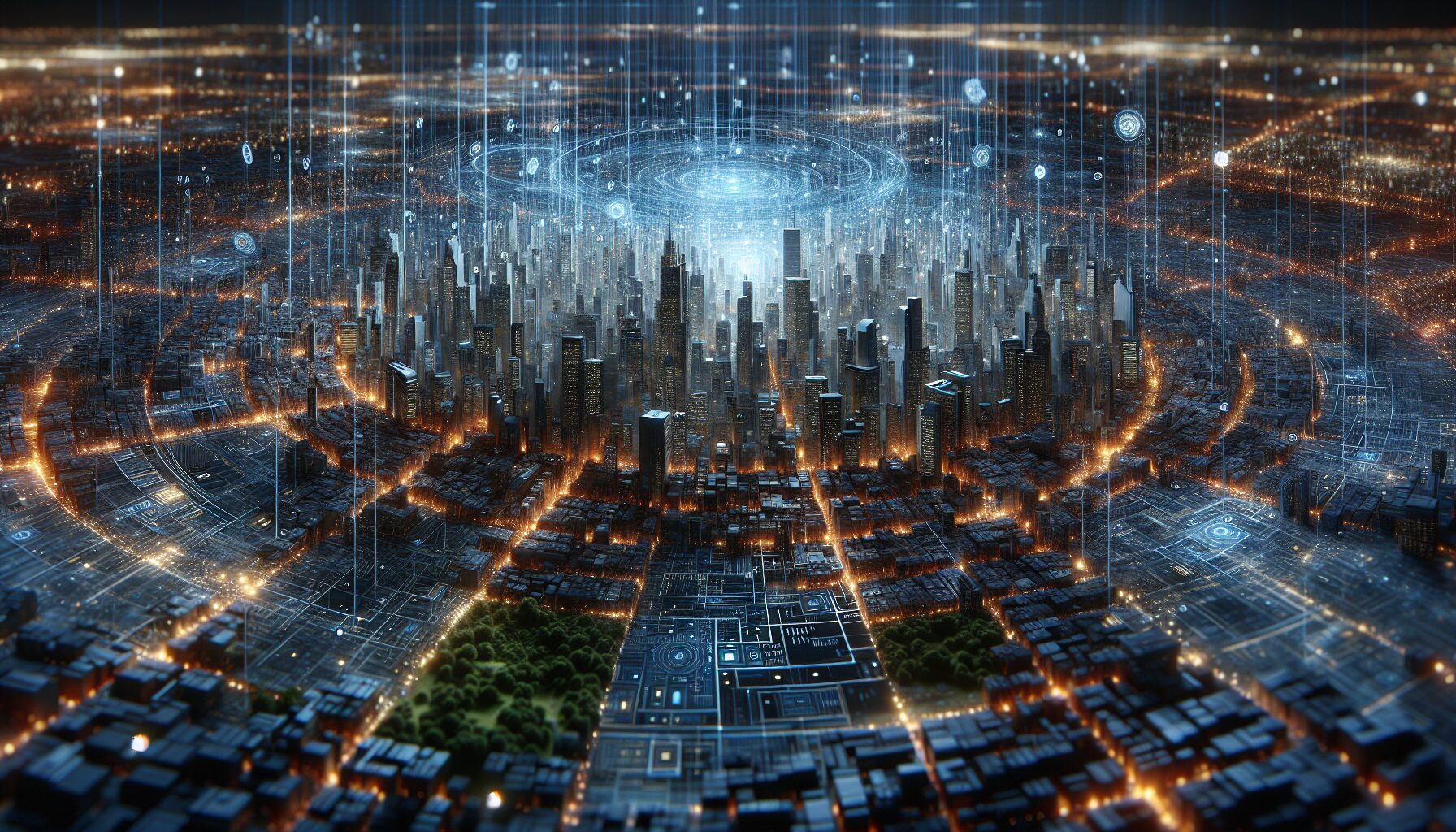
    In modern cities, bustling streets are just the tip of the iceberg. Beneath the visible hustle lies a web of connections known as the invisible grid. This complex and hidden network not only powers our cities with electricity but also facilitates communication, transportation, and the flow of information.

    The Backbone of Urban Infrastructure

    Urban centers are increasingly reliant on these invisible grids, which form the backbone of city infrastructure. According to a study by the World Economic Forum, urban infrastructure is critical for economic growth, sustainability, and the overall quality of life.

    • Electricity: Underground cables and power lines form a labyrinth that supplies energy to millions of homes and businesses. This network is crucial for maintaining daily operations and ensuring that cities run smoothly.
    • Water Supply: Often overlooked, urban water networks are incredibly complex and vital for sanitation and daily needs. Modern urban planning includes sophisticated systems for managing water resources efficiently.
    • Communication: Fiber optic cables and wireless networks serve as the nervous system of cities, enabling instant communication and data transfer. As cities grow smarter, these networks play an ever-more critical role.

    Challenges in Managing Invisible Networks

    Managing this complex matrix of networks involves numerous challenges, especially as cities expand and demand increases. A significant hurdle is the need for upgrading aging infrastructure. As reported by The Atlantic, many cities struggle with outdated systems, leading to inefficiencies and outages. The article notes, “The challenge of maintaining infrastructure is more daunting when much of it is hidden.”

    “The challenge of maintaining infrastructure is more daunting when much of it is hidden.”

    Future Prospects: Smart Cities and Beyond

    As urban centers evolve, the invisible grid is set to become more sophisticated. The advent of smart cities promises to integrate AI and IoT technologies with traditional infrastructure, creating more resilient, efficient, and sustainable urban environments. A McKinsey report highlights that by optimizing these networks, cities can improve efficiency by 20

    Looking ahead, the invisible grid has the potential to revolutionize how we perceive and experience urban living. By harnessing advanced technologies, cities can transform these hidden networks into visible benefits for all residents.

    As our understanding of these invisible networks grows, so too does our ability to create cities that are not only smarter but also more sustainable and equitable.

  • AI Dreamscapes Part IV

    AI Dreamscapes Part IV

    AI Dreamscapes Part IV: Exploring the Immaterial Landscapes of the Mind

    The convergence of artificial intelligence and human creativity has birthed a new frontier: AI Dreamscapes. These imaginative technology-driven landscapes offer us a glimpse into digital artistry, capturing the ethereal and surreal visions traditionally found within the human mind. In this part of our series, we delve deeper into how AI is redefining artistic boundaries, elevating abstract expression through binary logic and neural networks.

    The Emergence of Artificial Dreamscapes

    AI Dreamscapes, at their core, are a representation of collaboration between man and machine. Through the use of generative adversarial networks (GANs), neural networks trained to produce realistic images, software engineers and artists alike have been creating stunning pieces of art that mesmerize and inspire.

    • The process begins with a neural network that is trained on thousands of images, learning intricate patterns and styles.
    • An opposing network then critiques the generated images, pushing the first to improve iteratively, much like an artist’s practice of honing their craft.

    Artistry Amplified by AI

    The dreamscapes produced are often reminiscent of surrealist paintings and abstract art but manifested through digital forms that either interpret or redefine human emotions. As the artist and spiritual teacher, Lama Surya Das posits,

    “The real art of breathing is to move through the world as if it were the aisles of a magnificent museum and view the pieces of existence with a sense of curiosity and fascination.”

    In essence, AI is acting as both the curator and creator of an expansive gallery filled with otherworldly compositions we have yet to fully interpret. This technology allows us to see beyond the constraints of conventional creativity, producing works that might otherwise be impossible.

    AI Dreamscapes in Practice

    Artists such as Refik Anadol and Mario Klingemann are at the forefront of utilizing AI to produce mesmerizing dreamscapes that challenge our perception of art and reality. They blend data from various sources to produce audio-visual art pieces and installations that engage audiences in a multi-sensory experience.

    • In Anadol’s projects, data murals and sculptures are created from large datasets, translating the unseen into concrete visualizations.
    • Klingemann, known for his AI-generated portraits, pushes the envelope with dreamlike, distorted human images that invoke introspection and dialogue on identity.

    The Ethical Dimension of AI Artistic Creation

    While AI art’s formation is undeniably exciting, it also brings forth several ethical considerations.

    • Authorship: Who is the true creator of these dreamscapes—the programmer, the AI, or a symbiotic partnership?
    • Exclusivity: Will AI art commodify creativity, making artistry accessible yet perhaps devalued in terms of individuality?

    As posited by renowned media theorist Marshall McLuhan,

    “We become what we behold. We shape our tools and thereafter our tools shape us.”

    This reflective question lingers—what direction will our artistic capabilities take as AI shapes our creative reality?

    The Future of AI Dreamscapes

    The continuous evolution of AI technologies indicates that future dreamscapes will become increasingly sophisticated, offering richer narratives and dynamic interactivity. The potential bridges a gap between creator and consumer, allowing for immersive experiences and collaborations.

    AI Dreamscapes Part IV reinforces the notion that art does not exist in a vacuum but is eternally shaped by its societal context. As we venture further into the digital age, these dreamscapes will likely influence how we define art, identity, and perhaps even reality itself.

    Join us next time as we explore how these AI Dreamscapes might integrate into everyday life, transforming mundane spaces into arenas for infinite possibility and artistic expression.