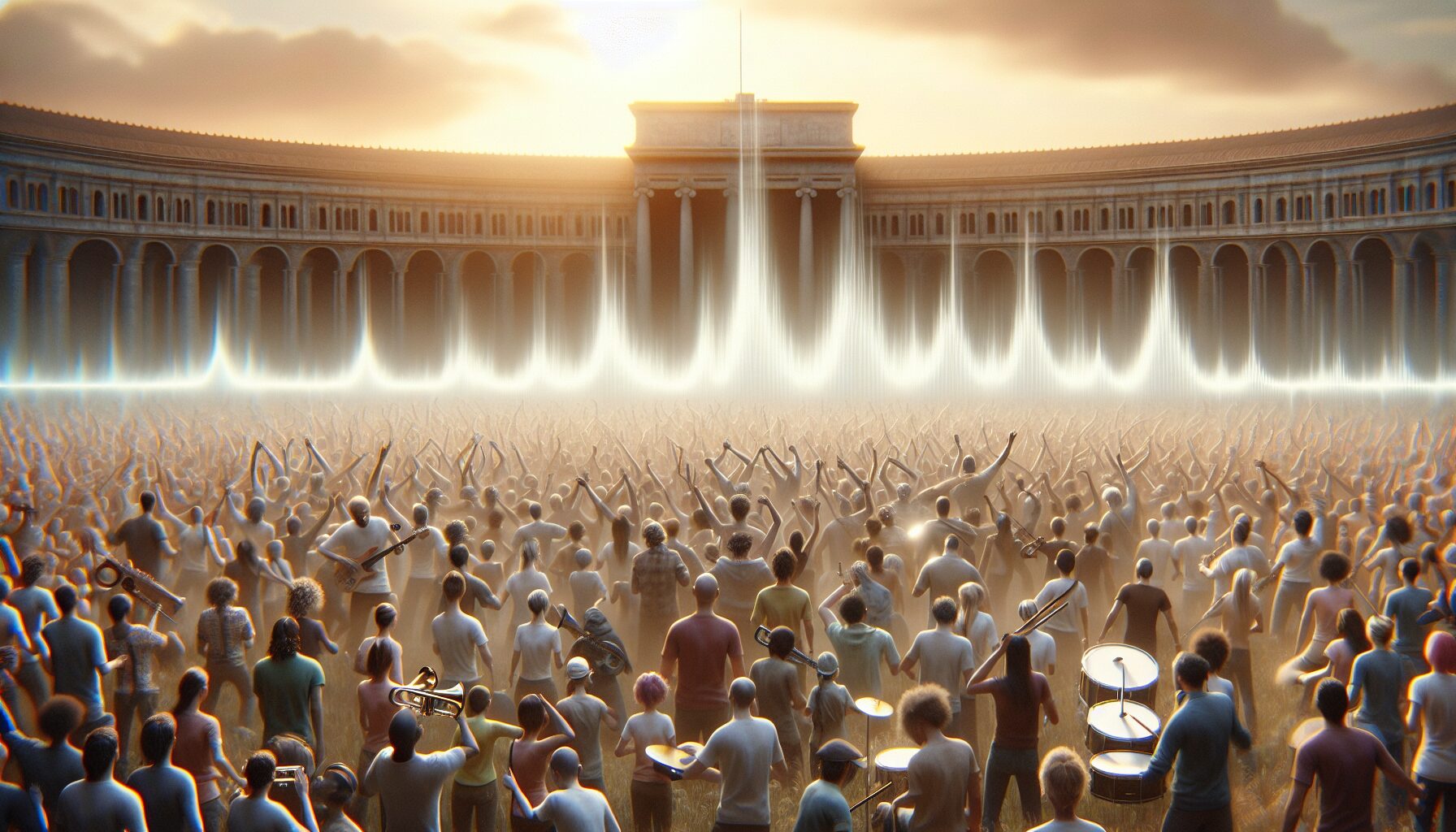
Noise Revolution: Sonic Protest Against Authority
In an increasingly silent world where dissent is often hushed, the concept of noise as a form of protest has gained momentum. The “Noise Revolution” is a burgeoning movement where sound becomes a powerful medium for expressing dissatisfaction, challenging authority, and demanding change.
Historically, noise has played a significant role in political and social movements. From the clanging of bells during the Peasant Wars in 16th-century Europe to the cacophony of pots and pans during the Cacerolazo protests in Latin America, sound has served as a potent symbol of collective unrest. As Hobsbawm (1959) noted, “Noise is not just a clamor for attention; it is also a declaration of presence and solidarity among the oppressed.”
The Power of Sound
Today, the Noise Revolution manifests in various forms worldwide:
- Traditional Instruments: Drums and whistles are used in marches and rallies to energize crowds and create unity.
- Modern Tactics: Amplifiers and speakers broadcasting disruptive soundscapes to capture attention and disrupt the norm. In Hong Kong, protesters used sound to not only rally but also to scramble authorities’ communications.
- Symbolic Noisemaking: In 2011, Wisconsin protesters used vuvuzelas outside the state capitol to express their opposition to budget cuts and union-busting measures.
Music, in particular, serves as a universal language of protest. As renowned musicologist Guy Debord describes, the “détournement” approach—turning familiar sounds into subversive elements—strikes at the heart of complacency and commands attention from both the public and those in power.
Cultural Impact
The impact of noise as a form of protest lies not only in its ability to disrupt but also in its cultural and psychological implications. It challenges the status quo by reshaping public spaces and social interactions. According to comparative studies by acoustician Julian Treasure, “Unwanted noise can enhance stress levels, but orchestrated noise, on the other hand, empowers movements and amplifies social messages.”
“Noise isn’t random chaos; it’s about finding a voice amid silence,” says cultural theorist Seth Horowitz.
In the digital age, noise finds a new frontier, where virtual platforms amplify its reach. The Noise Revolution is a testament to the enduring power of sound as a tool for resistance, transforming the act of making noise into a revolutionary and unifying force against authority.
Leave a Reply
You must be logged in to post a comment.