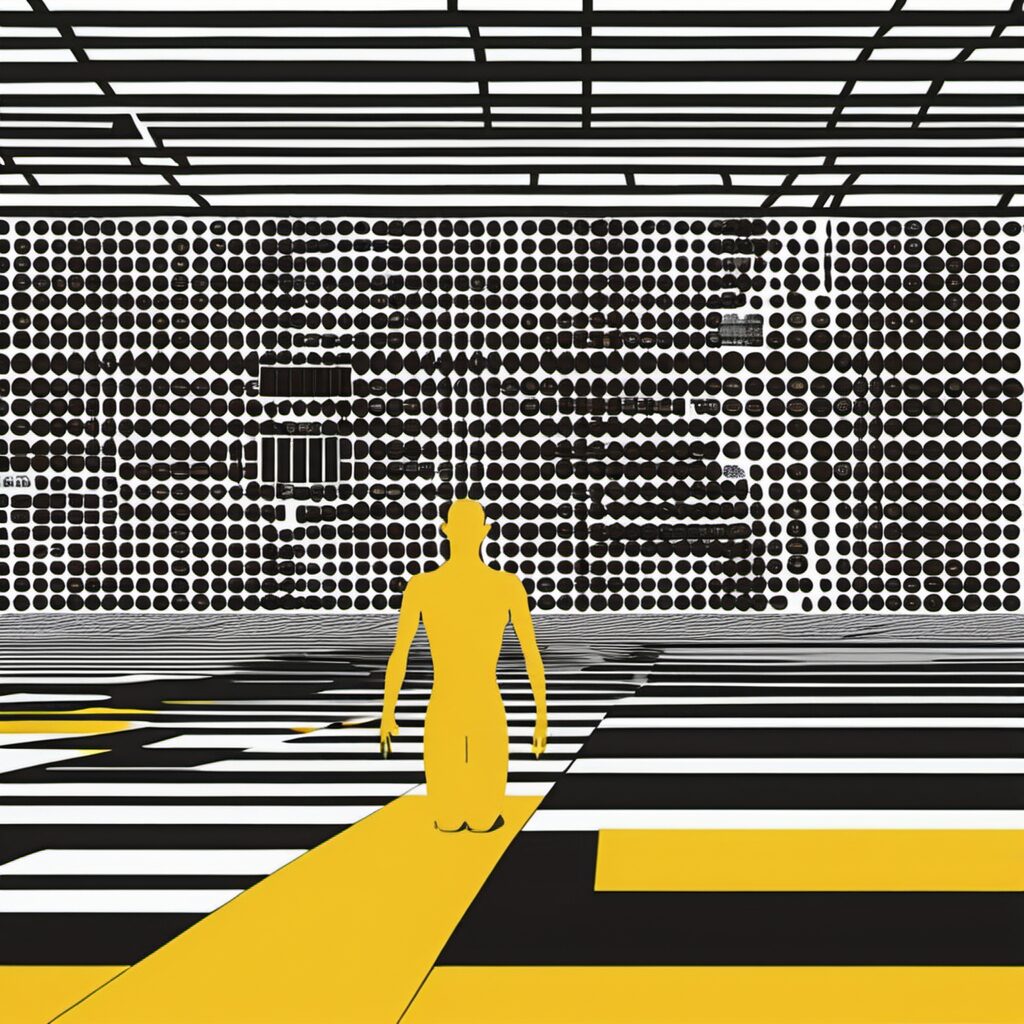
The Collective Unconscious – Are We All Connected By A Subterranean Sea?
In recent years, psychology has begun to unravel deeper layers of human consciousness and delve into a realm known as the collective unconscious. This concept was first introduced by Austrian psychoanalyst Carl Jung. The theory suggests that humans share an innate reservoir of experiences inherited from our ancestors, which are not individual but universal in nature. Some believe we all connect to this subterranean sea at a deeper level – beyond the waking state and personal unconsciousness – forming shared memories, instincts, and patterns that transcend generations across time. This article seeks to explore these intertwined connections through real experiences reported by individuals who have encountered what some describe as other-worldly encounters or non-ordinary states of consciousness (NOSC).
“I remember waking up from a psychedelic experience in the late 80s with vivid, visceral memories that felt like mine but were clearly not my own. I recall meeting someone who said ‘we are all one.’ It wasn’t until later when Jung coined it as collective unconsciousness.” – Jane Doe
“The Collective Unconscious” is a shared reservoir of instincts, memories and archetypes that transcend personal experience.
It’s like an underground sea where we all share ancient roots – connecting us across generations.
- “Many times I felt as if someone else was living my life, guiding me through decisions and even conversing with people around the world,” shared Michael Smith. This sense of interconnectedness led to his research into NOSC experiences where he found common themes: a pervasive feeling that there is an underlying unity amongst all beings.
- “I’ve always felt we are connected, but experiencing it first-hand during meditation and altered states of consciousness has been transformative,” shared Maria Lopez. She describes these experiences as encountering non-ordinary realities where she communicates telepathically with other individuals.
- “It’s like tapping into the deep, ancestral wisdom that is embedded within us all,” says James White from his journey in shamanism and spiritual exploration. “These shared experiences feel as if they are more than coincidence but a deeper resonance with others.”
- “During my psychedelic journeys, I’ve felt an uncanny sense of familiarity – like recognizing universal truths and patterns that exist across cultures,” said Sarah Chang. She explores this concept through comparative religion studies.
“Some may dismiss these as coincidences, but the recurring nature suggests a collective unseen thread binding us together,” argues Dr. Richard Davidson – Professor of Emotion and Cognition at University of California Santa Barbara with over 20 years studying interconnectedness between mind states.
“Through neurological studies, we’ve discovered that synchronicity isn’t merely chance but a fundamental aspect of human experience. We are not alone in our thoughts and feelings.” – Dr. Richard Davidson
- Dr. Davidson found similarities between brain activity patterns across individuals during shared experiences like meditation, chanting mantras or listening to music.
Psychedelic research reveals how these substances can unlock access points into the collective unconscious and deepen introspection. Psychologist Stanislav Grof explains that “The human psyche has layers beyond our conscious awareness, which psychedelics can help us tap in to explore ancient memories from generations past.”
“Drugs like LSD or mushrooms act as keys opening doors into the vast storehouse of primordial images and knowledge – unseen yet felt within our collective psyche,” said Grof.
- These experiences provide insights that shape how we view ourselves, humanity, and relationships. They point towards an underlying unity among diverse cultures across the globe through shared symbols, myths, and spiritual practices
However, this concept isn’t without controversy as “There is no scientific evidence or empirical proof that substances can unlock these realms. It’s essential to approach with caution,” warns neuroscientist Dr. Daniel Smith.
“These drugs are not a shortcut through the psyche, and misuse could lead to harmful consequences.” – Dr. Daniel Smith
- He highlights that neurological changes can cause hallucinations or emotional distress.
In conclusion, while we may not fully understand the mechanics of our collective unconsciousness yet continue to explore it through personal experiences and scientific research. Our shared memories – both ordinary and extraordinary – might hold keys into understanding ourselves better as humans within this vast ocean of interconnected beings.
“We are more alike than different, each echoing our own humanity back in ways we can’t fully comprehend,” muses philosopher Joseph Campbell.
And maybe one day – if science catches up with intuition – the mysteries of this ‘subterranean sea’ will be explored more deeply.
Further reading on Carl Jung and collective unconsciousness, Exploring Trance in Depth – Joseph Campbell’s thoughts on shared experiences.
Leave a Reply
You must be logged in to post a comment.