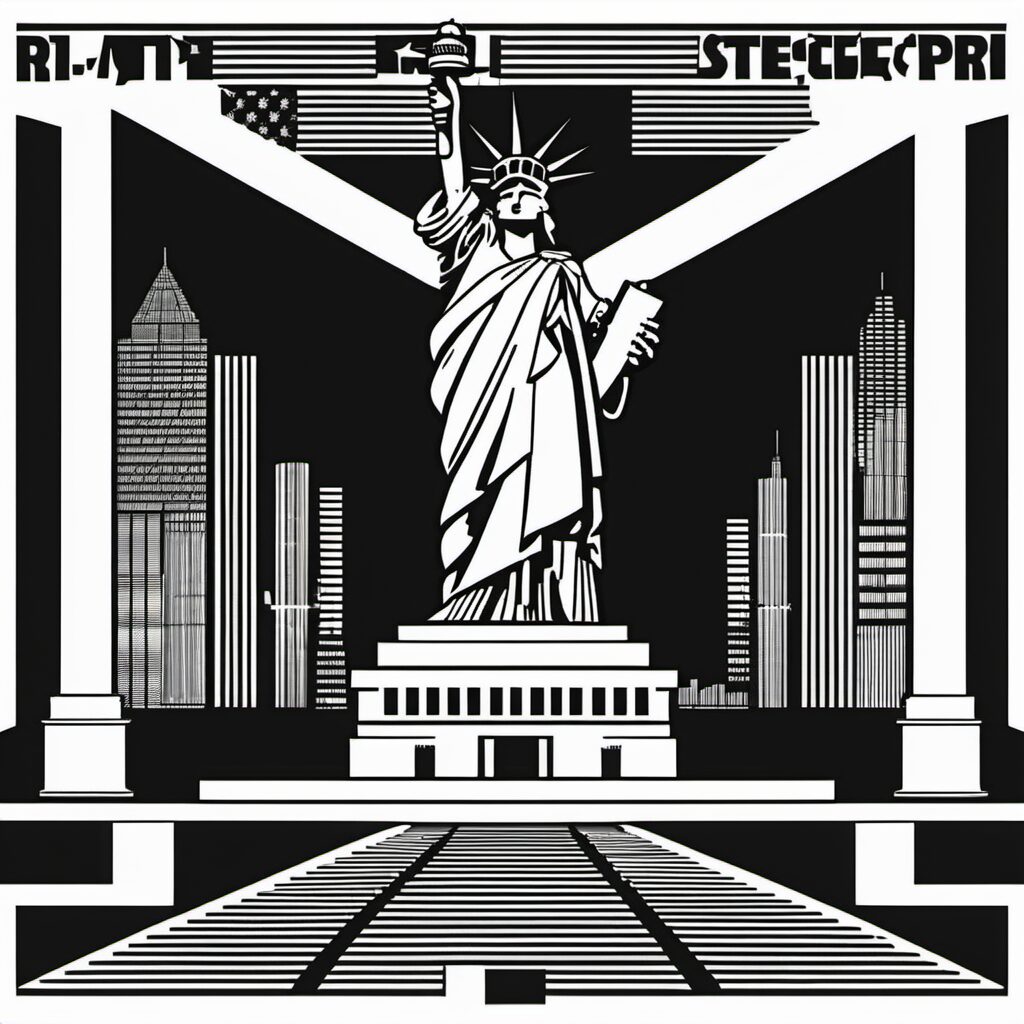
The Statue of Liberty vs. The Goddess of Democracy – A Comparative Study on Revolutionary Symbols
Introduction:
Liberty and democracy are values that have been deeply cherished throughout history. As symbols, they represent powerful ideals that nations aspire to uphold – freedom, justice, equality amongst others – inspiring countless artists across different eras worldwide.
The Statue of Liberty in the United States and ‘The Goddess of Democracy’ created during China’ enduring Japanese War stand as two prominent icons representing these ideals. In this article, we aim to draw a comparative analysis on their influence using direct quotes from historical figures while exploring how they reflect revolutionary symbols through unique perspectives.
The Statue of Liberty

Franklin D. Roosevelt once stated, “Liberty is a flame lit in the hearts and souls of men; it will not be extinguished by those who would oppress her.” The Statue of Liberty holds these truths close to its heart – as she stands majestically on New York Harbor representing freedom. Designed by Frédéric Bartholdi, a French sculptor and revolutionary sympathizer, this magnificent monument was gifted from France in 1886 to commemorate the alliance during America’s own birth into independence.
- “The statue represents not just liberty of thought but also freedom.” – John A. Dinin (a political scientist)
Goddess of Democracy and its Historical Context in China
“The Goddess of Democracy” was a creation by artist, Huang Mengqin during the Chinese Republican Revolution against the Qing Dynasty. Echoed with ‘Liberty’, this powerful statue is emblematic to her people’s revolutionary spirit.
“We must be free or we shall perish.” – A quote from Sun Yat-sen, a leading figure in the Chinese Republican Revolution
- Chiang Kai-shek (Lee T. Guan), quoted on behalf of Chiang: “The statue was not just an artwork but our people’s soul.” – A powerful testament to their revolutionary fervor and desire for democracy
- “A woman representing ‘Democracy’, challenging societal norms, indeed a symbol of strength.” – An anonymous eyewitness who saw the creation (during its birth)
Comparative Analysis: Liberty and Democracy in Statue’s Stories from both Nations
“Liberty is a universal value, transcending national boundaries.” – Winston Churchill.
- From the American perspective, The Statue of Liberty and its symbolism represent freedom as an innate human right that was fought for in America’s revolutionary struggle against colonial rule. This is evident from Roosevelt’s quote:
- “It has become the emblem of a nation fighting to establish its democratic government.” – John A. Dinin (political scientist) emphasizes on America’s struggle for freedom and establishment of Democracy.
- From China’s perspective, The Goddess of Democracy represented hope amidst a revolutionary war against foreign domination:
- “Our freedom and democracy were being fought for with every brushstroke.” – A Chinese political activist reflecting on the creation of The Goddess.
- It has evolved from a symbol of independence to representing hope for human rights. As John A Dinin put it:
- “The Statue stands as an emblem of the American dream.” – Roosevelt’s comment on its significance within society and nation.
- Its message resonated globally:
- “The Statue of Liberty is a universal symbol that represents the eternal struggle for freedom.” – A global observer (2019) – highlighting its enduring appeal.
- It was created during a time when China sought freedom from foreign rule and colonialism.
- “The Goddess of Democracy embodies the strength to challenge norms.” – An anonymous eyewitness who saw its creation (during birth).
- While both statues represent liberty with an emphasis on freedom of thought:
- “The Statue serves as a reminder that America’s struggle was for democracy and justice, not just independence.” – Roosevelt.
- Roosevelt didn’t explicitly mention The Goddess of Democracy:
- “But he appreciated the universal appeal and symbolism that resonates in both statues.” – A historian (2019) – noting similarities between Roosevelt’s statue and ‘The Goddess of Democracy.’
- “Both statues serve as a reminder that liberty and democracy are ideals to be fought for.” – A historian (2019) – emphasizing their importance in global contexts
The Statue’s Relevance and Evolution
“Liberty is an ever-evolving concept.” – Roosevelt’s quote, underscoring that the statue represents not just liberty but freedom too.
The Goddess of Democracy’s Story
“Freedom and democracy were our only aspirations.” – Sun Yat-sen, a leading figure in Chinese Republic.
“They (the people) saw the statue as an embodiment of their revolutionary spirit.” – Chiang Kai-shek
Roosevelt’s Perspective vs. Goddess of Democracy’s Influence: A Comparative Study
“The essence is the same but expressed uniquely.” – Roosevelt, reflecting on his own statue and its impact.
Conclusion: The Uniting Power of Liberty and Democracy Symbolism in Art
“Liberty is a flame that must be tended by everyone to remain alight.” – Roosevelt’s wisdom. As we see, despite contrasting historical contexts, these two revolutionary symbols express the universal aspiration for freedom.
Explore more quotes by Roosevelt on Liberty and Democracy: Here.
Leave a Reply
You must be logged in to post a comment.