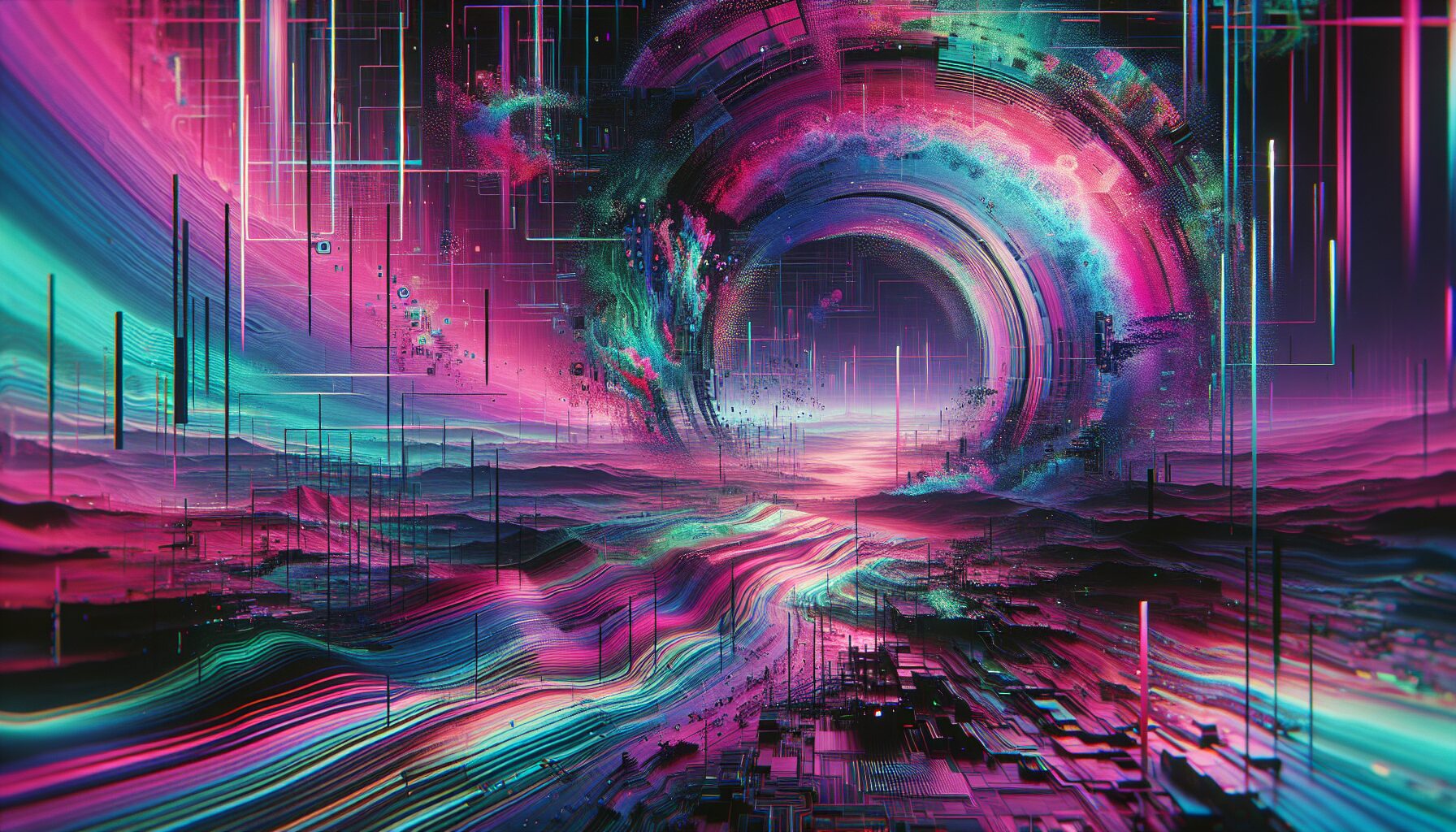
The concept of glitch aesthetics is a fascinating intersection of art and technology, where the imperfection of digital systems becomes a canvas for innovation and expression. Traditionally, glitches—unexpected errors or malfunctions—were considered mistakes to be corrected. However, in the realm of glitch aesthetics, these imperfections are celebrated as a form of beauty, subverting the conventional understanding of digital media.
The Origins of Glitch Art
Glitch art is not a product of the digital age alone; it has its roots in earlier experimental practices. The avant-garde movements of the 20th century, such as Dadaism and Surrealism, laid the groundwork by challenging established norms and embracing chaos and randomness.
“Glitch is the aesthetic of failure…a moment when something goes wrong.” — Iman Moradi, glitch theorist and author.
Early glitch artists found inspiration in these movements, experimenting with analog mediums like television, radio, and photography before fully embracing digital technologies. The transition to digital media opened new avenues for glitch artists to explore the complexities of data corruption and manipulation.
The Method of Glitch Creation
Glitch artists employ a varied toolkit to produce their works, deliberately inducing errors in digital systems to create visual or auditory pieces. There are several methods used to produce these effects:
- Data Manipulation: Artists alter the code or language underlying an image or audio file, such as switching file extensions or using a text editor to corrupt the data.
- Circuit Bending: This involves modifying electronic circuits in devices to trigger unexpected behaviors, creating spontaneous and often unpredictable results.
- Compression Artifacts: Intentional over-compression or decompression of digital files to create distortion and visible pixelation.
These techniques transform the so-called ‘errors’ into works of art. The emphasis is on the process as much as the finished product, offering a new perspective on how we interact with technology.
Philosophical Underpinnings
At the heart of glitch aesthetics lies a philosophical inquiry into the nature of perfection and imperfection. These works challenge the cultural obsession with flawless technology and media, urging audiences to see virtue in failure.
“In embracing glitch, we embrace a different kind of beauty—one that’s rooted in acceptance and imperfection.” — Rosa Menkman, glitch artist and theorist
Glitch art can also serve as a form of critique, questioning the reliability of digital environments and the illusion of stability they provide. By highlighting technology’s flaws, glitch artists remind us of the underlying fragility of digital constructs that permeate our lives.
The Impact on Contemporary Art
Glitch art has garnered substantial attention within the contemporary art scene, influencing a wide range of disciplines, from graphic design to music. Notable exhibitions and retrospectives have explored its evolving role in art history.
For instance, the Glitch Festival in Malta showcases a variety of electronic experiments, integrating glitch art into broader cultural contexts. Similarly, glitch exhibitions across the globe have expanded its reach and appreciation.
The fusion of traditional and digital techniques in glitch art also reflects a dialogue between the past and the present. As digital tools evolve, so too does the potential for creating more complex and nuanced glitch artworks. This constant evolution poses the question of what constitutes originality and authenticity within digital media.
Conclusion: Embracing the Glitch
Glitch aesthetics represents a paradigm shift, prompting us to reassess our relationship with technology. By finding beauty in broken systems, artists and technologists alike redefine the boundaries of creation, innovation, and error.
“The glitch serves as a reminder: behind every façade of perfection lies a world of potential chaos and creativity.” — Jon Cates, curator and media artist
Ultimately, glitch aesthetics invites us to reconsider the conventional metrics of value in art and technology, celebrating the unpredictable and unintentional. This exploration of ‘brokenness’ reveals a fascinating spectrum of beauty, one defined not by seamless precision but by vibrant imperfection.
Leave a Reply
You must be logged in to post a comment.