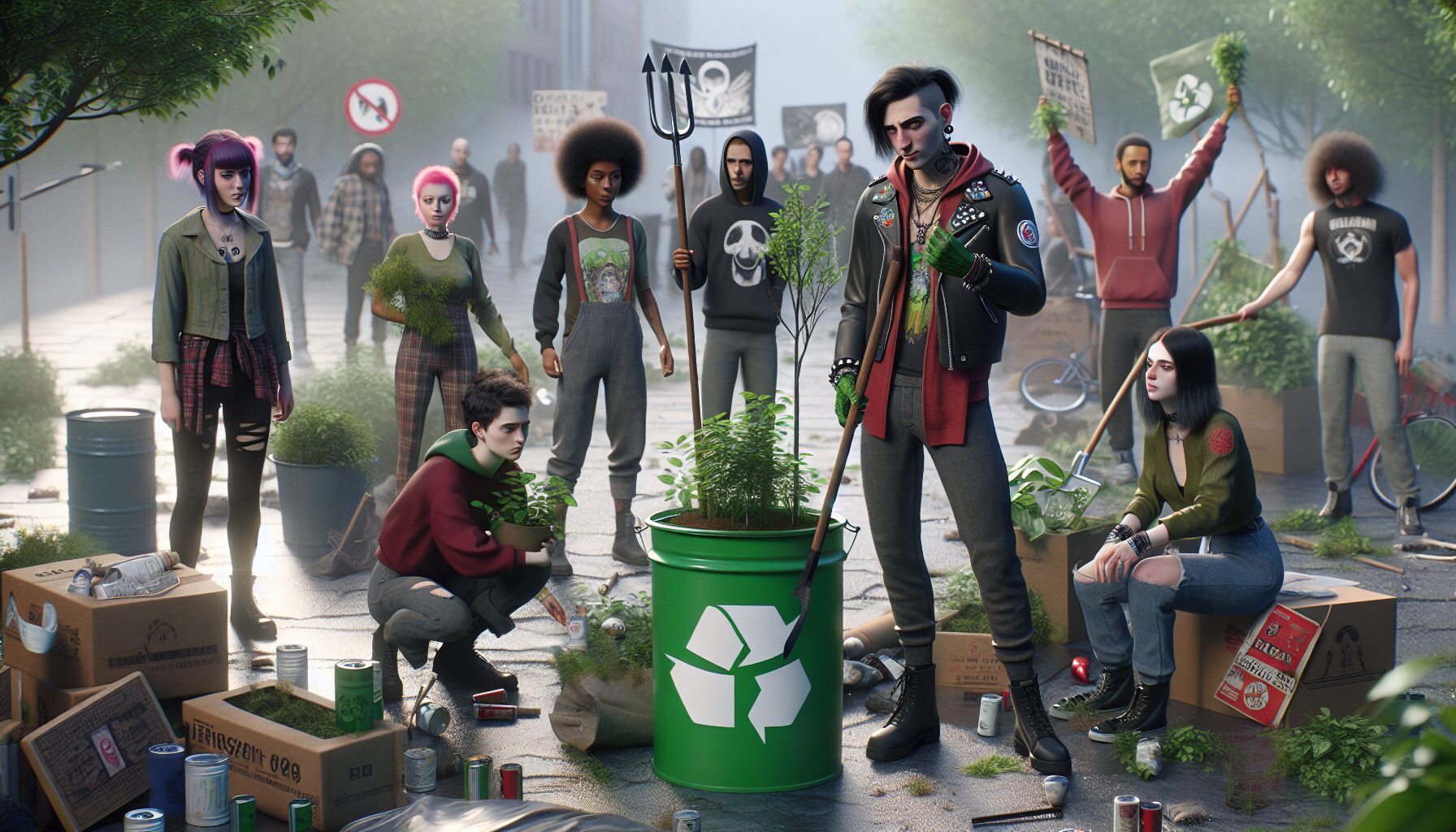
Green Revolt: Environmental Activism in Subcultural Circles
The fight for environmental justice and sustainability has seen significant evolution over the years, gaining traction not only in the halls of government but also in the fringes of society. Subcultures, often perceived as countercultural or rebellious, have been at the frontline of this green revolt, advocating for the environment in unique and impactful ways.
The Intersection of Subculture and Environmentalism
Subcultures, defined by their distinct values, beliefs, and aesthetics, offer alternative views to the mainstream. This deviation often aligns with a more profound appreciation for the environment and sustainability. As countercultural groups reject societal norms, they tend to adopt lifestyles that favor conservation and ecological preservation over consumerism and exploitation.
According to Chatterton and Pickerill (2010), “Subcultural movements often bring with them a consciousness of planet sustainability as they craft new identities apart from conventional social structures.”
Punk and Environmental Activism
The punk subculture, with its roots in anti-establishment and DIY (Do It Yourself) ethics, has closely intertwined with environmental activism. As a movement oriented around rejecting mainstream societal structures, punk advocates for reduced consumerism and self-sustainability. Punk’s influence is seen in communal living arrangements and participation in environmental protests and direct action events.
“Punks, perhaps more than any other subcultural group, have explicitly linked anti-capitalism with an environmental agenda,” notes Mark Butler in his book This is Ecopop.
The punk movement has given rise to several eco-conscious projects, including community gardens, food cooperatives, and DIY clothing swaps, all reflecting their commitment to reducing waste and increasing awareness.
Goth Subculture: Dark Aesthetic, Green Heart
While often associated with darkness and mystery, the goth subculture has contributed significantly to environmental activism. The emphasis on nature’s beauty and preservation forms a core part of the goth aesthetic, inspiring many to engage in conservation activities.
Goth events increasingly incorporate eco-friendly practices, such as utilizing sustainable materials and promoting recycling. Additionally, nature-themed art and music in the goth scene often convey messages about the importance of preserving the environment.
- Participation in tree-planting drives
- Organization of nature-centered events
- Advocacy for animal rights and protection
Eco-Druids and Neo-Pagans: A Return to Nature
Eco-Druids and Neo-Pagans are at the forefront of environmental advocacy, promoting a harmonious relationship with nature inspired by ancient spiritual practices. These subcultures emphasize the sanctity and interconnectedness of all life forms, supporting conservation efforts and the protection of natural spaces.
According to a study by Sarah Pike, “Neo-Pagans see environmental activism as a form of spiritual expression, viewing it as an obligation to the sacred Earth.”
This spiritual activism manifests in various ways, such as ritualistic clean-up events in natural areas, ceremonies celebrating seasonal changes, and campaigns against environmental destruction.
Skater Subculture: Rolling Towards Sustainability
The skateboarding subculture, which prides itself on creativity and independence, has also embraced environmental activism. Skaters are increasingly advocating for sustainable urban development and the protection of public spaces where they can practice their sport unimpeded by urban sprawl.
Programs like Skateistan not only promote skateboarding as a means of empowerment but also leverage it as a tool for teaching young people about sustainability and environmental awareness. Many skate brands are now producing eco-friendly boards and apparel, contributing to a shift towards more sustainable business practices in the industry.
Impact and Achievements of Subcultural Environmental Activism
The collective efforts of these subcultures have led to notable successes in the realm of environmental activism:
- Increased Awareness: Subcultures bring environmental issues to new audiences, raising awareness among demographics that might otherwise remain uninformed.
- Social and Political Pressure: Through organized protests, boycotts, and public campaigns, these groups have effectively pressured governments and corporations to adopt greener practices.
- Innovation in Sustainability: DIY ethics have spurred innovations in sustainable living, influencing mainstream practices and encouraging the adaptation of new standards for eco-friendliness.
Challenges and Future Outlook
While subcultural activism has achieved significant strides, it also faces challenges such as resource limitations and societal backlash. The non-mainstream nature of these movements can sometimes lead to marginalization, reducing their ability to enact widespread change.
Nonetheless, as climate change and ecological imbalance become more pressing issues, the integral role of subcultural activism in pushing for sustainable change is increasingly recognized and appreciated. Moving forward, these groups must continue to build bridges with mainstream environmental organizations, fostering a unified front in the fight for a more sustainable future.
Subcultures, in their diversity and creativity, offer a plethora of strategies for addressing ecological challenges, reminding us that activism does not have to conform to a singular model. Instead, as illustrated by these vibrant movements, it can be as varied and colorful as the people it inspires.
Leave a Reply
You must be logged in to post a comment.