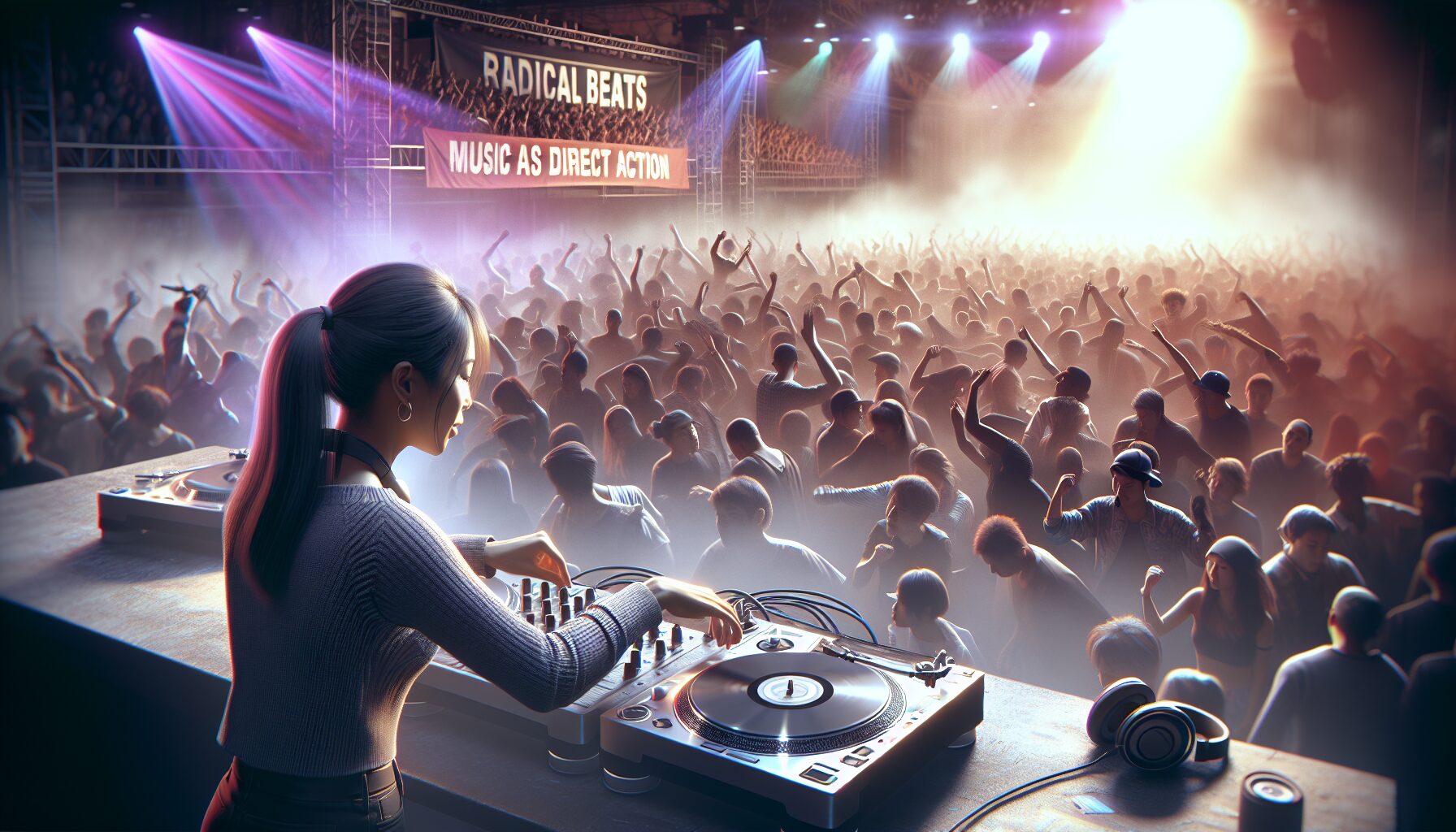
Throughout history, music has served as a powerful tool for social and political change. From the revolutionary anthems of the 1960s to the protest songs of today, music has provided a voice for those seeking justice and equality. As a form of direct action, music can mobilize communities, inspire movements, and create solidarity among diverse groups.
The Power of Protest Songs
Protest songs have long been a staple of social movements. These songs articulate the struggles, hopes, and demands of people fighting against oppression. In the 1960s, artists like Bob Dylan and Joan Baez became synonymous with the civil rights movement. Dylan’s “The Times They Are a-Changin’” captured the spirit of the era, urging people to recognize the shifting social order. As PBS highlights, these songs transcended mere entertainment to become rallying cries for change.
“Music always reflects society, and there’s no single song that could encapsulate both our hopes and our frustrations more than a protest song.” – Joan Baez
A Global Phenomenon
Music is not just a tool for change in the Western world; it is a global phenomenon. In South Africa, songs like “Nkosi Sikelel’ iAfrika” became anthems for the anti-apartheid movement. Similarly, in Latin America, artists like Victor Jara were central to movements for social justice and human rights. Jara’s poignant lyrics and commitment to his cause led to his arrest and murder during the Pinochet regime, but his legacy continues to inspire new generations.
The Guardian notes that Jara’s music has continued to be a source of inspiration, with new artists citing his influence in their fight against oppression.
Modern Music Movements
Today, music continues to be a force for change. The Black Lives Matter movement has seen the rise of hip-hop and R&B artists who address systemic racism and police brutality. Kendrick Lamar’s “Alright” became an unofficial anthem, giving voice to the frustrations and hopes of a new generation. As The New York Times points out, the song’s refrain, “We gon’ be alright,” has been chanted at protests across the world.
Moreover, music festivals like Coachella and Glastonbury have increased their focus on political activism. These events often feature artists who speak out on climate change, gender equality, and human rights, integrating their performances with calls to action.
The Role of Technology
In the digital age, technology plays a crucial role in amplifying music as a form of direct action. Platforms like YouTube and Spotify allow artists to reach global audiences instantly. Social media enables musicians to engage directly with fans, fostering a sense of community and shared purpose. As a result, songs can quickly become part of the larger social discourse, challenging injustices and mobilizing support.
“With tools like social media, the potential for music to create change is greater than ever. It’s not just about the songs but the connection they foster.” – Questlove
Conclusion
Music, as a form of direct action, remains an indelible part of the struggle for justice and equality. Whether calling for civil rights, environmental justice, or global peace, the impact of music is profound and ongoing. As movements evolve, so too will the songs that underscore them, ensuring that the beat of change never stops.
From the streets to the stage, music continues to be a unifying force, reminding us that even in the face of adversity, we have a powerful tool to inspire action and change the world.
Leave a Reply
You must be logged in to post a comment.