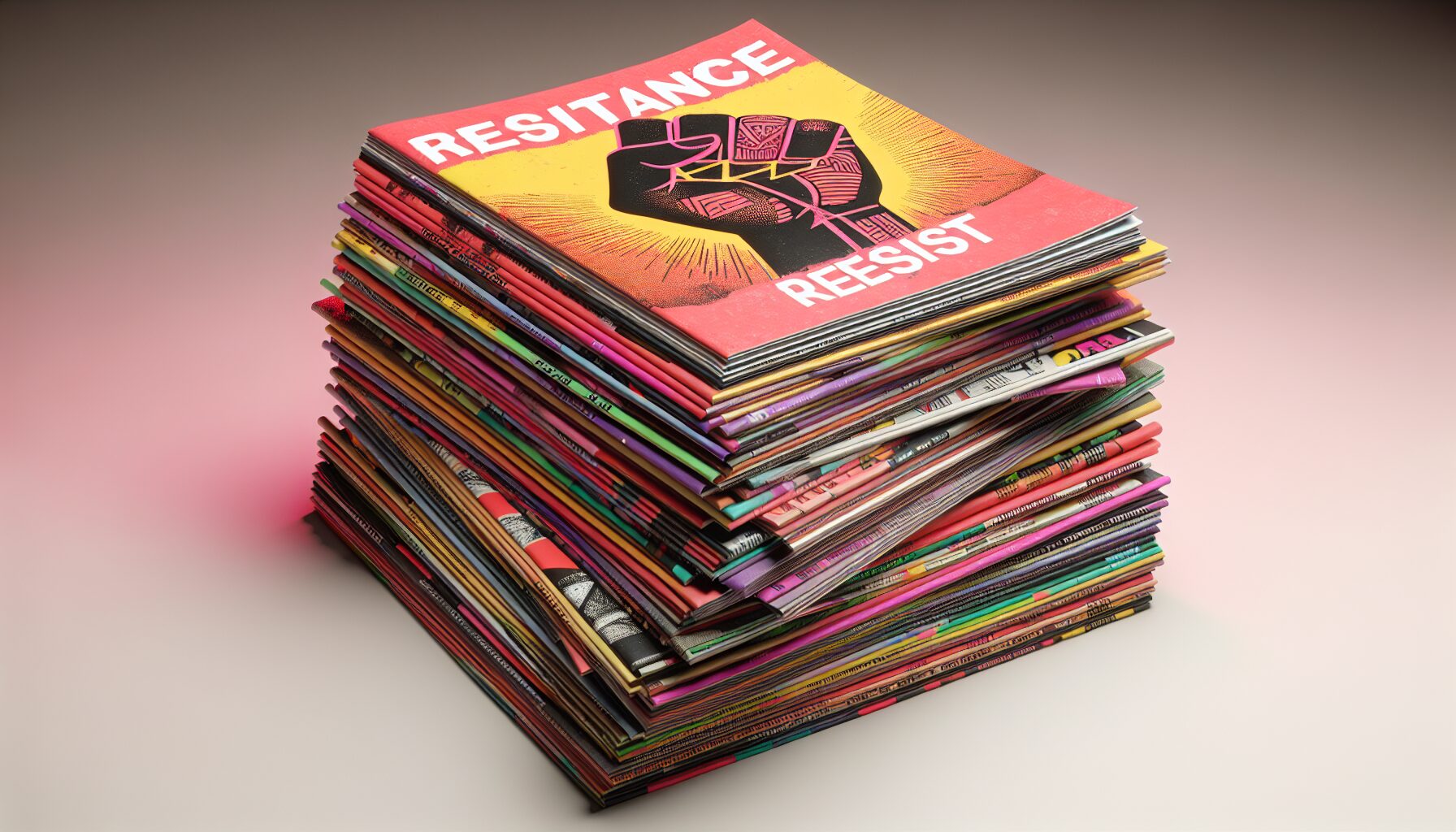
In the ever-evolving landscape of artistic and political expression, zines have emerged as a powerful medium for those who feel marginalized by mainstream media. These small, self-published booklets have become the vehicle for counterculture, an underground press for those whose voices resonate with the spirit of resistance. In an era where digital communication transcends borders, zines hold a unique niche, emphasizing the tangible, the personal, and the authentic.
The Origin and Evolution of Zines
The history of zines is as diverse as the content they cover. Initially blossoming in the mid-20th century alongside the science fiction fanzines, this medium has since been embraced by punk rock enthusiasts, feminists, and other subcultures as a means to disseminate ideas outside the purview of corporate publishing houses.
“Zines are, by definition, small print run, self-published magazines. There’s a long history of folks printing little publications themselves on a variety of topics that the traditional press might not care about too much,” explains Artsy’s Kate Abbey-Lambertz.
Medium of Protest
Throughout history, zines have served as an essential platform for dissent and activism. During the 1970s and 80s, punk zines emerged as crucial voices in criticizing commodified music scenes and promoting DIY ethics. Bands and fans alike utilized zines to distribute music, ideas, and political rhetoric, focusing on authenticity and grassroots participation.
One seminal example is Sniffin’ Glue, a punk zine created by British fanzine writer Mark Perry in 1976. Providing a raucous voice outside the mainstream media, Sniffin’ Glue captured the raw spirit of the punk movement and inspired countless others to pick up pens and staplers, reflecting the zine’s tagline: “Can’t play? Doesn’t matter. Don’t think you can write? Who cares?”
Feminist Manifestos
The Riot Grrrl movement, which surfaced in the early 1990s, exemplifies the symbiotic relationship between zines and feminist activism. Fueled by a desire to address gender injustices, bands like Bikini Kill and others used zines to challenge the patriarchal structures inherent in music and society.
“Riot Grrrl isn’t just a girl band thing, it’s also about creating a great community of friends and allies who can inspire and support each other,” Kathleen Hanna noted in an interview.
These zines were not merely publications but transformative spaces for marginalized voices to explore intersections of gender, race, and sexuality. Bikini Kill zines provided a blueprint for a feminist revolution, leveraging its manifesto to engage readers critically and personally.
Contemporary Zine Culture
Today, zine culture continues to thrive, expanding its focus to encompass a wider array of social and cultural critiques. Zine fairs and independent bookstores serve as hubs for community engagement, allowing creators to connect directly with their audiences, free from commercial constraints.
According to The New York Times, “the intimacy and idiosyncrasy of zines is what’s made them appealing to generations of outsiders. They offer a direct, uncensored form of communication that invites readers into a more private world.”
- Visibility and Representation: Zines play a crucial role in amplifying voices of LGBTQIA+ communities, racial minorities, and nonconformist subcultures.
- Environmental Concerns: Inspired by sustainability, some zine creators adopt greener practices, often favoring recyclable materials and local distribution.
- Cross-media Engagement: Hybrid formats blending illustration, poetry, and narrative continue to evolve, reflecting a dynamic artistic landscape.
The Future of Zines
As digital accessibility broadens, the tactile nature of zines continues to offer a refreshing contrast, a rebellion against algorithms and the gloss of digital polish. The DIY ethic of zine-making fosters empowerment through creation, and the future of zines will likely see even more diverse voices enter this vibrant world of resistance.
In a world where commercial media can sometimes feel impersonal or homogenized, zines stand as a testament to self-expression and resilience. They invite creators and readers alike to envision new futures, challenge societal norms, and galvanize change, one stapled manifesto at a time.
Leave a Reply
You must be logged in to post a comment.