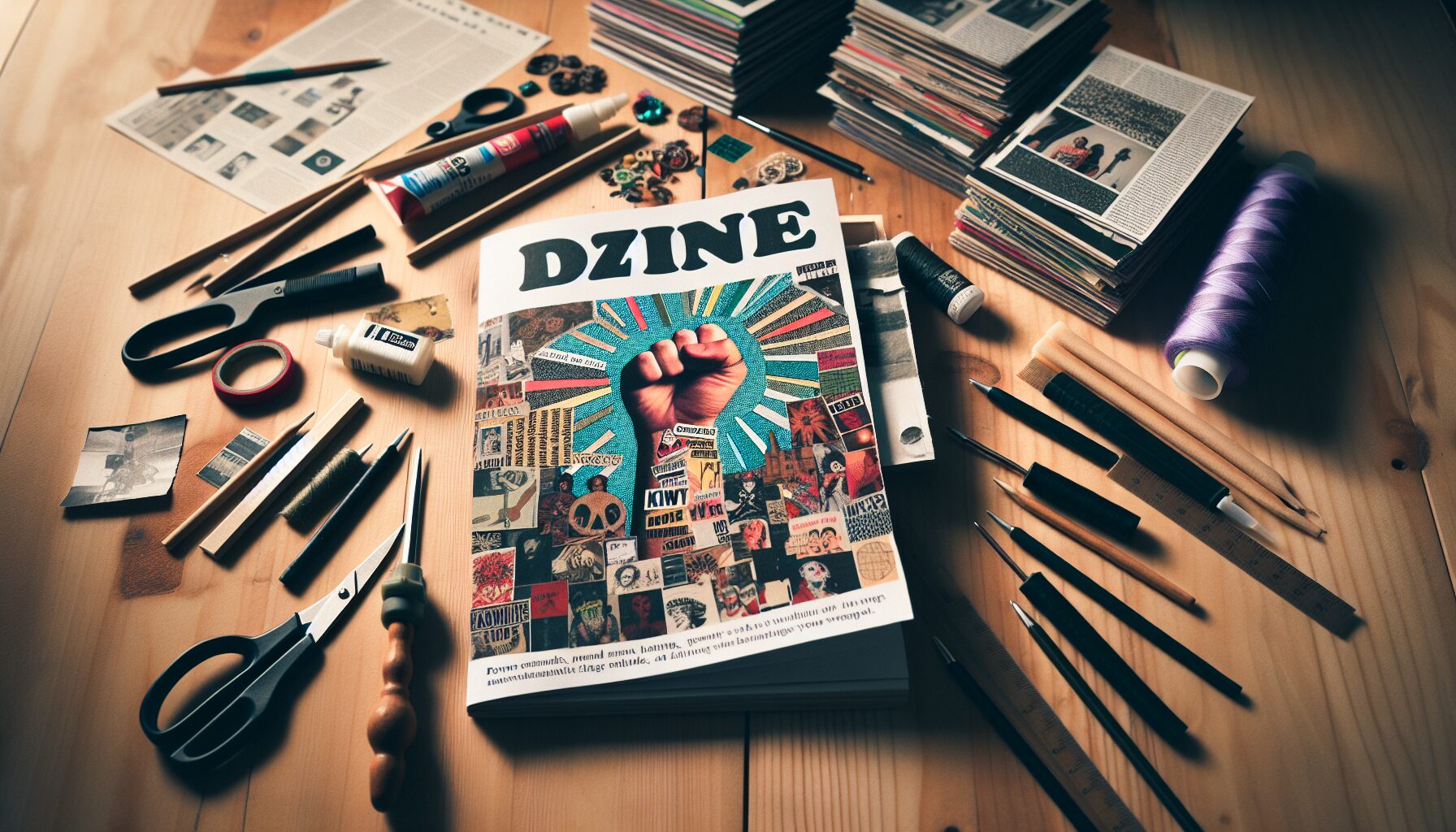
Zines as Cultural Weapons: DIY Publishing for Change
In an era dominated by digital media, where information flows seamlessly across screens, the printed zine emerges as a surprising yet potent tool for cultural change and social activism. Defined by their do-it-yourself ethic, zines have carved a niche in the world of publishing by offering a platform for voices otherwise marginalized by mainstream media.
The Birth and Evolution of Zines
Zines can trace their roots back to the early 20th century, gaining momentum in the 1930s as part of the science fiction fandom movement. However, their current incarnation really took shape with the punk rock movement of the 1970s. These publications became synonymous with DIY culture, characterized by their low-budget, often handmade aesthetic.
“Punk was just about being free. It was about doing things on your terms, and that included creating media that fit your reality, not what sold in stores,” recalls John Holmstrom, the founder of the legendary punk zine Punk Magazine.
This ethos remains at the heart of zine-making today. Despite the technological shifts, zines continue to thrive as paper booklets, exchanged by hand, mailed between comrades, or sold at zine fests, bleeding an authenticity that digital cannot replicate.
Zines as Vessels of Countercultural Expression
The charm of zines lies in their role as vessels of countercultural expression. In a landscape where mainstream publishing often prioritizes profit over content and gloss over grit, zines offer raw, unfiltered access to grassroots ideas and movements. They serve as platforms for LGBTQ+ communities, marginalized voices, and political radicals, allowing them to document lives, experiences, and views that don’t make it into widely available texts.
- Feminist Zines: Prominent through the riot grrrl movement of the 1990s, feminist zines tackled issues of gender inequality, offering a new space for women to express anger, joy, and solidarity.
- Queer Zines: Zines like J.D.s and Outpunk chronicled queer culture during times when mainstream acceptance was limited.
- Political Zines: Publications like D.B. Cooper and Slingshot offer critical insights into anarchistic and environmental movements, questioning mainstream political narratives.
A Tool for Personal and Social Change
Zines are not merely about documentation; they are active tools for personal and social transformation. According to Bitch Media, “Zines don’t have to be crafted by polished authors; they are often raw and intentionally amateur, because their message is tied to their method.”
For those who feel invisible or unheard, zines represent a way to claim space and voice. The act of creating and distributing a zine is its own form of activism—a declaration of presence and resistance. “By sharing zines, creators form communities of support and change, fostering dialogue and, more importantly, action,” notes zine historian Stephen Duncombe in Notes from Underground: Zines and the Politics of Alternative Culture.
The Role of Zine Fests and Digital Platforms
Zine fests have become vital nodes in the zine community’s network. These gatherings allow creators to showcase their work, exchange ideas, and forge connections. Popular events, such as the DC Zinefest or the Portland Zine Symposium, underscore the communal aspect inherent in zine culture.
Interestingly, while many zine creators remain rooted in print, digital platforms have begun to complement their distribution strategies. Websites like Issuu or Etsy offer zine creators low-cost, expansive distribution, letting them reach global audiences while preserving the personal touch that defines zine culture.
Practical Steps in DIY Zine Creation
Creating a zine can be both empowering and accessible. Here are some basic steps to get you started:
- Identify Your Message: Know what you want to say and who you want to reach. Whether it’s art, poetry, commentary, or mixed media, the message is the core of your zine.
- Choose a Format: Decide on the size and layout. Typical formats include half-fold or mini-zines, but creativity has no bounds.
- Design and Assemble: Whether you hand-draw, collage, or use computer software, the visual and textual elements should serve your message.
- Reproduction: Photocopiers are the traditional choice due to their low cost. Kirin Rai, a zine creator, advises, “Always test for contrast—what looks good on screen might not pop on paper.”
- Distribution: Hand out your zines, leave them in public spaces, share them at zine fests, or distribute them online via platforms that cater to DIY publishing.
The Future of Zines
As the world navigates questions of information ownership, censorship, and media trustworthiness, zines will undoubtedly continue to play a critical role. They are not bound by algorithmic controls or corporate overseers, allowing them to grow organically and adapt to societal needs.
For those who champion diversity, activism, and the power of individual voices, zines are more than just a medium—they’re a movement. A movement that reminds us of the vitality inherent in human expression, echoing the sentiment that every voice matters and every story deserves to be told.
In conclusion, zines remain an enduring bastion of independent thought, community connection, and creative expression. They are the cultural weapons of our time, wielded freely by those daring enough to imagine a world different from the one we inhabit, proving that even the simplest of tools can forge the most profound change.
Leave a Reply
You must be logged in to post a comment.