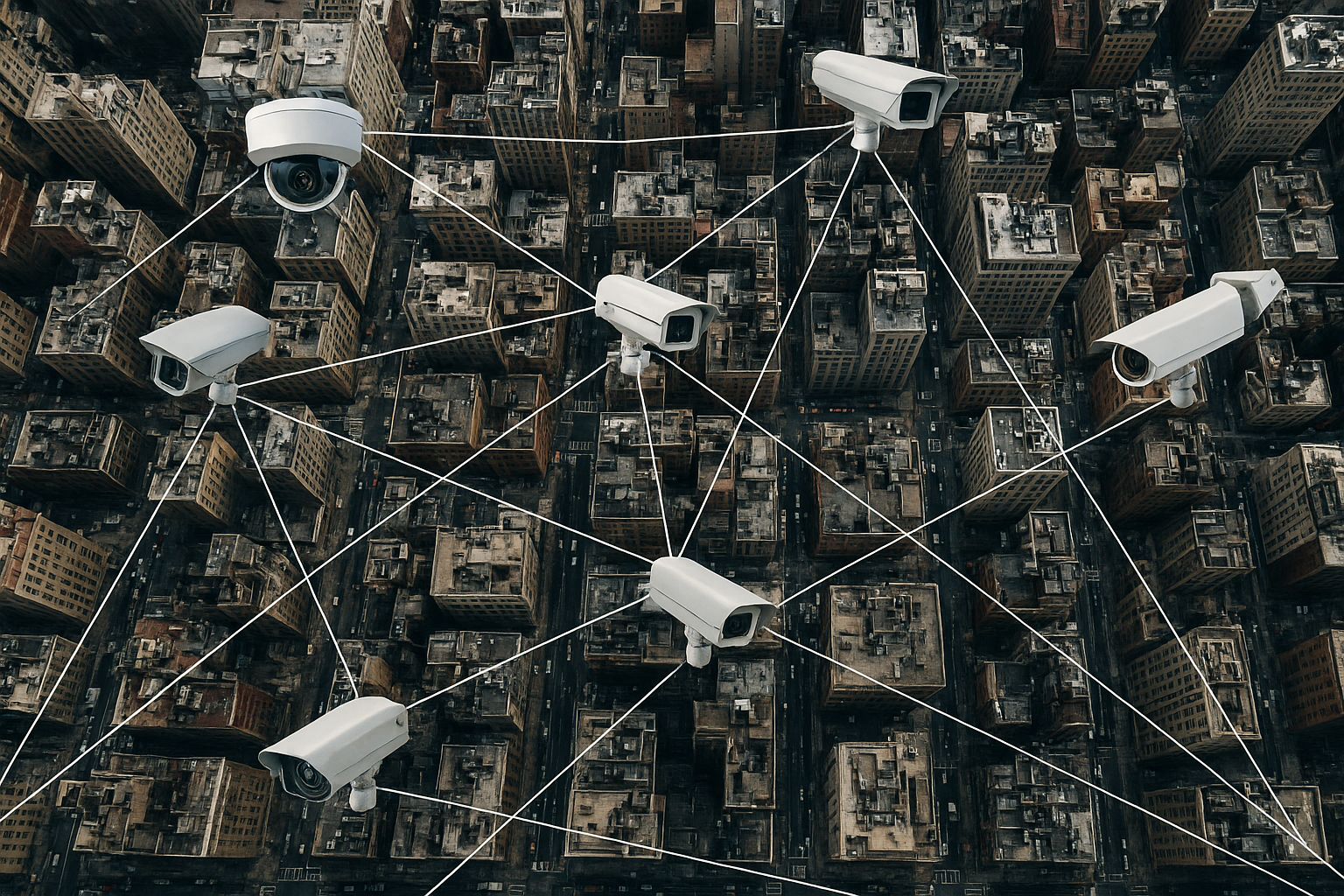
Surveillance Mapping: How to Read a City’s Sensor Topology
In the modern age, cities around the globe are continuously evolving due to the integration of smart technologies. Amongst these technologies, surveillance systems play a pivotal role. Understanding a city’s sensor topology—its web of surveillance—can seem daunting. However, by examining the underlying principles, one can gain a clearer picture of how urban surveillance networks function and how they affect day-to-day life.
The Anatomy of Urban Surveillance
Surveillance systems within a city comprise a myriad of sensors and devices, including CCTV cameras, traffic sensors, and environmental monitoring devices. These are strategically placed to enhance security, manage traffic, and monitor environmental conditions. However, they also raise critical questions about privacy and data use.
“Smart cities rely on the Internet of Things for everything from tracking pollution to identifying when public trash bins need to be emptied.” – Wired
To demystify these systems, it is essential to understand the concept of a sensor topology. This term refers to the network layout of these devices, how they are interconnected, and the breadth of their capabilities in data collection and communication.
Understanding Sensor Nodes and Hubs
Urban surveillance networks consist of individual sensor nodes that perform specific functions. These nodes collect data, such as imagery or sound, and transmit it to central processing units or hubs. In a typical city topology, these nodes are akin to neurons in the human brain—constantly gathering information about their surroundings.
- Sensor Nodes: These are the points of data collection, capturing real-time information from the urban environment.
- Communication Hubs: These act as the processing centers that analyze and store data collected from sensor nodes.
For instance, congestion sensors at intersections feed traffic flow data to centralized hubs where decisions regarding traffic light adjustments can be made. Similarly, air quality sensors that detect pollution levels contribute to the city’s environmental monitoring systems.
Data Flow and Connectivity
The effectiveness of a city’s sensor topology is measured by its data flow and connectivity. That is, how well these sensors and hubs communicate and how efficiently they can transmit large volumes of data. Seamless data flow ensures that the surveillance system can operate in real-time, providing authorities with the ability to respond swiftly to occurrences across the city.
“The rollout of next-gen networks like 5G is poised to transform urban surveillance by increasing connectivity speeds and lowering latency, thus enabling faster communication between devices.” – The Verge
This transformation leads to a higher degree of connectivity across the urban landscape, closing the gaps between disparate systems and ensuring a comprehensive surveillance grid.
Ethical Implications and Privacy Concerns
While the integration of these systems brings many benefits, it also raises significant privacy issues. As more sensors are deployed, the potential for increased surveillance and data collection grows, posing challenges to civil liberties.
Experts argue for a balance between ensuring public safety and protecting individual privacy. It is crucial that municipalities adopt transparent policies regarding the use and storage of surveillance data.
- Implementing clear data privacy laws that protect citizens’ rights.
- Establishing oversight committees to monitor the deployment and use of surveillance technologies.
- Encouraging public dialogues about the scope and impact of surveillance systems.
The Future of Urban Surveillance
As cities strive to become ‘smarter’, the complexity of sensor topologies will continue to grow. The challenge will be in creating systems that are not only robust and effective but also sensitive to ethical and privacy concerns. Future developments must be guided by regulatory frameworks that ensure both innovation and the protection of public freedoms.
In conclusion, while unraveling the intricacies of a city’s sensor topology may be complex, understanding the theory behind these networks allows us to engage in conversations about their implications on modern life. Surveillance mapping not only enlightens us about technological advancements but also prompts critical reflection on the values we want to uphold in our cities.
Leave a Reply
You must be logged in to post a comment.