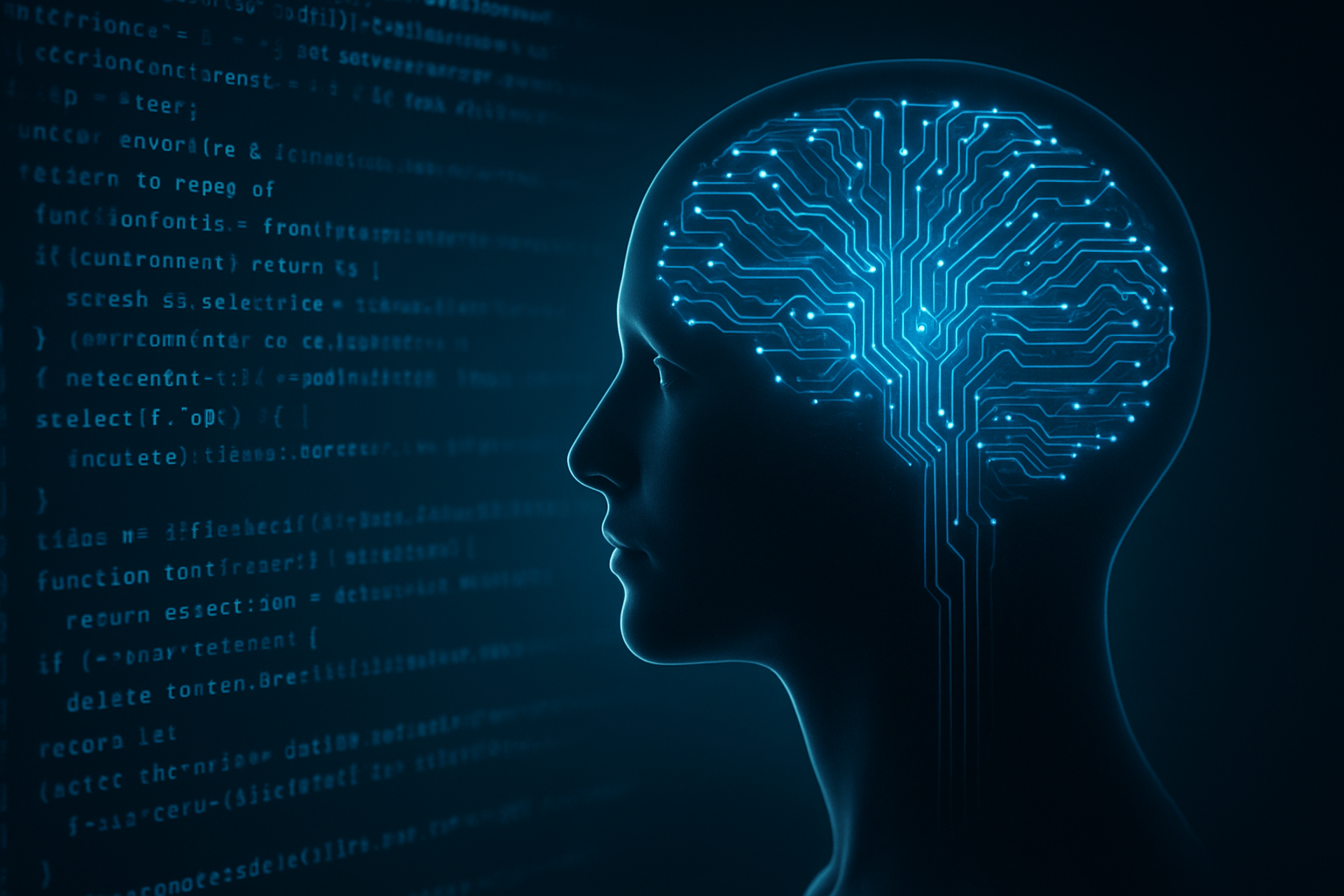
Consciousness has long puzzled philosophers, scientists, and thinkers across disciplines. Increasingly, however, the field of cognitive science is leaning toward a fascinating proposal: consciousness might be understood as code. This perspective suggests that our mental processes, from self-awareness to abstract thinking, can be described as a series of computational operations. But what does this mean for our understanding of the human mind?
The Computational Theory of Mind
The computational theory of mind (CTM) posits that the mind operates in ways analogous to a computer. According to this view, mental states are likened to software programs running on the complex hardware of the brain. Philosopher Jerry Fodor was instrumental in developing this theory, famously stating, “The mind is a computational system” (Fodor, “The Mind Doesn’t Work That Way”, 2000).
- Information Processing: Just as a computer processes information through binary code, human cognition can be broken down into discrete mental operations.
- Algorithmic Analysis: Various mental tasks, from language acquisition to problem-solving, can be decomposed into smaller, manageable algorithms.
Consciousness as a Meta-Program
Building on CTM, some researchers suggest that consciousness is a kind of meta-program that oversees various cognitive processes. Philosopher and cognitive scientist Daniel Dennett argues “Consciousness is a kind of user-illusion” (Dennett, “Consciousness Explained”, 1991), suggesting that what we experience as consciousness is the mind’s way of organizing and optimizing mental operations efficiently.
“The brain doesn’t work in a series of logical steps but rather in a chaotic web of overlapping networks, each doing its own processing.” — Daniel Dennett
The Implications for Artificial Intelligence
If consciousness can indeed be codified, this opens remarkable possibilities for artificial intelligence (AI). By replicating the code underlying consciousness, machines might one day attain a form of sentience. Already, AI systems are capable of learning and adaptation in ways that mimic cognitive processes. The next leap might involve instilling machines with something akin to human-like consciousness.
However, as cognitive scientist Steven Pinker warns, “We don’t fully understand the codes that generate our subjective experience” (Pinker, “How the Mind Works”, 1997), highlighting the monumental challenge that lies ahead.
Conclusion
The idea of consciousness as code invites a radical reevaluation of the mind, one that bridges neuroscience, philosophy, and artificial intelligence. As researchers strive towards a unified theory of mind, they pave the way for advancements that could redefine our place in the cosmos, our understanding of machines, and perhaps, the very essence of what it means to be human.
For further reading, explore the Computational theory of mind and more on Steven Pinker’s insights.
Leave a Reply
You must be logged in to post a comment.