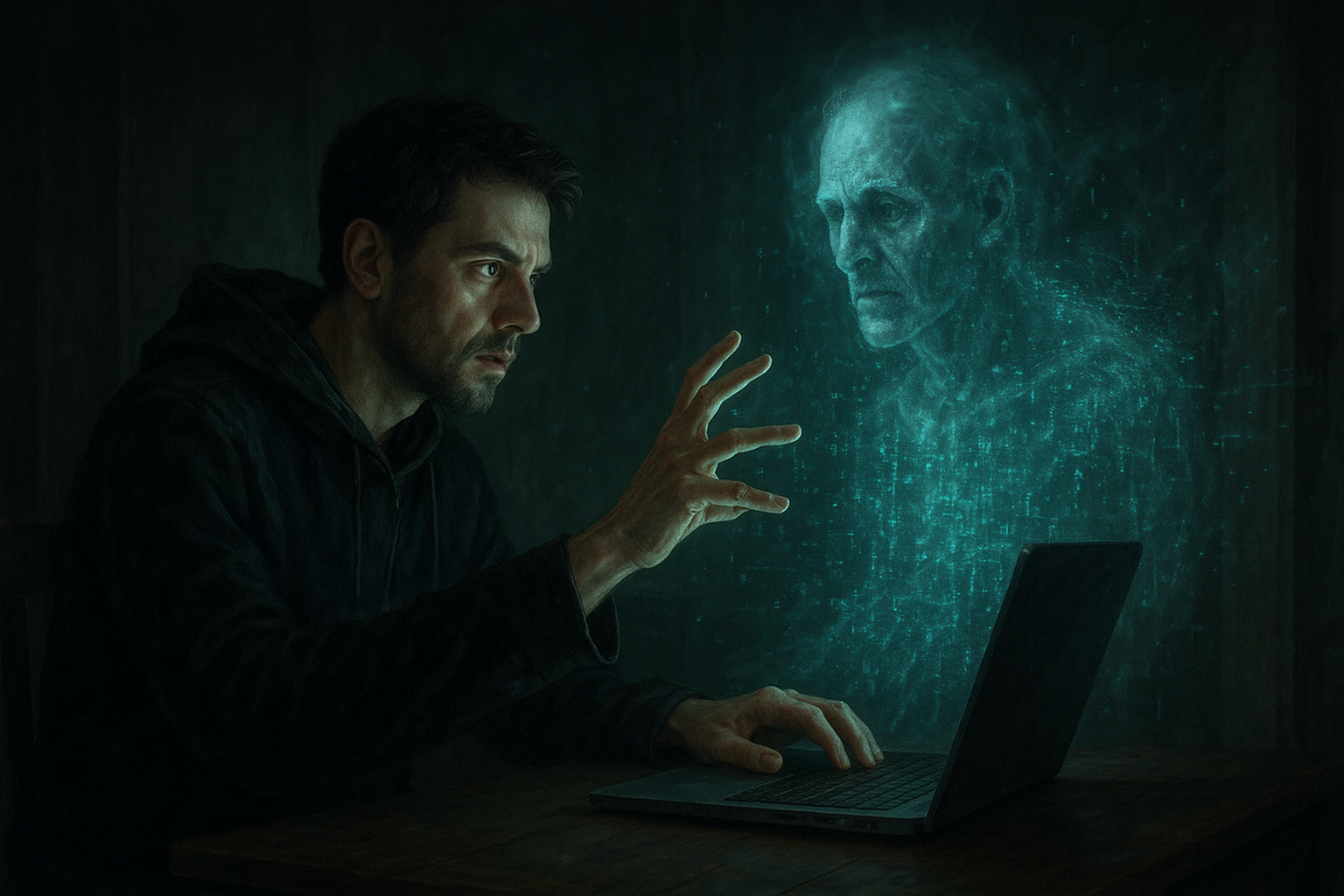
In our rapidly evolving digital age, the concept of death has taken on new dimensions. With the proliferation of data and advanced technology, a novel practice known as data necromancy has emerged, blurring the lines between life and death. It involves reconstructing the essence of individuals who have passed away through their digital footprints—texts, photos, social media activity, emails, and other online artifacts.
The Digital Afterlife
The expansion of our digital lives invites questions about what happens to our data after we die. As more of our existence becomes digital, our personal data essentially turns into digital artifacts that are left behind. These remnants offer a kind of modern immortality, where technology can animate aspects of an individual’s personality beyond physical death.
A 2020 report by the Oxford Internet Institute noted that by 2070, deceased users could outnumber living users on platforms like Facebook. This prospect raises fascinating implications for how the dead might continue to “exist” in the digital realm, offering both challenges and opportunities for human interaction with the deceased.
Technological Tools for Data Necromancy
- Holograms: One of the most publicized uses of data necromancy came with the recreation of deceased celebrities. Using photorealistic holograms, companies have brought back stars such as Tupac Shakur at the Coachella Valley Music and Arts Festival in 2012. Such demonstrations exhibit the power—and eerie uncanniness—of ‘resurrecting’ those who have passed.
- Chatbots: Technologies like chatbots can simulate conversations with the deceased using AI. Inspired by real interactions, these bots learn from archived chat logs and are designed to mimic speech patterns of the departed. Microsoft filed a patent in 2021 for technology that could digitally reincarnate loved ones, signaling a new frontier in personalized AI.
- Deepfake Technology: Deepfakes use artificial intelligence to produce highly realistic simulations of individuals. While controversial for its potential misuse, deepfake technology can be harnessed to create dynamic, lifelike representations of those who have died, enabling a type of visual and interactive memorialization.
Philosophical and Ethical Implications
Data necromancy raises profound philosophical and ethical questions. The practice challenges traditional notions of life and death, privacy, and consent. For instance, do the digital remains of a person equate to their memory or consciousness? Or do we risk reducing individuals to data points, stripped of their humanity?
“The dead, it seems, are demanding attention in new and sometimes uncomfortable ways,” says sociologist Tony Walter who studies thanatology—the study of death and the practices associated with it. The ability to ‘resurrect’ the dead digitally calls for a reexamination of how we define and relate to death itself.
Ethically, the consent of the deceased, or lack thereof, becomes a significant issue. Most individuals do not outline digital inheritance or specify how they wish their data to be used post-mortem. Laws and social norms are struggling to keep pace with technological capabilities, leaving a patchwork of policies and moral questions.
The Emotional Impact on the Living
There is a distinct emotional layer to data necromancy. For those who are grieving, the idea that they might communicate with deceased loved ones can either offer comfort or complicate the grieving process.
Dr. Elaine Kasket, a psychologist and author of All the Ghosts in the Machine, explores how digital afterlives might offer solace to some while hindering the acceptance of death for others. “A digital presence can provide an opportunity to extend connections or even find new kinds of peace,” says Kasket. However, experts warn that this can also lead to prolonged attachment situations, where individuals struggle to move through grief stages naturally.
The Cultural Landscape
Diverse cultures view death and remembrance in varying lights, and technology adds a new dimension to these perspectives. In cultures with strong beliefs in spirits and ancestors—their ongoing influence and presence—data necromancy could seamlessly align with existing traditions.
In other societies, the notion of engaging with digitally revived deceased persons might conflict with religious doctrines or spiritual beliefs that emphasize finality in death. Thus, the acceptance of data necromancy can vary dramatically across different cultural landscapes.
Future Directions and Considerations
As technology continues to advance, data necromancy will likely evolve, garnering more refined applications and potentially more acceptance. Yet, as with any new frontier, it calls for deliberate reflection. Society must ascertain not only the possibilities such technologies provide but also where we should ethically and morally draw the line.
- Policy Development: To manage the impacts of data necromancy, there is a need for clear policy development that respects the wishes of the deceased while protecting the emotional well-being of the living.
- Consent Frameworks: Individuals might soon consider stipulating their preferences for posthumous data use in their wills, much like organ donation registrations.
- Public Discourse: Open dialogue within communities can aid in addressing the societal ramifications of data necromancy, ensuring that it complements human needs and values without impinging on them.
Ultimately, the summoning of the dead through their digital traces is both a testament to technological progress and a profound challenge to our understanding of existence. As these practices weave themselves into the fabric of modern life, societies across the globe must navigate the delicate balance between honoring memories and respecting the sanctity of death.
For further exploration, you can find more insights on this topic from the Oxford Internet Institute’s report at Oxford Internet Institute, and Dr. Elaine Kasket’s book All the Ghosts in the Machine, which is available through major booksellers.
Leave a Reply
You must be logged in to post a comment.