Category: Uncategorized

  • Mosh and Meditate – Hardcore as Mindful Practice

    Mosh and Meditate – Hardcore as Mindful Practice

    Mosh and Meditate: Hardcore as Mindful Practice

    In the dimly lit spaces of compact venues and sprawling music festivals alike, one can find a phenomenon that marries the frenetic energy of hardcore sounds with an unexpected element – mindfulness. The experience of moshing to hardcore punk or metal music may seem worlds apart from the serene practice of meditation, yet many enthusiasts argue that this juxtaposition is nothing short of a mindful practice in its own right.

    The Paradox of Hardcore

    At first glance, the chaotic, high-energy environment of a hardcore punk concert may appear to be the antithesis of tranquility. Mosh pits, characterized by their aggressive dance, give release through flailing limbs and palpable intensity. Yet, for many, this seemingly disorderly display serves as a channel for focused mindfulness.

    “There’s something about the intensity of hardcore that brings you completely into the moment,” says Jamie Cooper, a longtime fan and musician within the hardcore community. “When you’re in a mosh pit, you have to be fully aware of your surroundings, the bodies moving around you, the music – it’s a form of forced mindfulness.”

    The Therapeutic Nature of Hardcore

    Research supports the idea that the act of engaging in music, particularly in a live setting, can produce psychological benefits. According to a study from Frontiers in Psychology, the synchrony experienced in music can lead to social bonding and a decrease in stress levels. Hardcore music, with its visceral beats and communal environment, can function as a therapeutic release.

    Listening to music as intense as hardcore demands a kind of presence. For those in the scene, it’s not merely about the music; it’s about the unspoken rules and community values shared by attendees, such as looking out for one another in the pit and respecting each other’s space.

    Meditative Movement: Mindfulness in Motion

    The concept of mindfulness often revolves around stillness and introspection. However, the kinetic ritual of moshing brings a different angle to the table. Participants frequently describe entering a ‘flow state’, where they are fully immersed without a sense of time.

    • Presence: The physicality of moshing eliminates external distractions, engaging participants wholly.
    • Connection: The shared experience strengthens community bonds, fostering inclusivity.
    • Release: Emotional catharsis is achieved through physical exertion and the music’s raw energy.

    “It’s a way to get out of your head and just be,” says Melissa Tran, a mindfulness advocate who incorporates music into her practice. “It might not be traditional, but who’s to say what meditation really looks like for everyone?”

    Aligning Hardcore and Mindfulness

    More than just a musical genre, hardcore becomes a lifestyle that allows practitioners to engage in an active form of meditation. The community emphasizes authenticity, self-expression, and resilience, mirroring principles found in traditional mindfulness teachings.

    The lyrics in many hardcore songs address topics such as personal struggle, societal issues, and overcoming adversity, echoing reflections often explored during meditation. When channeled through the raw ferocity of hardcore music, these themes can become profoundly introspective and transformative.

    The Future of Hardcore as Mindfulness

    As the idea of mindfulness continues to expand into broader aspects of life, the crossover between hardcore music and meditation shows promise as an avenue for individuals seeking alternative methods of connecting with the present moment. Many predict that this integration will continue to evolve as younger generations redefine what mindfulness and self-care can encompass.

    Ultimately, the melding of moshing and meditation challenges conventional perceptions and invites open-minded exploration. As this movement grows, enthusiasts welcome newcomers to experience the harmony within the havoc and discover their own paths to mindfulness through the powerful medium of hardcore music.

    For more insights on the fusion of music and mindful practices, consider reading resources such as Mindful.org or Psychology Today.

  • Anti-Surveillance Manifesto – Digital Freedom for Subcultures

    Anti-Surveillance Manifesto – Digital Freedom for Subcultures

    Anti-Surveillance Manifesto: Digital Freedom for Subcultures

    In the age of pervasive surveillance, digital freedom has become an essential aspect of self-expression, particularly for subcultures that often exist on the fringes of mainstream society. These communities, whether they are cyberpunks, goths, or cosplayers, rely on the internet and digital platforms to connect, communicate, and cultivate their identities, often away from prying eyes.

    The Surveillance State: A Threat to Expression

    The surveillance apparatus, encompassing everything from government agencies to corporate data mining, poses a significant threat to the anonymity and privacy that subcultures hold dear. In a world where “Big Brother is watching,” as famously noted by George Orwell in 1984, the freedom to explore and expand one’s identity can be stifled by the fear of judgment or reprisal.

    “In a time of universal deceit, telling the truth is a revolutionary act.” – George Orwell

    Many members of subcultures engage in activities that can be easily misunderstood or misrepresented by those outside their communities. As such, the constant gaze of cameras and the monitoring of online actions can deter individuals from fully expressing themselves, pushing them back into societal conformity.

    The Fight for Digital Autonomy

    In response to these threats, a growing movement is advocating for digital autonomy and resistance against surveillance. This movement is grounded in the belief that individuals should not have to choose between expressing their unique identities and maintaining their privacy.

    Tools for Protection

    Several strategies and tools are emerging to help protect the digital freedom of subcultures:

    • Encryption: Utilizing end-to-end encryption in messaging services to ensure private communication.
    • Decentralization: Embracing decentralized platforms that are less susceptible to centralized control and data mining.
    • Education: Encouraging digital literacy to inform communities about the risks of surveillance and the measures they can take.
    • Anonymity: Using tools like virtual private networks (VPNs) to anonymize their online presence.

    Conclusion

    As the battle for digital freedom continues, it is crucial for subcultures to assert their rights to privacy and free expression. Organizations like the Electronic Frontier Foundation advocate for these rights, emphasizing the importance of protecting individual freedoms in an increasingly monitored world.

    Ultimately, maintaining digital freedom is essential not just for subcultures, but for society as a whole. In protecting these freedoms, we safeguard the diversity and creativity that drive innovation and cultural evolution.

  • Green Underground Ethics – Eco-Radical Tactics in Action

    Green Underground Ethics – Eco-Radical Tactics in Action

    As environmental crises mount and climate change rhetoric turns into urgent calls for action, some groups are taking radical stances to push environmental protection to the forefront. These eco-radicals, often operating under the radar, are challenging traditional approaches with tactics that many consider controversial but necessary.

    The Emergence of Eco-Radicalism

    The emergence of eco-radicalism can be traced back to the frustration over slow governmental responses to environmental degradation. Groups like Earth First! and Extinction Rebellion argue that extreme measures are essential in ensuring environmental preservation. Their tactics vary from peaceful protests to civil disobedience, aiming to disrupt the status quo and compel immediate policy changes.

    “Non-violent direct action is meant to convey the urgency of the situation. It catalyzes change by demonstrating the power of ordinary people.” – The Conversation

    Strategies and Tactics: A Diverse Arsenal

    • Direct Action: Groups like Greenpeace often engage in direct action, using peaceful physical intervention to interrupt practices harmful to the environment. Ships blocking whaling operations or activists occupying trees slated for logging are prominent examples.
    • Sabotage: Some factions within the eco-radical community take a more destructive approach, targeting infrastructure projects detrimental to ecosystems with sabotage. This controversial method raises ethical questions around property damage and effectiveness.
    • Legal Challenges: Organizations sometimes work within the system, filing lawsuits to halt environmentally harmful projects. This method is less radical but demonstrates a shift toward comprehensive strategies combining legality with activism.

    Ethical Dilemmas and Public Perception

    Eco-radicalism brings significant ethical debates. While these tactics seek to protect the environment, they sow discord regarding legality, consent, and public safety. The question remains whether the potential environmental benefits justify the radical methods employed.

    “There’s an ethical complexity in balancing immediate harm for future benefits. The movement challenges both its supporters and detractors to consider environmental responsibility more seriously.” – BBC News

    Despite divisive opinions, these eco-radical tactics have undeniably sparked greater discussion around climate issues. The urgency these groups communicate is pressing and perhaps necessary in pivoting global attention towards sustainable futures. However, the sustainability of their tactics and the broader acceptance of their actions remain subjects for ongoing debate.

    For more comprehensive insights into the impact of eco-radicalism, you can explore resources from Greenpeace and various Extinction Rebellion networks.

  • Radical Sonic Rituals – Blurring Music and Spirituality

    Radical Sonic Rituals – Blurring Music and Spirituality

    In a world where the lines between different forms of expression are increasingly blurred, the fusion of music and spirituality stands out as both a complex and transformative phenomenon. Radical sonic rituals—an avant-garde movement focusing on the incorporation of sound and music into spiritual practices—are leading the charge in blurring these boundaries.

    Rooted in ancient traditions yet infused with contemporary innovation, radical sonic rituals use sound as a form of deep, spiritual exploration. From the resonant hum of Tibetan singing bowls to the throbbing beats of electronic meditative music, these practices transcend mere auditory experience, creating profound connections between individuals and the universe.

    An Age-Old Connection

    Historically, music has always played a crucial role in spiritual ceremonies. From the rhythmic drumming in African tribal rituals to the Gregorian chants of medieval Europe, sound has been a conduit for the divine. As The New York Times highlights, “Sound has the power to move us in ways that are both seen and unseen, tethering us to a universe larger than ourselves.”

    The Modern Take

    Today, artists around the globe are pushing the envelope, integrating modern technology and personal spirituality into their musical pursuits. Noteworthy artists like Jónsi of Sigur Rós and Icelandic musician Björk have often spoken about how music acts as a spiritual compass—a pathway to transcendence. In a recent interview with Rolling Stone, Björk explained, “Music becomes part of my spiritual session; it’s a healing, a purification.”

    Elements of Radical Sonic Rituals

    • Immersive Soundscapes: Utilizing audio technology to craft environments where listeners can lose themselves in sound.
    • Nature Sounds: Incorporating natural elements like flowing water or birdsong to recreate a sense of grounding and presence.
    • Guided Musical Journeys: Often led by a facilitator, these sessions use music as a form of guided meditation.
    • Interactive Participation: Encouraging participants to contribute vocally, breaking down barriers between performer and audience.

    “The merging of music and spirituality is not just for the divine, but for the earthly journey as well,” notes The Guardian. “It allows us to explore the depths of our souls, using sound as both guide and teacher.”

    In an era where the material and spiritual often find themselves at odds, radical sonic rituals offer a harmonious blend. They are an invitation to engage with sound on a deeper level, to explore the spiritual realm not in isolation, but as a shared, sonic journey.

  • Zine Tactics – Guerrilla Publishing for Change

    Zine Tactics – Guerrilla Publishing for Change

    Zine Tactics – Guerrilla Publishing for Change

    Zine Tactics – Guerrilla Publishing for Change

    The world of zines represents the raw, unfiltered spirit of independent publishing. These small-circulation, self-published works of original or appropriated texts and images have served as powerful vessels for social change and personal expression since the mid-20th century. Emerging from the fringes of society, zines play a critical role in empowering voices often neglected by mainstream media.

    The evolution of zines as a tool for cultural and political expression can be traced back to movements like the punk subculture of the 1970s. According to Stephen Duncombe in his book “Notes from Underground”, zines became “the Xeroxed shriek against cultural norms,” providing a platform for those who felt alienated by the predominant media narratives.

    What Are Zines?

    Zines (pronounced “zeens”) derive their name from fanzines, which were often dedicated to hobbies, weird tales, and science fiction in the mid-20th century. Today, they encompass a broad spectrum of themes, and their formats vary widely:

    • Perzines: Personal zines that delve into the personal lives, thoughts, and experiences of the creator.
    • Art zines: Focused on visual art, showcasing the creator’s drawings, photography, or graphic design.
    • Political zines: Offering commentary and critique on political issues, often with a clear activist intent.
    • Comic zines: Featuring original stories in comic book form.

    The Art of Guerrilla Publishing

    Guerrilla publishing through zines embodies a “do-it-yourself” (DIY) ethos. This autonomous process can be as simple as typing, illustrating, photocopying, and stapling booklets together.

    “Zines allow people to create without the approval of an industry, and that is an incredibly powerful posture from which to begin communicating,” says Anne Elizabeth Moore, author and zine creator.

    Key elements of guerrilla publishing include:

    • Low Cost Production: The affordability of materials like photocopying or digital printing allows creators to produce zines with limited financial resources.
    • Accessibility: Unlike mainstream publishing, zines are not bound by market demands, allowing for a diverse array of voices and topics.
    • Distribution Networks: Often exchanged in person, sold at zine fests, or distributed through independent bookstores, these networks resist traditional sales channels.

    Zines as Catalysts for Change

    Zines have been instrumental in promoting social movements and building communities. From the feminist zines of the Riot Grrrl movement to the environmental activism promoted through eco-zines, these publications have galvanized grassroots activism worldwide.

    Sarah Dyer, a zine creator from the ’90s opined, “There’s this misconception that zines should only be about punk rock or grunge, but they have been such a diverse and thriving medium through which people talk about far more.”

    The Future of Zines

    Despite advances in digital technology and social media, the physical presence and tangible nature of zines continue to resonate with creators and audiences alike. The zine culture persists as a vibrant form of art and communication that challenges the status quo.

    The rise of digital rizograph printing, along with online platforms that foster zine communities, has extended the reach of these publications while preserving their independent ethos. The intimate, personalized touch of a zine remains unparalleled in an increasingly digital world.

    Finally, an argument can be made that zines, much like their digital counterparts—blogs and social media—offer a glimpse into the unfiltered perspectives usually absent from mainstream discourse. They emphasize the significant impact a small, passionate group can have in instigating change.

    Conclusion

    In a time where voices are frequently drowned out in the cacophony of digital noise, zines stand as a lasting symbol of resistance and expression. They serve as reminders that impactful ideas can grow from the grassroots, demanding change while fostering a shared sense of purpose. As new zine makers continue to push the boundaries of this distinctive medium, zines will undoubtedly remain a formidable tool for guerrilla publishing and advocacy.

  • The Underground Almanac – Mapping Subcultural Knowledge

    The Underground Almanac – Mapping Subcultural Knowledge

    In a world increasingly dominated by mainstream culture, the allure of the unconventional persists. Beneath the surface of popular media lies a vibrant tapestry of subcultures, each enriched by its distinct philosophies, customs, and aesthetics. This intricate web of alternative communities forms what can be termed the “Underground Almanac,” a metaphorical map charting the knowledge and trends of the world’s less-traveled roads.

    “The innovation that comes from these communities often influences mainstream culture, yet they remain an underexplored domain for many,” says David K. Smith, a cultural anthropologist at the University of California.

    Understanding Subcultures

    Subcultures are social, cultural, or political groups that develop in opposition to or apart from mainstream culture. Often characterized by unique styles, beliefs, and music, these groups foster a sense of identity and belonging for their members. Examples include:

    • Punks – Known for their distinct fashion and music that challenges the status quo, punk rock has left a lasting impact on fashion and music worldwide.
    • Goths – With their love for the macabre, goths have cultivated an aesthetic revolving around dark clothing, dramatic makeup, and a passion for the mysterious.
    • Cyberpunks – Futuristic and technology-driven, cyberpunks envision a world where technology overwhelms humanity’s sensibilities, often expressed through literature and visual art.

    The Importance of Mapping Subcultural Knowledge

    The Underground Almanac isn’t a tangible publication but a conceptual space where subcultures retain their histories and innovations. Documenting these spaces can provide valuable insights into how alternative societies operate and influence the broader world.

    According to The Guardian, “recognizing these groups allows for an appreciation of diversity and the ways in which different communities contribute to the global cultural landscape.” Tracing the evolution of subcultures uncovers patterns of resilience, adaptation, and influence.

    The Digital Age and Subcultural Expansion

    The digital era has exponentially increased the visibility and interconnectedness of subcultures. Social media platforms, forums, and websites enable communities to share ideas, art, and events easily, transcending geographical constraints.

    “The internet democratizes access to information and allows marginalized voices to flourish and gather momentum,” states Angela Chen, a technology and culture writer for Wired.

    However, the internet also poses challenges. The risk of dilution, where subcultures become mainstream and lose their authentic appeal, is ever-present. What once served as an emblem of identity can become commercialized, stripping away its original meaning.

    Preservation vs. Evolution

    As subcultures grow and evolve, they constantly teeter between preservation and mainstream assimilation. Many seek to retain their core tenets while adapting to new societal norms and technological advancements.

    Historical preservation is crucial for safeguarding the essence of these communities. Resources such as zines, documentaries, and digital archives serve as repositories for future generations, ensuring that subcultural history remains accessible. Meanwhile, evolution is indicative of a subculture’s vitality and adaptability, signaling its relevance in contemporary society.

    Challenges Faced by the Underground Almanac

    Maintaining a balance between preservation and evolution is a delicate task. In an age where everything trends and fades quickly, subcultures must decide how much of their identity to share. They face potential dilution if they lean too strongly into the mainstream, while over-protectionism may lead to stagnation.

    Then there is the matter of authenticity. As Tatashi Kimura, a sociology professor at the University of Tokyo, notes, “Subcultural authenticity can be difficult to define and maintain, especially in a globalized context where trends spread rapidly and are constantly reinterpreted.”

    Conclusion: The Future of the Underground Almanac

    The journey of exploring and documenting subcultures is ongoing, with the Underground Almanac serving as an ever-expanding guide. As subcultures push back against mainstream norms and propose alternative ways of living and thinking, they provide critical reflections on society at large.

    Understanding, respecting, and documenting these movements is imperative in recognizing the full scope of human creativity and the myriad ways it expresses dissent, identity, and community. By nurturing the Underground Almanac, we celebrate the beauty of difference and the perpetual innovation that springs from the margins of society.

  • DIY Frequency – Building Resistance Through Sound

    DIY Frequency – Building Resistance Through Sound

    DIY Frequency: Building Resistance Through Sound

    In an era where mass protests and social movements are becoming more prevalent, unconventional methods of resistance are also gaining popularity. One such method is the use of sound, a powerful and often overlooked tool, in the fight for social justice. DIY frequency and sound wave technology are gaining traction as accessible means for activists to organize, resist, and communicate under oppressive regimes.

    The Power of Sound

    Sound, at its very essence, can be a method of communication, a tool for organization, and a means of protest. According to Nicole Laskowski in TechTarget, “Sound doesn’t just travel. It resonates. It makes people feel. The vibration of sound can affect mood, energy levels, and, as a result, behavior.” This inherent quality of sound makes it uniquely suited to mobilize and unite people in times of distress.

    Historical Precedents

    The utilization of sound in protest has deep historical roots. Consider the singing revolution in Estonia, Latvia, and Lithuania during their push for independence from the Soviet Union. The mass gatherings where tens of thousands sang forbidden patriotic songs became symbolic of nonviolent resistance. The simple yet powerful act of singing solidified a national identity and galvanized movements towards freedom.

    “When people sing together, resistance is built into the melody and harmony,” noted John Mullen, a professor of cultural studies.

    DIY Sound Tools

    • Portable Speakers: Activists use mobile phones combined with portable speakers to spread messages quickly and efficiently. Speakers can amplify messages over a wide area, ensuring that voices of protest are heard even amidst chaos.
    • Binaural Beats: A modern development in sound protest is the use of binaural beats – audio tracks that can induce a meditative or hypnotic state, potentially calming large groups or making them more receptive to a particular message.
    • Radio Transmission: Shortwave and pirate radio have historically been effective in transmitting messages across borders, circumventing official channels controlled by authoritarian regimes.
    • Sound Bombs: Similarly, tactical use of sound has been recommended for temporary distraction or disbursement of crowds. High-decibel sound devices can temporarily incapacitate enforcement lines, giving protestors time to regroup or escape.

    Building Resistance Through Technology

    Technological advancements have made it easier to harness sound for activism. DIY sound frequency equipment can be built with minimal resources. With just a smartphone, some accessible apps, and basic technical knowledge, individuals can design sound experiments to influence or accompany protest activities.

    Sonic Warfare: A modern term coined to describe the strategic use of sound in conflict arenas, sonic warfare encompasses technologies that manage, manipulate, and reproduce sound to affect adversaries’ perceptions and capabilities. This can range from disorienting noises designed to scatter crowds to audio tracks that promote solidarity and focus.

    Creating Your DIY Sound Toolkit

    • Software and Apps: Free software such as Audacity allows activists to manipulate audio files and create impactful audio clips. Other apps like GarageBand or Soundtrap can help construct soundscapes tailored for specific protest actions.
    • Sound Visualizers: Devices that transform sound into visual signals can help in direct demonstration of the power of collective noise. These can be used in educational settings to illustrate the science of sound waves and their social applications.
    • Online Resources: Numerous online communities provide free resources and tutorials on building your own sound devices, from basic amplifiers to more complex synthesizers.

    The Ethical Implications

    While the deployment of sound in activism holds promise, it also necessitates ethical scrutiny. High-decibel sound can cause unintended harm, and technology should always be used responsibly. In 2020, during Black Lives Matter protests, the use of LRADs (Long-Range Acoustic Devices) led to significant public debate over their potential for harm. The Wikipedia page on Long Range Acoustic Device provides more background on its controversial uses.

    “Technology itself is neutral,” argues Sherry Turkle, a professor at MIT. “It’s how we use, implement, and critically assess its impact that determines whether it serves a good or malicious purpose.”

    Sound and Future Activism

    As technology continues to evolve, so too will the methods of resistance it engenders. The integration of sound into future protest strategies holds untapped potential, affording creativity and adaptability in the face of changing socio-political landscapes. By understanding and utilizing the power of sound, activists can continue to craft innovative methods of peaceful confrontation and civil disobedience.

    Conclusion

    The intersection of sound, technology, and activism presents a multifaceted avenue for resistance. From its historical roots to modern-day innovations, the conscious manipulation of sound remains a potent and evocative tool in the continuous struggle for social change and justice. Through collaborative efforts, the spirit of DIY sound activism persists, echoing the timeless beats of unity, resilience, and rebellion.

  • Noise Pilgrimage – Hardcore Music as Spiritual Journey

    Noise Pilgrimage – Hardcore Music as Spiritual Journey

    Noise Pilgrimage: Hardcore Music as a Spiritual Journey

    For many, music is more than just a sequence of sounds; it is an emotional and spiritual experience. Among the diverse genres of music, hardcore—a subgenre of punk rock known for its intense sound and energy—stands out as a transformative voyage for both artists and listeners. This musical journey is often referred to as a “Noise Pilgrimage.”

    The Roots of Hardcore Music

    The origins of hardcore can be traced back to the late 1970s and early 1980s, evolving as a raw and aggressive response to mainstream culture. Bands like Black Flag, Bad Brains, and Minor Threat were at the forefront, offering an outlet for youthful frustration and a call for societal change. According to Rolling Stone, hardcore punk was “born out of a need for speed, an adrenaline-fueled manifesto expressed as much through sound as through furious physicality.”

    The Sonic Meditation

    Hardcore music is characterized by its relentless beats, driving basslines, and shouted vocals. Yet, beneath this fierce exterior lies a deeper, more introspective experience often compared to meditation. The cacophony becomes a form of catharsis, a meditative practice for both the creator and the listener.

    “When I’m playing, I reach a level of connectedness that feels almost spiritual,”

    Greg Ginn, founder of Black Flag

    For many fans, attending a hardcore show is akin to participating in a congregational ceremony. The shared energy of the crowd, the immersion in sound, and the abandonment of daily cares create a temporary sanctuary, a space where one can seek solace in noise.

    Hardcore Music as a Path to Self-discovery

    The journey through hardcore music often mirrors a spiritual quest. Fans and musicians alike embark on a profound process of self-discovery, questioning societal norms and seeking personal truths. The community built around hardcore is as much about philosophical inquiry as it is about music.

    Ian MacKaye of Minor Threat illustrated this notion, highlighting that “music should challenge the status quo and inspire people to think differently.” Hardcore bands embrace this ethos, providing the soundtrack for a generation of seekers.

    Community and Connection

    Hardcore music fosters a strong sense of community among its followers. The DIY ethic prevalent in the scene encourages everyone to participate, blurring the lines between audience and artist. This inclusivity turns concerts into communal rites and social gatherings into deeper experiences of connection.

    • DIY Ethos: Bands often produce their own records, organize tours, and run independent labels, reinforcing the communal aspect.
    • Zines and Publications: These often serve as the written voice of the community, sharing ideas, music reviews, and personal stories.
    • Grassroots Activism: Many groups within the hardcore scene advocate for social and political issues, using music as a platform for change.

    These elements contribute to a spiritual bond that transcends geographical boundaries, linking like-minded individuals across the globe. As The New York Times once noted, hardcore isn’t just about rebellion; it’s about finding and nurturing a community.

    Transformative Power

    For those who immerse themselves in hardcore, the experience can be profoundly transformative. It has the power to heal, to educate, and to inspire. For many, it serves as a compass, guiding them through the complexities of identity, belief, and purpose in life.

    Reflections of this transformative power can often be found in the lyrics of hardcore bands, touching on themes of existentialism, mental health, and empowerment. This lyrical depth, combined with the visceral energy of the music, creates a unique path for spiritual and personal growth.

    Conclusion

    Ultimately, hardcore music as a “Noise Pilgrimage” serves as more than just an auditory experience. It is an exploration of the self and the world, a journey through sound and fury that leads to inner peace and understanding. Hardcore resonates as a spiritual journey, a dynamic testament to the power of music to alter perception, inspire change, and unite diverse people on a common path.

    As we continue to navigate a complex world, the music’s message remains clear: transformation is possible—through sound, through community, and through shared experiences. Hardcore offers a sanctuary of self-expression and discovery, proving that sometimes, the most profound journeys are indeed the loudest.

  • Surveillance Shadows – Living Outside the Digital Eye

    Surveillance Shadows – Living Outside the Digital Eye

    In an age where the omnipresence of digital surveillance seems unavoidable, a growing number of individuals and communities are actively seeking ways to exist beyond the relentless gaze of the digital eye. From privacy advocates to technology skeptics, the allure of retreating into the “surveillance shadows” holds a potent appeal. But what does it mean to live outside the digital eye, and is it truly achievable?

    The Paradox of Privacy

    The rise of surveillance technologies has reshaped how privacy is conceptualized. Philosopher Michel Foucault, the seminal thinker on surveillance, described the Panopticon as a metaphor for modern societal control structures, where individuals self-regulate under the assumption of constant observation. In his words, “The panopticon must not be understood as a dream building: it is the diagram of a mechanism of power reduced to its ideal form” (Discipline and Punish, 1975).

    Today, the reach of the digital Panopticon extends far beyond Foucault’s imagination, with smartphones, social media platforms, and internet cookies tracking our every move. The paradox is that while technology promises increased security and convenience, it simultaneously erodes the personal agency and privacy that many yearn to reclaim.

    Strategies for Living Outside the Digital Eye

    • Digital Minimalism: One approach is to limit one’s digital footprint by adopting minimal technology usage. As Cal Newport suggests in his book Digital Minimalism, individuals can focus on investing time in activities that align with their values, rather than succumbing to screen-driven distractions.
    • Encryption and Anonymity: Another strategy involves employing tools that prioritize privacy, such as encrypted messaging apps and anonymous browsing networks like Tor. These tools empower users to cloak their online presence, offering a semblance of autonomy in a hyper-connected world.
    • Off-Grid Living: For some, the ultimate escape from the digital eye is to live off-grid, embracing self-sufficiency and disconnecting from digital networks entirely. This radical lifestyle choice involves significant sacrifices and challenges, yet it embodies a profound commitment to autonomy and privacy.

    Is Total Escape Possible?

    While the dream of stepping entirely outside the surveillance shadow is enticing, the total escape from the digital eye remains a formidable challenge. The interconnectedness of modern life means that complete isolation from digital touches can lead to social and economic exclusion. Nevertheless, the pursuit of privacy is not futile; it serves as a vital reminder of our need for boundaries and self-determination in the digital age.

    “The question of what will happen, what you ought to do, comes down to what you believe a human being is.” — Edward Snowden

    The journey toward living outside the digital eye is as much about redefining human agency as it is about privacy. It calls for a nuanced understanding of our relationship with technology and a courageous reimagining of what it means to be truly free.

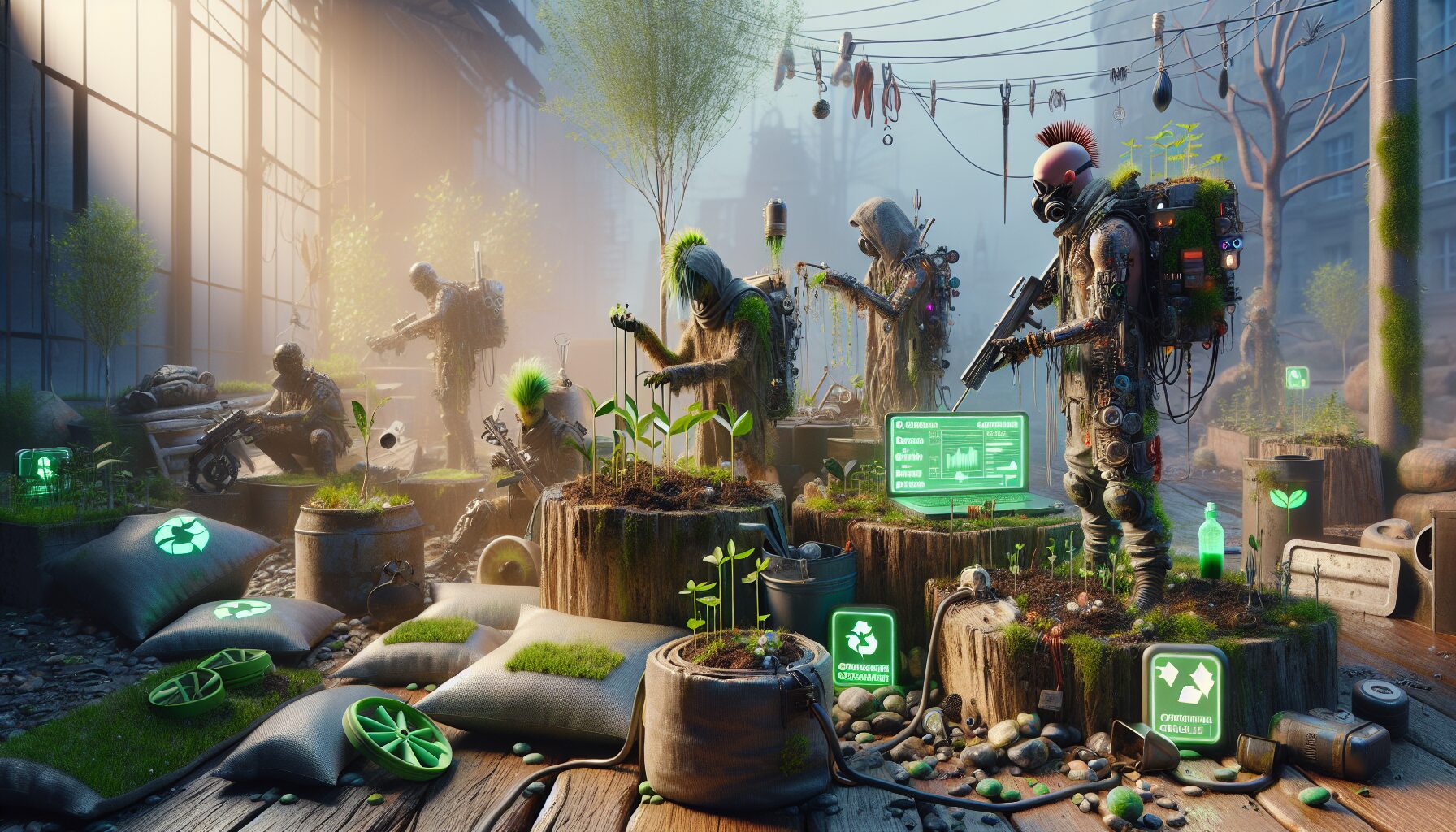
  • Eco-Punk Resistance – Green Ethics in Subcultural Action

    Eco-Punk Resistance – Green Ethics in Subcultural Action

    Eco-Punk Resistance: Green Ethics in Subcultural Action

    In a world grappling with climate change, dwindling natural resources, and ever-growing urban sprawl, subcultures play an increasingly pivotal role in advocating for environmentally conscious lifestyles. Enter the realm of Eco-Punk, a vibrant movement that merges punk ideology with green ethics, standing at the intersection of rebellion and ecological responsibility.

    Roots of Eco-Punk

    The Eco-Punk movement stems from the larger punk ethos, which famously embodies DIY culture, anti-establishment sentiments, and self-sufficiency. The environmental wing of punk culture, Eco-Punk diverges by specifically emphasizing sustainable practices such as urban gardening, renewable energy use, and anti-consumerism.

    As Jim Clarke writes in The Quintessential Self-Sufficiency of Eco-Punk, “Eco-punk empowers individuals to subvert mainstream environmental apathy by crafting small-scale, impactful changes in their daily lives.”

    Principles of Eco-Punk Ethics

    • DIY and Self-Sufficiency: True to their roots, Eco-Punks often engage in projects like upcycling, repair cafes, and community gardens to promote self-reliance and resource conservation.
    • Anti-Consumerism: Eschewing mass-market goods, Eco-Punks advocate for minimalism and the purchase of sustainable, ethically sourced products.
    • Activism and Direct Action: From organizing climate protests to facilitating workshops on composting, Eco-Punks aren’t afraid to take matters into their own hands.
    • Community Building: Emphasizing collective action, Eco-Punk communities create networking opportunities through meetups and collaborative projects.

    Inspiring Change Through Art and Activism

    The Eco-Punk movement employs creativity as a powerful tool for change. Musicians, artists, and writers within the subculture leverage their platforms to shed light on environmental issues and champion sustainability.

    “Music can cut through, whether or not it’s specifically overt in its messaging, but it can inspire people to think environmentally,” says Lauren Hunter for The Guardian.

    Challenges and the Road Ahead

    Despite its noble goals, Eco-Punk faces challenges, notably from societal inertia and myths surrounding the feasibility of green initiatives. However, the movement is unwavering in its resolve to combat environmental crises, hoping to redefine societal norms.

    As Eco-Punk continues to evolve, it acts as a beacon of hope, encouraging individuals to reassess their relationship with the environment. Whether through grassroots activism or art, the message is clear: change is not only possible, but essential.

  • Spiritual Hardcore – Finding Transcendence in the Pit

    Spiritual Hardcore – Finding Transcendence in the Pit

    Spiritual Hardcore: Finding Transcendence in the Pit

    The world of hardcore music is often perceived as chaotic and intense, a realm of aggressive riffs and cathartic energy. However, amidst the fury and noise lies a path to spiritual transcendence. This article delves into the unique ways in which the hardcore scene fosters profound personal growth and offers a spiritual journey for those who embrace its chaotic harmony.

    The Origins and Philosophy of Hardcore

    To understand the spiritual depth of hardcore, one must first explore its roots. Emerging in the late 1970s and early 1980s, hardcore punk was born out of a need for expression beyond the conventions of mainstream music. Bands like Black Flag and Minor Threat pioneered a sound that was raw, swift, and intense.

    “Hardcore, in its radical ethos and sonic form, offers an unfiltered reflection of societal discontent and personal struggles.” – Wikipedia

    This ethos of authenticity and defiance is not merely a musical stance—it’s a way of life that mirrors many spiritual traditions. At its core, hardcore challenges individuals to confront their innermost fears and desires, promoting a spiritual bravery akin to meditation or any rigorous inward journey.

    Entering the Pit: Chaos as a Vehicle for Growth

    The mosh pit, a dance form synonymous with hardcore concerts, serves as a metaphorical crucible for transformation. In the pit, one finds a powerful sense of community and acceptance among chaos. Here are a few ways the pit can be a site of spiritual exploration:

    • Unity Through Diversity: The pit is a level playing field, where everyone who enters is united by shared energy and intent. Differences in age, background, or ideology dissolve within the collective motion.
    • Letting Go: Engaging with the physicality of the pit requires an abandonment of ego. Attendees often speak of the liberating sensation of letting go and surrendering to the moment.
    • Recovery and Support: When someone falls, others are there to lift them up. This mutual respect and care reflect the community’s underlying ethical code, paralleling the compassion found in many spiritual teachings.

    Lyrics as a Mantra: From Anger to Enlightenment

    Hardcore lyrics, with their raw emotionality and directness, serve as powerful mantras. They address issues such as personal freedom, social justice, and mental health, resonating deeply with the listener and often providing solace and clarity.

    “All the band’s songs really are about self-empowerment and fighting oppression, both personal and systemic.” – Al Barile (SS Decontrol)

    This lyrical depth transforms seemingly aggressive songs into vehicles of inner reflection and motivation. Much like reciting sacred texts or affirmations, the repetition of meaningful lyrics allows listeners to internalize their messages, fostering personal transformation.

    Ritualistic Elements: The Concert as a Sacred Space

    A hardcore show is often described as a spiritual experience not unlike that of a religious ceremony. Several elements contribute to this sense of sacredness:

    • Atmospheric Transformation: The palpable energy that fills venues during performances can be likened to the vibes felt in sacred spaces. It’s an energy that transcends the physical and enters the realm of the metaphysical.
    • Communal Chanting: At concerts, the collective voice singing or shouting in unison mimics spiritual chantings, resonating with rituals found in various cultures worldwide.
    • The Stage as Pulprit: The stage, from which vocalists deliver their messages, becomes akin to a pulpit where spiritual and philosophical ideas are exchanged and propagated.

    Hardcore and Mindfulness: A Path to Presence

    In its frenetic pace, hardcore music paradoxically encourages a state of mindfulness—a hardcore show demands complete presence from its participants.

    Tuning into the rhythm, interacting with fellow fans, and maintaining awareness of one’s environment constitute a rigorous practice of being in the now. This total immersion and engagement unveil a path to mental clarity and focus often sought after in meditative practices.

    Personal Stories: Transcendence Through Hardcore

    Many who have immersed themselves in the hardcore scene speak of personal transformation. Stories of overcoming addiction, battling mental illness, or finding a sense of belonging are rife among community members.

    “Hardcore saved my life—it connected me to people and ideals that inspired me to be my best self.” – John Doe, hardcore enthusiast

    These personal tales of metamorphosis seem almost miraculous but are grounded in the tangible support and inspiration the scene offers.

    Conclusion: Embracing the Spiritual Hardcore Journey

    For those outside the hardcore scene, the idea of finding serenity amid what appears to be chaos might seem contradictory. However, for insiders, this conflict is precisely where growth occurs. It is in the acceptance of chaos that they find order within themselves.

    Ultimately, hardcore offers not just a sonic experience but a comprehensive way of living that aligns closely with many spiritual paths. It shines a light on an essential truth: that transcendence often arises from the most unexpected places.

    For anyone seeking a transformative spiritual journey, embracing the chaos and community of the hardcore scene may lead to profound personal enlightenment and liberation.

  • Radical Zine Culture – Printing Outside the System

    Radical Zine Culture – Printing Outside the System

    In an era dominated by digital media, the rise of the internet and social platforms, the printed page seems to have lost its allure for many. Yet, for a dedicated subculture, zines continue to thrive as a powerful medium for self-expression, community building, and alternative narratives. Zines, short for magazines or fanzines, are small-circulation, often self-published works covering various unconventional topics. They are manifestations of radical thoughts, ideas, and artistry that find a voice outside mainstream channels.

    The Roots of Zine Culture

    Zine culture has deep roots going back to the science fiction fanzines of the 1930s, but it significantly burgeoned during the punk movement of the 1970s. Punks used zines to convey their anti-establishment ideals, promote bands, and critique the socio-political state of affairs. This do-it-yourself (DIY) ethic was perfectly embodied in zine production, where glossy, commercial polish was eschewed in favor of raw, unfiltered authenticity.

    “Zines offer a space for marginalized voices to express themselves in ways that mainstream media does not allow.” — University of Oregon’s Daily Emerald

    The Modern Zine Renaissance

    The resurgence of zine-making in the 21st century is a fascinating evolution. Many attribute this to the growing disillusionment with digital media’s ephemeral nature. In response, there is renewed appreciation for tangible media that one can hold, feel, and read at their own pace without the perpetual glow of a screen.

    • DIY Spirit: Zines uphold the ethos of creating something from scratch, with no need for tons of capital or connections.
    • Community Building: By circulating zines at events or selling them in independent bookstores, creators forge a community of like-minded individuals.
    • Aesthetic Appeal: The tactility and personalized style of each zine contributes to its charm, making it a collector’s item for aficionados.

    Printing Techniques and Distribution

    Most zine creators start with basic tools: paper, scissors, glue, a photocopier, and a dream. Despite their humble beginnings, some zines have evolved into beautifully crafted volumes, using risography, screen printing, and letterpress techniques.

    Distribution, too, has taken interesting twists—mail trades, zine fests, and mutual support networks. The Berlin Zine Festival and Chicago Zine Fest are excellent examples of spaces where zine enthusiasts gather to exchange their work, ideas, and passion. Through these festivals, zines are brought to diverse audiences, extending their reach beyond local confines.

    “Zines are special in that they cross national and cultural boundaries with relative ease — and they do so through the post! In essence, zines create postal networks, this is quite unique and very encouraging.” — The Atlantic

    Content and Themes

    Zines often delve into niches that mainstream media doesn’t prioritize. They’re fertile ground for experimentation, self-reflection, and radical discourse. Common themes include:

    • Feminist and LGBTQ+ Politics: Zines like “Riot Grrrl” and “Queer Ultra Violence” have become iconic for their unapologetic stance and representation.
    • Art and Photography: Showcasing independent artists, these zines offer a platform for artwork and photography that challenge normative aesthetics.
    • Personal Narratives: Memoir-style zines provide intimate glimpses into personal experiences, often becoming testimonials of resilience and identity exploration.

    Challenges and Resilience

    Despite the evocative power of zines, challenges exist. Financial limitations often restrain production quality and quantity. Yet, this scarcity adds a layer of exclusivity and urgency. Additionally, because zines operate outside traditional networks, gaining visibility can be difficult. However, social media has somewhat alleviated these obstacles, serving as both a promotional tool and a bridge to engage new audiences.

    The resilience of zine culture lies in its ability to adapt and reinvent itself. As networks grow, so do the innovative ways creators share and produce zines. Initiatives like Kickstarter campaigns have empowered zine artists to crowdfund their projects, thus bypassing financial hurdles.

    The Future of Zines

    With their continued popularity in academic, artistic, and activist circles, zines will remain a critical component of radical publishing. They stand not only as historical artefacts but also as ongoing dialogues of resistance and transformation. The next chapter of zines might involve more integration with digital platforms, not as competitors but as complementary mediums where content can be accessed globally and preserved.

    In essence, the zine culture is a testament to the enduring need for varied forms of storytelling and expression. While the mediums evolve, the core spirit of zines — one of community-driven, authentic, and subversive dialogue — remains unmistakably compelling.